
Large, toothy predators elicit powerful emotions and strong opinions, so rewilding conversations often focus on these totemic beasts. But while apex predators are important, rewilding is about boosting biodiversity up and down the food chain, freeing up natural processes within our many dysfunctional ecosystems. And sometimes, that can happen just as easily from the bottom up, as from the top down.
What if true ecological recovery starts much smaller?
In the summer of 2024, Jeremy Clarkson shared a social media post highlighting his alarm at how few butterflies there were that year. Ever one to have his finger on the environmental pulse, Jeremy sagely concluded, ‘Something is afoot.’ If even Mr Clarkson is now noticing the decline of wild nature, perhaps the plight of smaller species might offer us all some common ground. While wolves remain challenging and beavers continue to provoke debate, maybe butterflies – or even moths – are a better place to start?
There are 57 resident butterfly species in the UK, plus two regular migrants, compared to more than 2,500 species of moths and over 870 macro species – moths large enough to be noticed. Surprising then, that moths are a peripheral presence in most of our lives. How many moth species can you name? Fluttering beneath streetlights and battering themselves softly against our windows, moths remain largely overlooked because they seem so inconsequential. They appear small, drab and uninteresting; nothing like a wolf.
Moths deserve your attention
But moths deserve your attention. On closer inspection, they’re a lot less drab than you might have thought – and they’re also important for a healthy wider environment, as Tom Prescott is keenly aware. I meet Tom, accompanied by Brock the dog, on a search for one of Scotland’s rarest moths, at a site near Tummel Bridge, on a muggy day in June. Tom is Butterfly Conservation’s Senior Conservation Officer for Scotland, and he explains that moths are important not only for their intrinsic value, but for their under-appreciated role as pollinators, nutrient cyclers and a key part of the food chain.
‘Get things right for moths and chances are, you’ll be getting things right for a lot of other things too.’
Tom Prescott, Scotland’s Senior Conservation Officer for Butterfly Conservation.

Moth caterpillars are an especially vital food source for chicks. Recent declines in moth abundance – with numbers down 28% in the last 50 years – are thought to be one of the drivers for more noticeable declines in species like cuckoos, farmland birds and bats. All this makes moths an important environmental indicator. ‘Get things right for moths and chances are, you’ll be getting things right for a lot of other things too, says Tom. Or vice versa.
Moths, and the countless other small creatures we overlook in our daily lives, might also have another even more important role to play. The British public’s famous love of nature has become a long-distance relationship, increasingly remote, increasingly mothballed. What if the Garden Tiger and the Elephant Hawk-moth could help reconnect us with the natural world?
Re-connect with the buzz and thrum of wild nature
The good news is moths can still be found just about anywhere. If you have a garden, you could hang a white sheet on a line at night, shine a torch on it and marvel at what shows up. Without a garden, you could simply open a window and turn on the light (remember to carefully catch and release your moths). Re-connect with the buzz and thrum of wild nature.
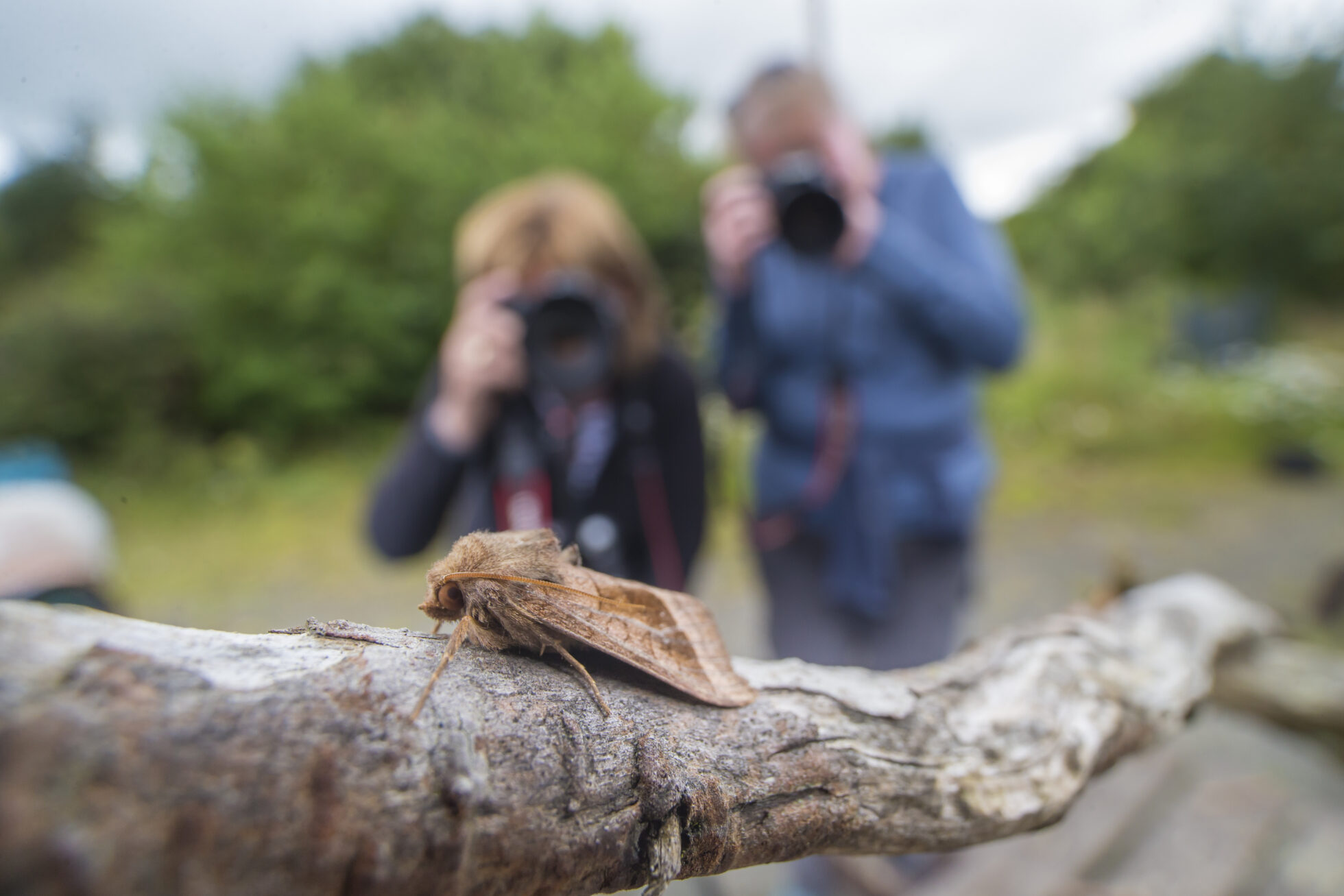
Before long, you might find yourself actively looking for moths, and if you get hooked, you could end up like Tom and me – out on the trail of the Kentish Glory. The Kentish Glory is a showstopper, with a glorious cape of rich caramel fuzz, long feathery antennae and an impressive wingspan of up to 65mm. The males sometimes fly around in the day, but as one of Scotland’s rarest moths they’re still hard to see.

Their rarity is a paradox given the abundance of their food source, one of Scotland’s most common trees – the Silver birch. The Kentish Glory has already disappeared entirely from England (including Kent) and Wales, but clings on in Scotland. Why is it so rare? Why does it favour some silver birch trees and ignore others? No one quite knows. Even Tom, an expert on Kentish Glories, admits: ‘There’s so much about this moth we still don’t understand.’
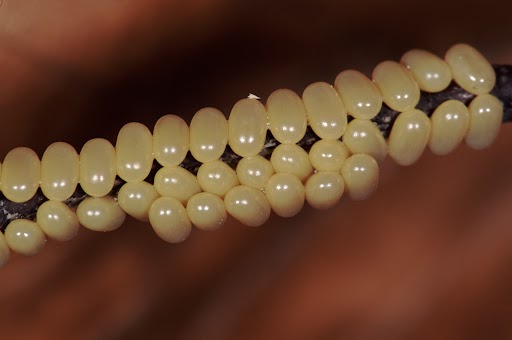
We do know that in the Spring, the females select a suitable birch tree, curl their abdomens around the end of a twig, and lay a couple of layers of eggs. ‘When first laid, they’re this bright custard yellow colour and quite obvious,’ says Tom. ‘But as they age, if they’re fertile, they turn a purple-brown colour, the colour of birch twigs, so they’re really well camouflaged.’
‘You’re not quite looking for a needle in a haystack, but it’s not far off.’
When the caterpillars hatch, they eat their way out of these eggshells, leaving behind the translucent casings, ‘like fun-sized bubble wrap.’ Finding these eggs or caterpillars is key to identifying active breeding sites but requires a sharp eye and plenty of stamina. ‘You’re not quite looking for a needle in a haystack,’ says Tom, ‘but it’s not far off.’ This is no easy treasure hunt but, with the help of dedicated volunteers, Butterfly Conservation has recently identified 95 new Kentish Glory sites within the Cairngorms National Park, turning the Kentish Glory into an unlikely ambassador for the park’s regenerating expanses of broadleaf woodland.
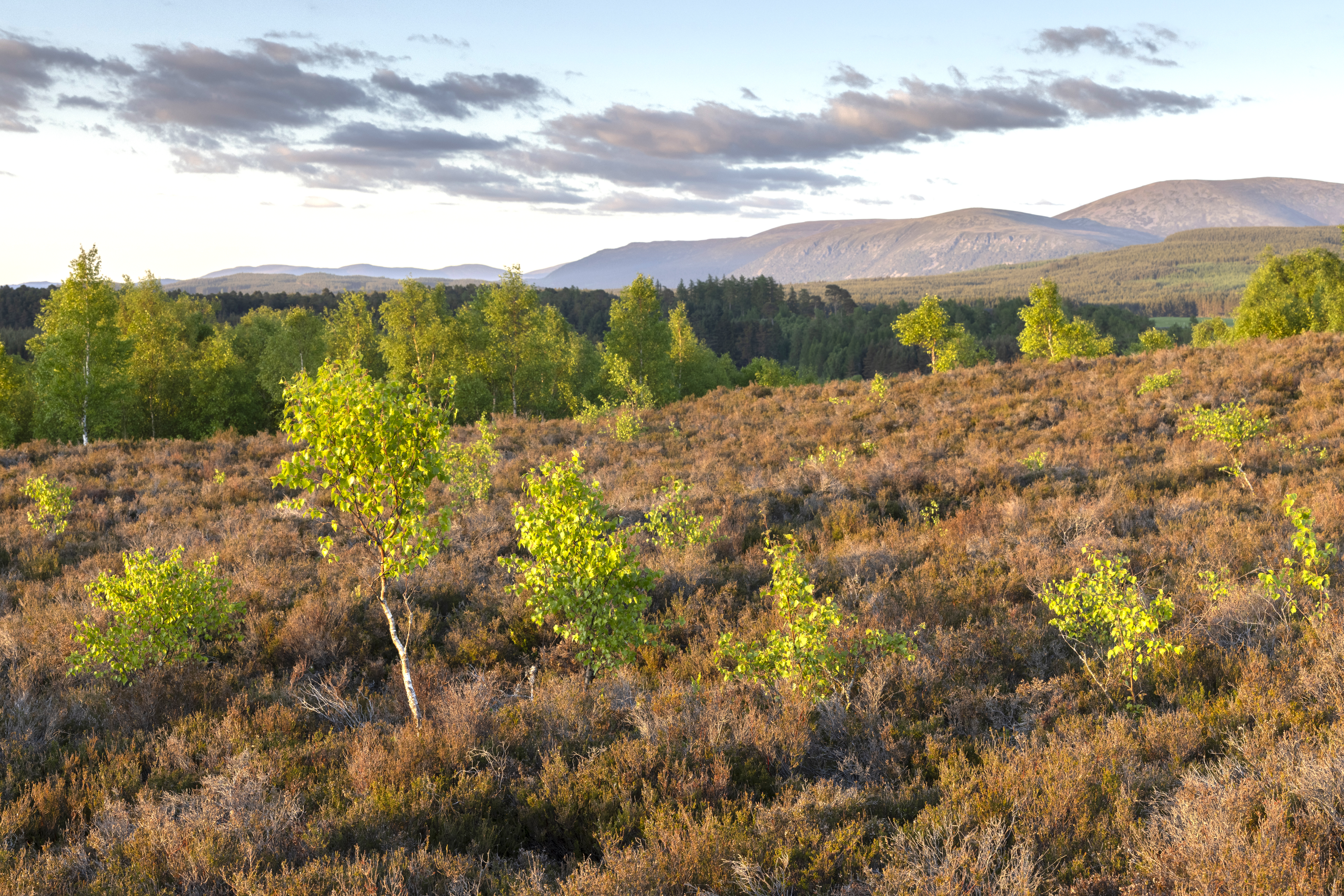
Still, there’s a catch. As these woodlands mature, they become unsuitable for the Kentish Glory, with the females only laying eggs on young, isolated birch trees. It seems Kentish Glories need some degree of natural flux across the landscape. They need some wildness. Birch trees are naturally succeeded by oak and ash over time, but when these giants are disturbed by death, fire or disease, the process starts again with birch, generating life-giving variety and complexity. Our modern landscapes rarely provide such change, remaining too often in stasis, managed as one thing or another.
Back with Tom near Tummel Bridge I meet one of Butterfly Conservation’s hardy volunteer surveyors. Philippa Swan’s diminutive frame and neat grey hair are contrasted by an all-in-one midge net hoodie, her trousers tucked firmly into socks. No ticks shall pass. Philippa means business. ‘Survey work takes you to places you didn’t know about,’ she says, explaining the origins of her interest in moths. ‘I’d go to places that were interesting for ancient history, and find butterflies there. The more I saw, the more interested I became in the whole environment.’
This is the key to rewilding ourselves: a journey that begins with noticing nature again.

This is the key to rewilding ourselves – a key principle of the Scottish Rewilding Alliance’s Rewilding Nation Charter – a journey that begins with noticing nature again and making more space for wildness in our day-to-day lives. But while Philippa’s journey has helped her discover a treasure trove of previously overlooked invertebrate gems, it has also alerted her to their plight. ‘We’re under so much pressure from commercial forestry here,’ she says. ‘We’re losing these things.’
She attributes the abundance of butterflies at these historic sites to the lack of forestry. ‘You’ve still got these little patches of ancient grassland, but they’re few and far between, every year we’re left with less and less.’
Philippa’s search for species like the Kentish Glory has awoken her to the importance of wild places and natural complexity, piquing a growing interest in fungi and flora, and the diversity of life so intricately entangled in healthy living systems. She talks of her sadness at the ongoing declines in nature but also of the joy and wonder she feels on discovering a patch of surviving richness. ‘It’s another paradox,’ says Philippa, with a smile, picking up her sweep net and continuing her search.