
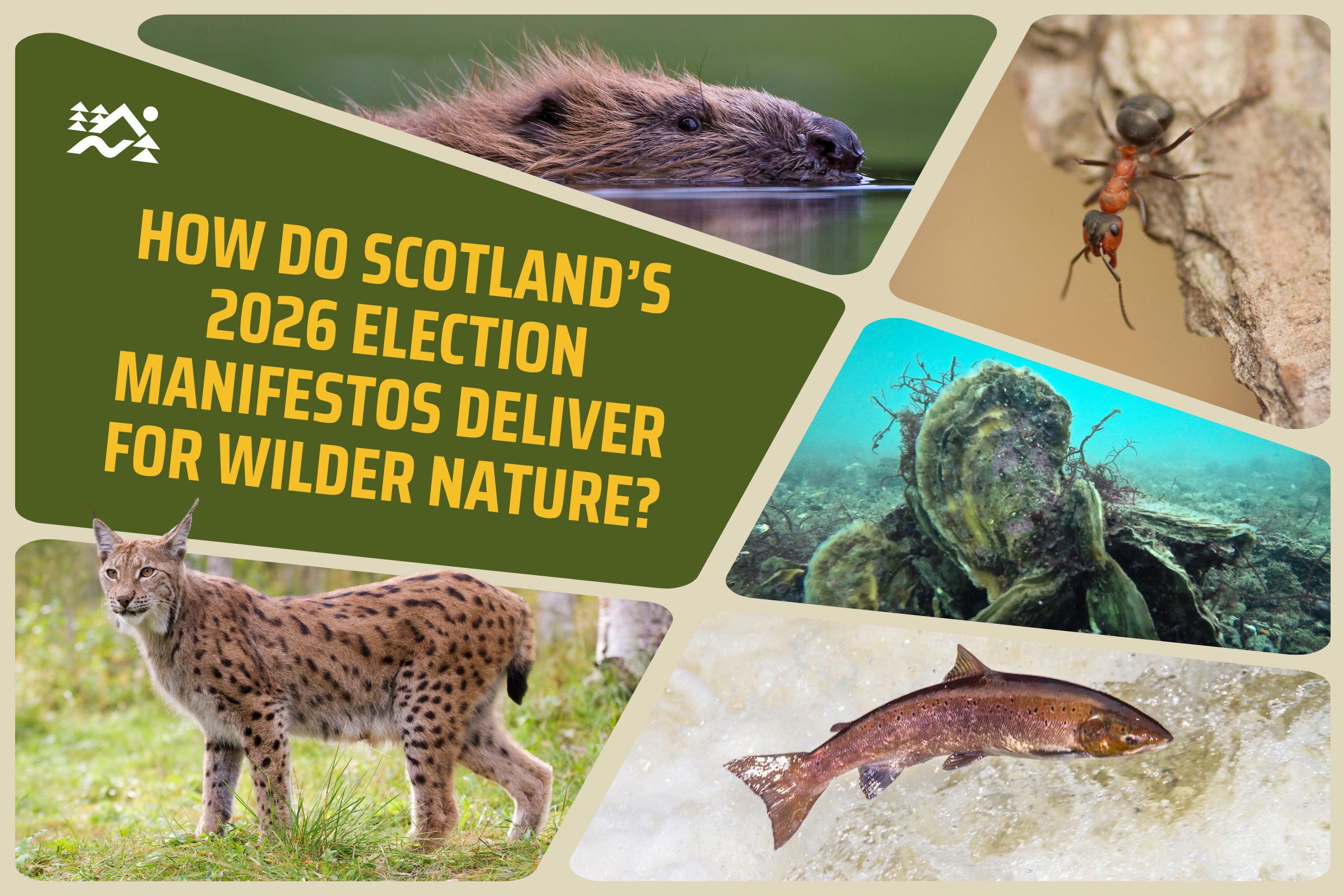
Scotland goes to the polls on 7 May. But what are political parties actually offering for wilder nature?
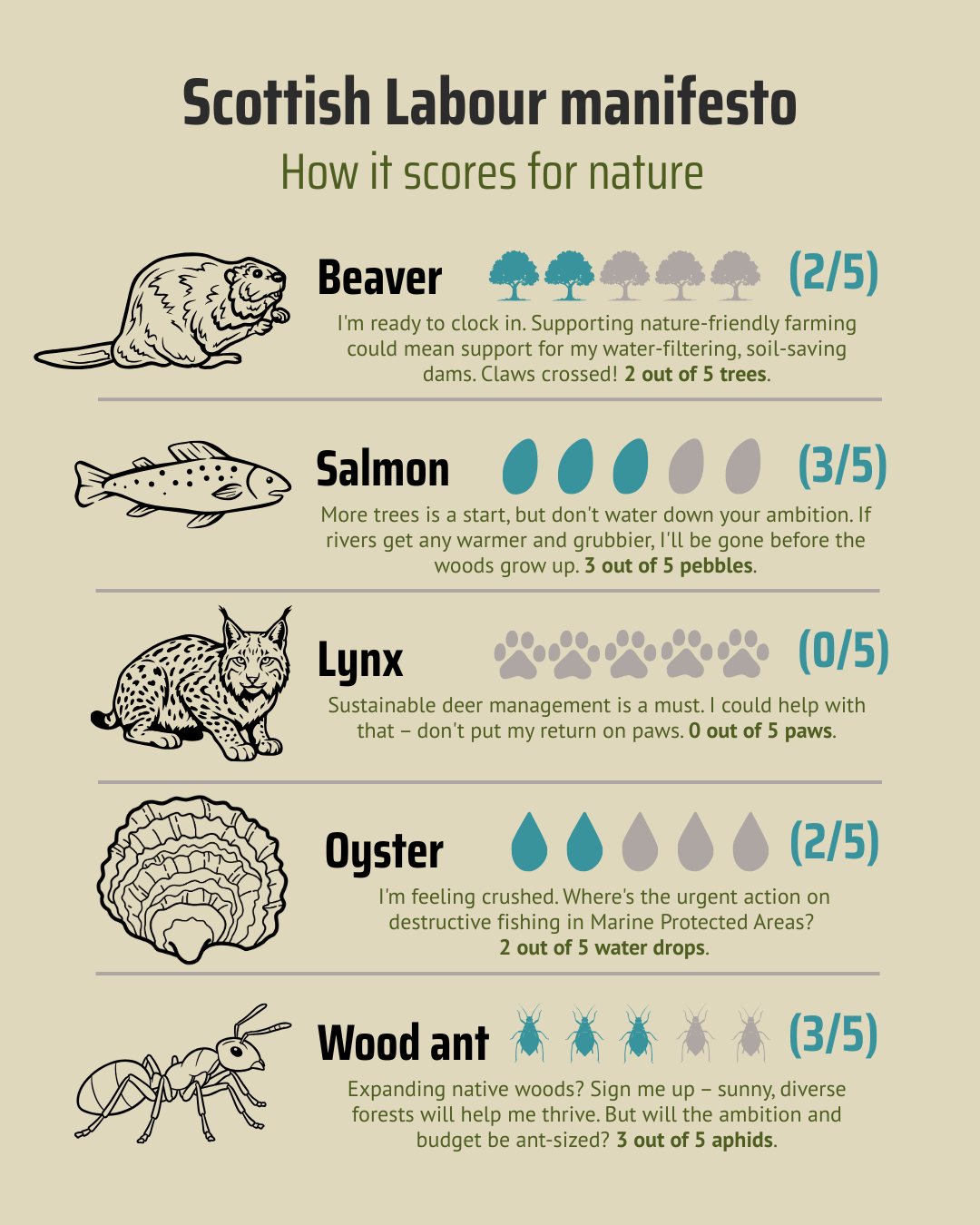
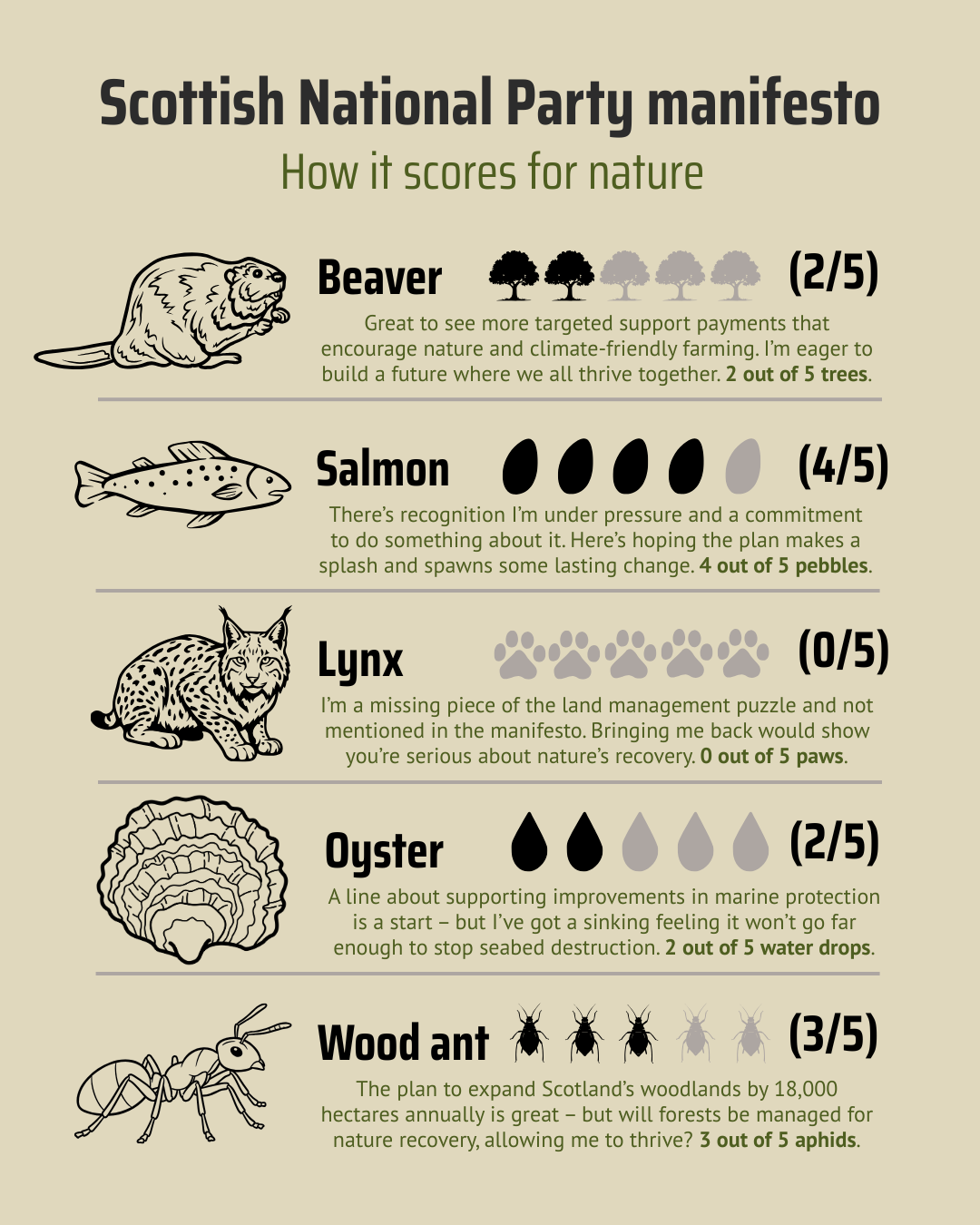
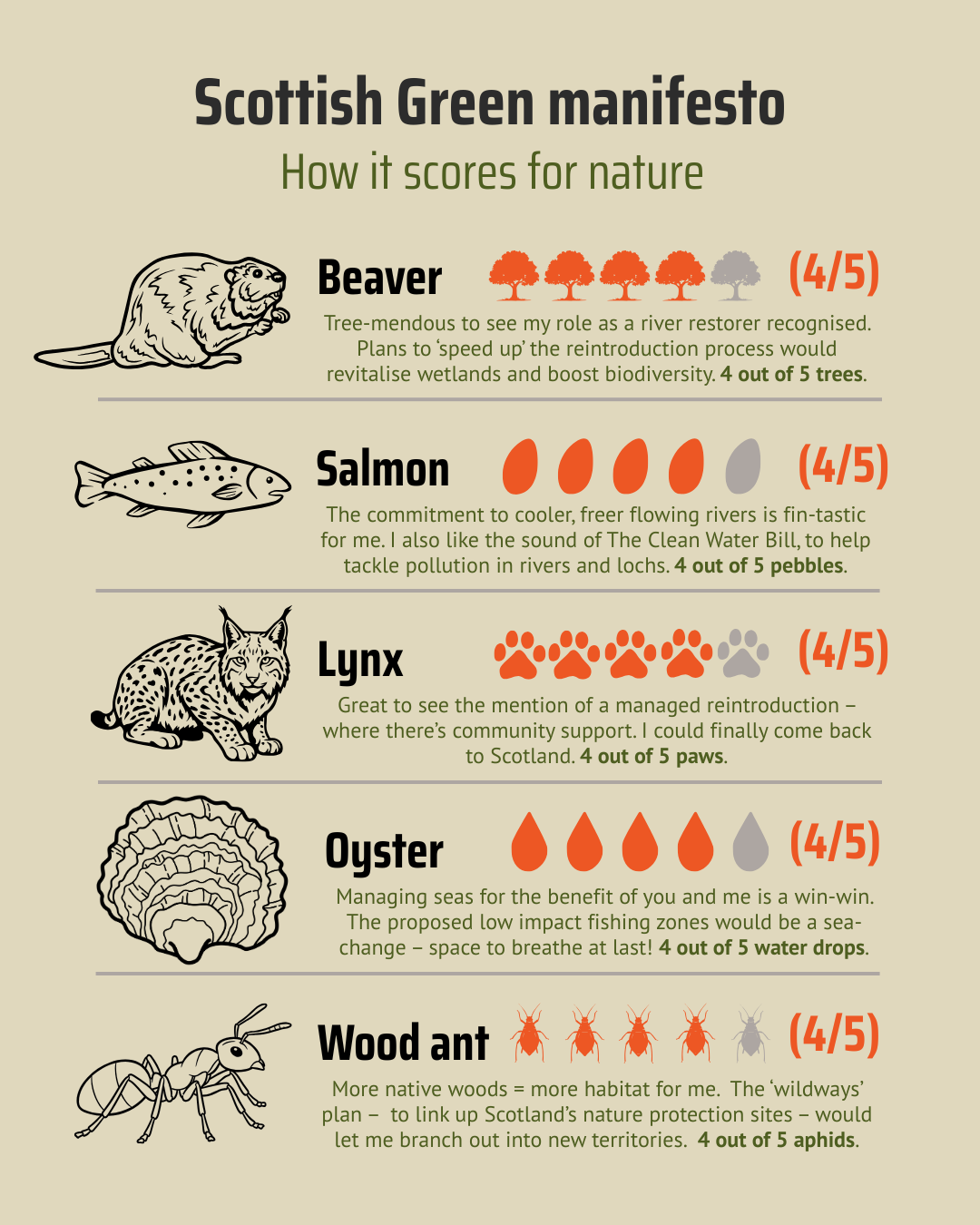
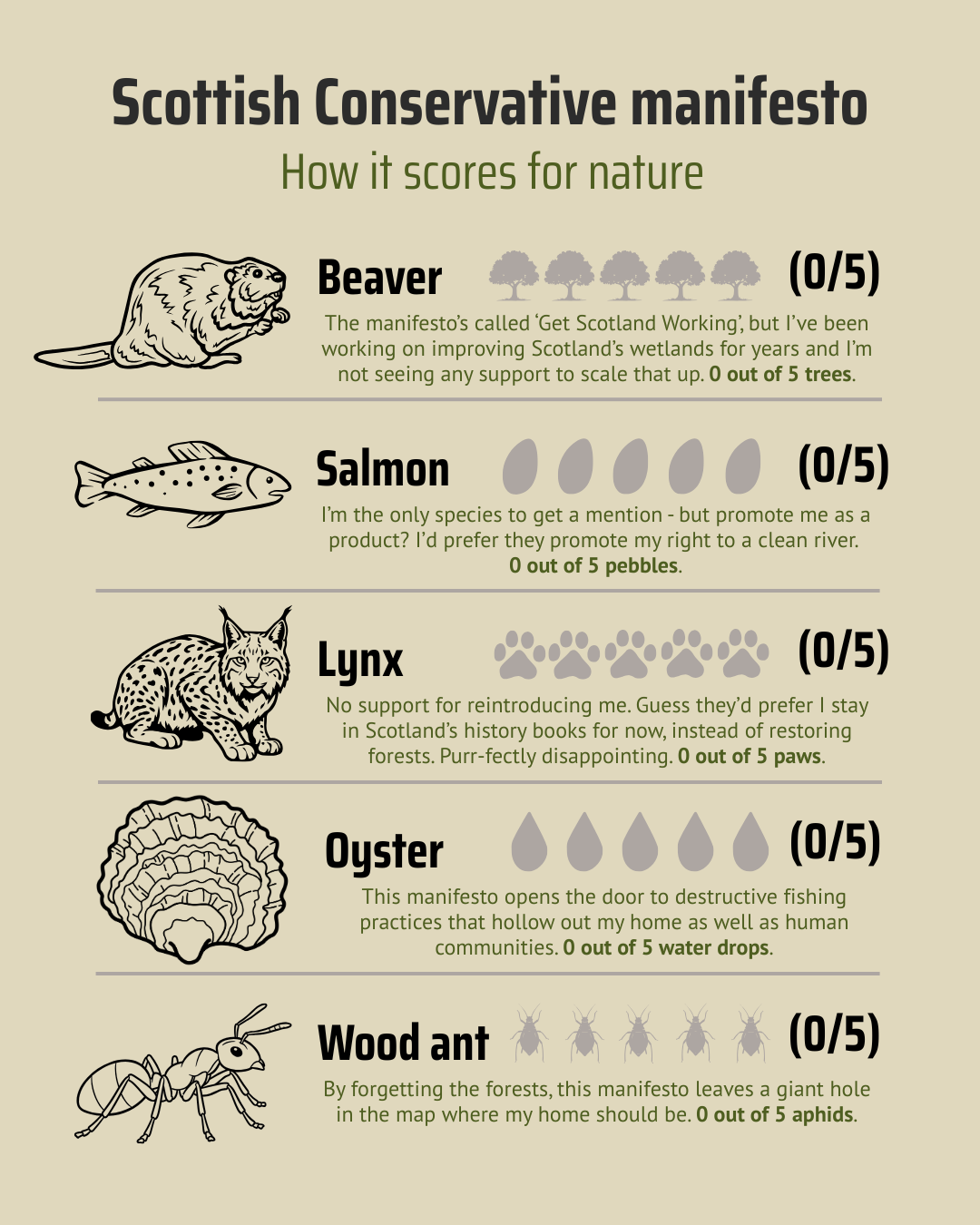
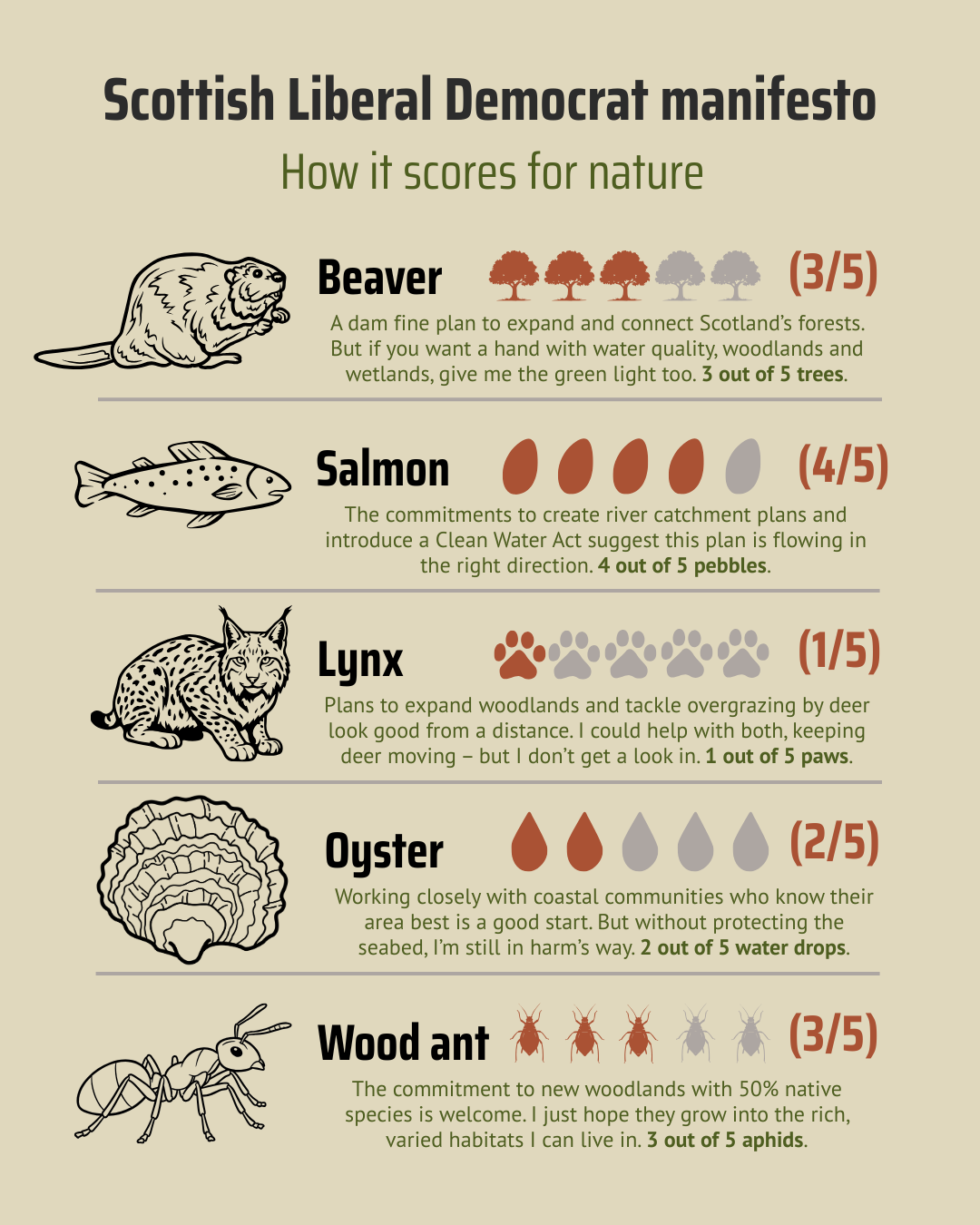
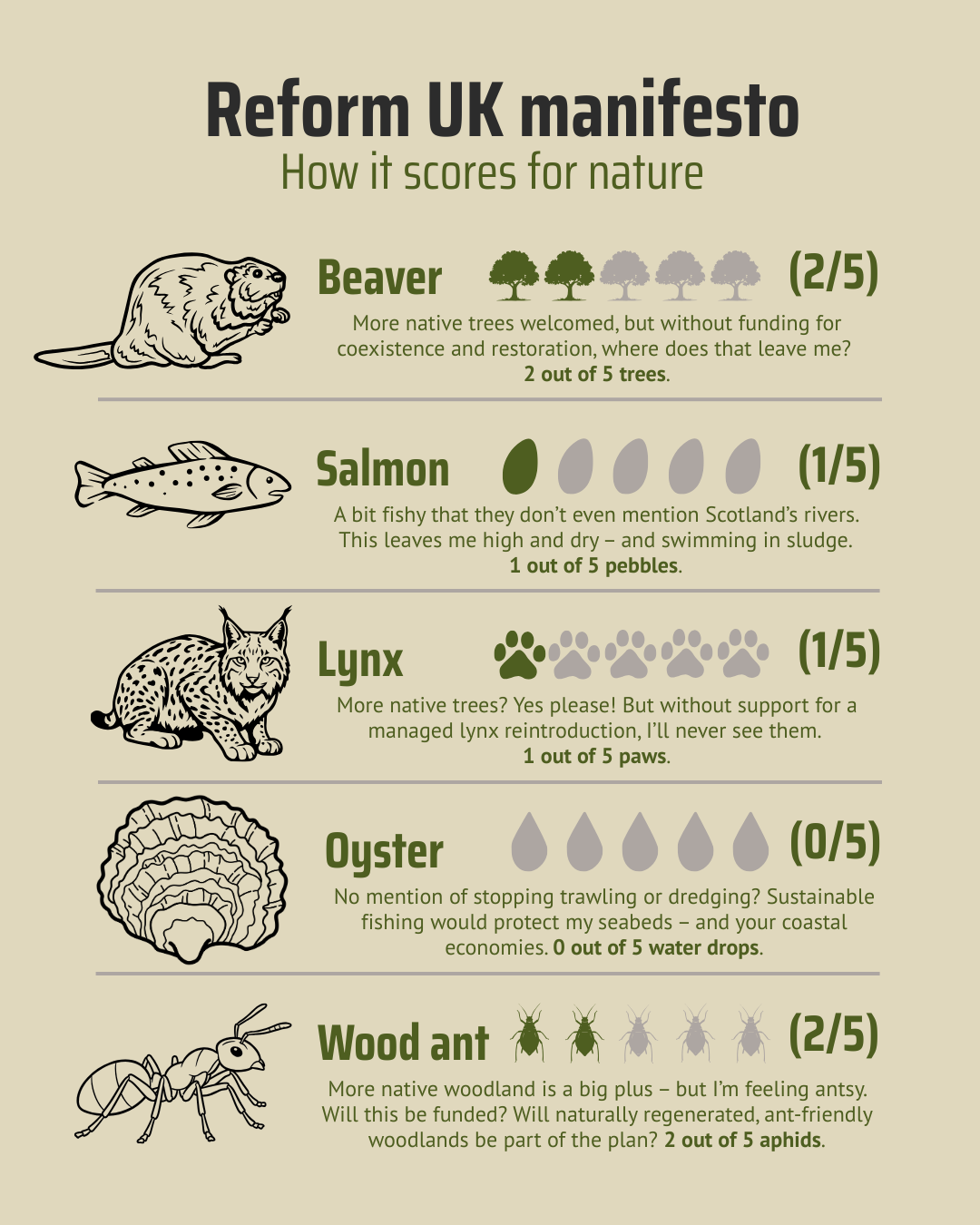
To find out, we asked a panel of Scotland’s keystone species* to review each party’s manifesto. Together, they’ve assessed what’s being proposed, what’s missing, and what it could mean in practice.
Here’s what they found.
*A keystone species is any organism that keeps an ecosystem working properly. They have a big impact relative to their numbers. Keystone species can include predators that help control the numbers of other species, ecosystem engineers that change habitats around them or species that create invaluable interactions in an ecosystem.
The manifestos: reviewed
Introducing the panel
The Atlantic Salmon (Salmo salar) has called Scotland’s rivers home for over 10,000 years, arriving as the glaciers retreated. This iconic travelling species is a living link between freshwater burns and the open ocean. But warming waters, leaking pollution and straightened rivers have taken a toll on its habitat. The salmon’s rating reflects whether a manifesto offers a future with a living river system – or a network of dying streams.
The Eurasian Beaver (Castor fiber) was the architect of wetlands across Scotland before being hunted to extinction 400 years ago. Since its official reintroduction in 2009, it’s been hard at work reshaping the land around us, boosting biodiversity and mitigating floods. The beaver’s score is determined by a manifesto’s commitment to ongoing, multi-stakeholder work to return the beaver to more of Scotland’s rivers.
The Eurasian lynx (Lynx lynx) has been missing from the Scottish landscape for hundreds of years, following the decline of its forest home. As an apex predator, the lynx – already reintroduced successfully across Europe – is a missing piece of the puzzle for deer management and woodland regeneration. The lynx’s score measures whether a manifesto supports the need for continued conversations around managed reintroduction.
The European flat or native oyster (Ostrea edulis) once formed massive, water-filtering reefs beneath the waves that protected shorelines and sheltered young aquatic animals. Its population numbers collapsed due to overfishing and destructive fishing practices. The oyster is looking out for policies that would enforce protections in Marine Protected Areas and allow Scotland’s seas to recover.
The Wood Ant (Formica aquilonia) manages Scotland’s forests, maintaining soil health and regulating insect numbers. To thrive, it needs complex, messy and interconnected native woodlands. The wood ant’s rating assesses whether a manifesto’s approach to trees prioritises biodiversity and connectivity.
What next?
The next Scottish Parliament will play a key role in whether Scotland meets its target of becoming nature-positive by 2030.
With the next election falling in 2031 – a year after that deadline – early action from our elected politicians will be critical.
The health, abundance and diversity of our nature is critical to the survival of our species. Nature puts food on our plates, water in our taps and air in our lungs.
As a country where natural processes have been disrupted or broken, we have a long way to go – but rewilding can help us get there faster.
If you want to see nature at the heart of decision-making, write to those seeking your vote and ask them to support a Rewilding Nation.
Manifestos were judged by the panel according to a scoring matrix.
- Manifestos scored a 5 if our panel members identified legally binding targets, specific ring-fenced funding and/or a clear timeline for relevant policy commitments.
- Manifestos scored a 4 if there was solid support for relevant policies and/or recognition of the species’ role, but did not include specific funding, a timeline and/or a clear legal mechanism for enforcement.
- Manifestos scored a 3 if relevant policies were mentioned, but species were not explicitly named and/or a clear plan for implementation was missing.
- Manifestos scored a 2 if relevant policies were mentioned but it was not clear how they would accommodate the needs of the panel.
- Manifestos scored a 1 if the manifesto ignored habitats and species, lacking any policies.
- Manifestos scored a 0 if the manifesto actively promoted destructive practices.
Each panel member was also looking for particular ideal policy commitments.
- The beaver was looking out for support for riparian woodlands and incentives for nature-friendly farming practices, especially in the form of redesigning rural support payments.
- The salmon was interested in river restoration commitments, including riparian woodland creation and cleaner water.
- The lynx was – naturally – looking for a commitment to a managed lynx reintroduction where communities are in support.
- The oyster wanted to see real protection from destructive fishing practices in marine protected areas.
- The wood ant wanted to see native woodlands expanded and diverse forests created.