Category: News and blog

  • Scottish Government begins its rewilding journey

    Scottish Government begins its rewilding journey

    In a milestone for rewilding, the Scottish Government’s Chief Scientific Advisor has endorsed a definition of rewilding that can be used by the Scottish Government and wider public sector.

    The Scottish Government’s Chief Scientific Advisor has today (4th July 2023) endorsed a definition of rewilding that can be used by the Scottish Government and wider public sector. 


    This marks a significant step forwards for a government that has previously avoided using the word ‘rewilding’, despite the increased number of rewilding projects across Scotland. 


    Steve Micklewright, Scottish Rewilding Alliance Convenor and CEO of Trees for Life said, ‘After many years of rejecting ‘rewilding’, regarding it as too controversial and challenging, it is good to see that the Government have finally caught up with something rewilding practitioners have known for a long time – rewilding addresses the dual nature and climate emergencies and can help create a nature-based economy that means communities can thrive in changing times.’ 


    Work by the John Hutton Institute that included input from civil servants, green investors, academics and two environmental organisations, but lacked involvement from many of Scotland’s rewilders, helped to create the definition. Steve added, ‘The Government definition is to be welcomed. It focuses on what is different about rewilding for land managers and how it seeks to ensure it can benefit local communities. It is therefore an essential step in creating a #RewildingNation.’


    The Scottish Rewilding Alliance has called on the Government to declare Scotland the world’s first Rewilding Nation, and commit to start the process of rewilding 30% of Scotland’s land and sea by 2030. Steve said, ‘There is now a groundswell of rewilding happening across Scotland and we are hopeful that the next few years will take us closer to being a #RewildingNation. Growing Government support and endorsement is essential in achieving this.’


    Some who participated in developing the definition voiced concern over what they perceived as the divisive nature of the term rewilding. Steve said, ‘Scotland is one of the most nature depleted countries in the world. Our attempts to protect nature over the last 60 years have failed. Language changes. Rewilding signals change and bold action and it is something that inspires people to take action – and we need to challenge those that do not.’

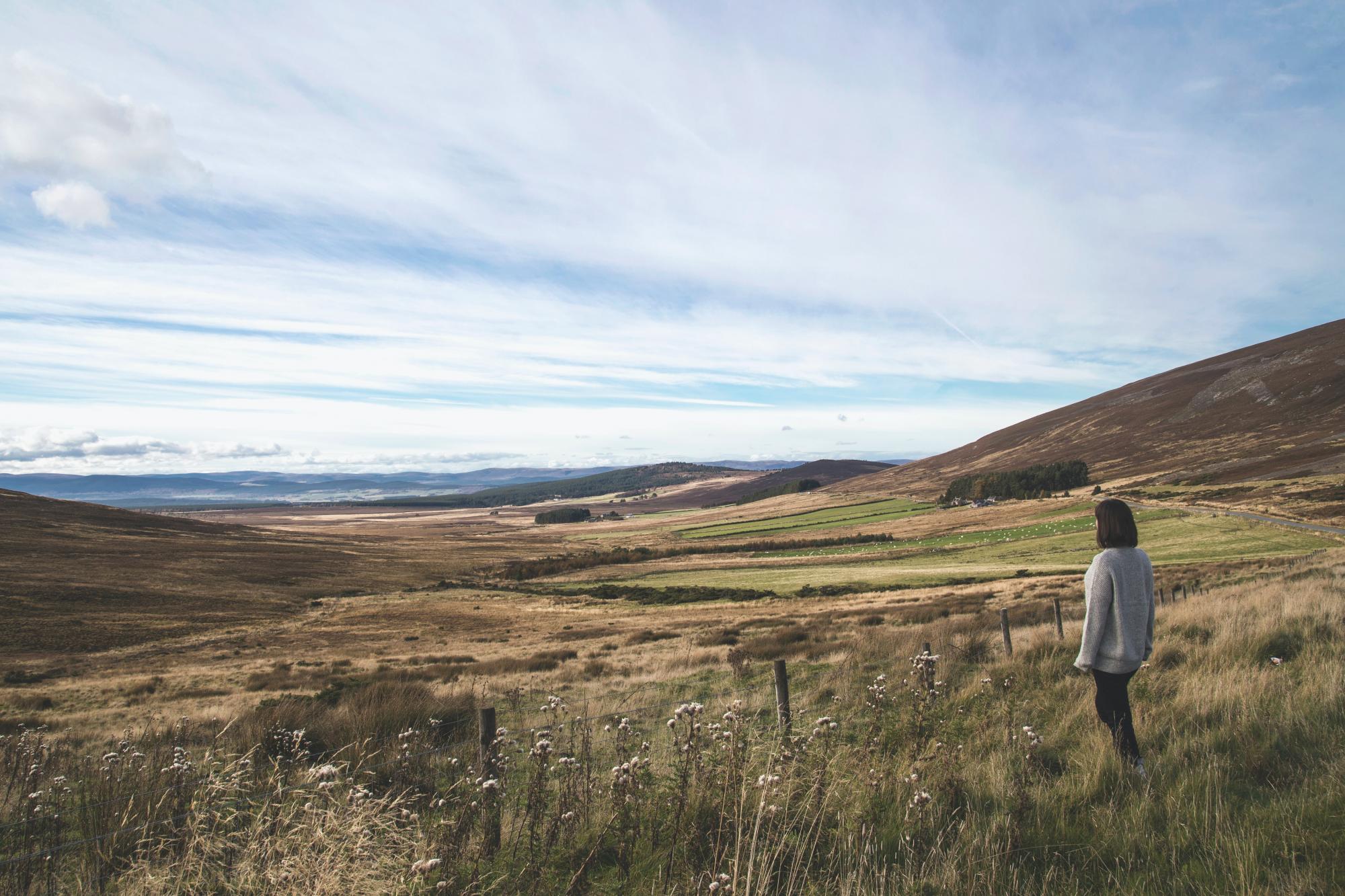
    Photo by Gabriela Palai via Pexels

  • Opinion piece: creating a country where communities and nature thrive together

    Opinion piece: creating a country where communities and nature thrive together

    When we talk about what sort of Scotland we want to live in, we need to be having louder, clearer, more thoughtful conversations about the country’s land.

    By Steve Micklewright, Convenor of the Scottish Rewilding Alliance (www.rewild.scot) and Chief
    Executive of rewilding charity Trees for Life (treesforlife.org.uk)


    When we talk about what sort of Scotland we want to live in, we need to be having louder, clearer, more thoughtful conversations about the country’s land.

    Questions about who owns our land, who benefits from it, and how it is managed, have profound implications for tackling the overlapping nature and climate emergencies, including through rewilding – in empowering, fair ways for local communities.

    Scotland has one of the world’s most concentrated land ownership patterns, with fewer than 500 people controlling half its land. It is one of the world’s most nature-depleted countries too. This double whammy means having open conversations about how land is owned, and the purpose it’s put to, is doubly important.

    Two new reports throw this into sharp relief. The Scottish Land Commission’s latest assessment of Scotland’s rural land market makes for sobering reading. It highlights record land prices, with estates and hill farms purchased by wealthy corporations – often as an investment, or for commercial forestry.

    For social justice and rewilding, this overheating market is worrying. It risks more inequality and concentrated rural land ownership, as less wealthy prospective buyers – be they charities, local communities, or younger farmers – get priced out.

    Meanwhile, a Community Land Scotland report by academic, ecologist, writer and land reform advocate Alastair McIntosh looks at green finance and its implications, and at rewilding. There is much I agree with, and some things I don’t, in Alastair’s thoughtful paper. Rewilding may be the new kid on the block, but we need to be clear about what rewilding is and isn’t. There are community groups and charities as well as large landowners exploring different rewilding models, while some corporations and businesses are seeking to appropriate the word.

    Rewilding – large-scale nature restoration – can create a cascade of benefits for people. It works best when it has people and communities at its heart. Whether by community groups, charities or companies, rewilding is surging across Scotland.

    But corporations pursuing carbon credits or the green gold of subsidies and grants are a different beast. Such activities are mostly not rewilding. At worst, they can be greenwashing. When they involve planting the wrong trees in the wrong place, and when they force up land prices local people’s reach, they can threaten both rewilding and communities.

    So the efforts of a few corporate non-rewilders to associate themselves with rewilding and its popularity should be resisted.

    But Alastair’s report offers hope. There is much common ground between Scotland’s rewilding charities, community landowners and land reformers – including the goals of thriving, resilient and empowered communities, restored ecosystems, and concerted action on climate breakdown.

    The Scottish Rewilding Alliance wants Scotland to become a rewilding nation, with 30% of land and seas enjoying nature recovery by 2030, where everyone can share in the benefits – from health to community wealth building to flood protection.

    This includes more communities being involved in rewilding, including on land they own. It includes re-peopling, including through nature-based economic opportunities.

    In the Highlands, re-peopling is central to Trees for Life’s new Dundreggan Rewilding Centre near Loch Ness, and to our work with the community and landowners in the Affric Highlands initiative – Britain’s largest rewilding landscape, stretching from Loch Ness to the west coast. In Dumfries and Galloway, the 10,500-acre Tarras Valley Nature Reserve on Langholm Moor – created after south Scotland’s largest community buyout so far – is carrying out inspiring work for community regeneration, nature recovery, and climate action.

    Across Scotland, Northwoods Rewilding Network, launched by charity SCOTLAND: The Big Picture, now consists of over 50 partners, including community sites, small farms, crofts, and small landholdings.

    My hope is that rewilders and organisations such as Community Land Scotland, the Scottish Land Commission and others can explore how we can all work together – and with the Scottish Government – for ambitious and just land-based solutions that benefit people, nature and climate.

    By ensuring a rich and diverse pattern of different kinds of landowners – community, private, public, third sector – that stewards Scotland’s land and seas back to health, we can create a country where our communities and nature thrive together.


    Ends


    The Scottish Rewilding Alliance is a collaboration of more than 20 organisations which share a
    mission to enable rewilding at a scale new to Scotland. See www.rewild.scot

    This opinion piece originally appeared in the Press and Journal on 27/06/2023 and can be found online at https://www.pressandjournal.co.uk/fp/opinion/5884636/rewilding-land-reform-scotland-misunderstood-key-opinion/ 

  • Three-quarters of Scots want wilder national parks, poll finds

    Three-quarters of Scots want wilder national parks, poll finds

    Scottish Rewilding Alliance calls on Government to fulfil wishes of Scottish people and implement recommendations to combat nature and climate emergencies.

    Three-quarters of Scots want wilder national parks, poll finds

    Three quarters of Scots want to see wilder national parks, with areas devoted to rewilding, according to research carried out for the Scottish Rewilding Alliance.

    In an opinion poll for the Alliance carried out by market research agency Survation, 74% of Scots agreed with the call to make national parks wilder, with just 6% of people opposed.

    The polling supports recommendations by the Scottish Government’s nature agency NatureScot, which in February advised ministers to create wilder national parks. This followed an extensive consultation as part of plans to designate a third national park in Scotland.

    Scotland’s existing national parks were declared more than 20 years ago. The move to a greater focus on rewilding to help tackle the overlapping nature and climate emergencies is urgently required, says the Alliance.

    “We’re urging the Government to listen to its nature agency and the Scottish people, and make nature recovery a primary purpose of our national parks,” said Steve Micklewright, Convenor of the Scottish Rewilding Alliance and Chief Executive of rewilding charity Trees for Life.

    “This would ensure these important areas can make a greater contribution to Scotland becoming the world’s first rewilding nation – a place where nature and people can thrive – and in achieving the Government’s commitment to protect 30% of Scotland for nature by 2030.”

    If the Government follows NatureScot’s advice, ministers would introduce legislation to make restoring nature and combating climate breakdown the overarching purpose of Scotland’s national parks.

    “Our national parks have the potential to be at the forefront of restoring functioning, thriving ecosystems in Scotland, a country that is currently one of the most nature-depleted in the whole world,” added Steve Micklewright.

    “Wilder national parks would provide more opportunities for people to live and work in them, including through more sustainable livelihoods, while visitors would be able to enjoy seeing more of Scotland’s remarkable wildlife and habitats as species and landscapes begin to recover.”

    The Scottish Rewilding Alliance is a collaboration of more than 20 organisations which share a mission to enable rewilding at a scale new to Scotland. See www.rewild.scot.

    Ends

    Notes to editors

    1. NatureScot advice on creating wilder national parks:

    www.nature.scot/doc/national-parks-advice-ministers-february-2023

    2. Polling: 1,033 people were asked for their views in the opinion poll conducted by market research agency Survation (survation.com) on behalf of the Scottish Rewilding Alliance. See www.rewild.scot/uploads/Scottish%20Rewilding%20Alliance%20Survation%20Summary.pdf

  • Respond to the Scottish Government’s National Park Consultation

    Respond to the Scottish Government’s National Park Consultation

    The decision to designate a new national park is a golden opportunity to rethink our approach to restoring nature and supporting thriving communities

    Scotland has just two national parks, created 20 years ago. Now the Scottish Government is on the verge of designating a third, and is seeking public input on the role of national parks and how it should go about selecting a new one. A consultation is open for input until 30 November 2022

    We are living through climate and nature breakdown. Every step we take has to be in the name of nature. Every piece of legislation passing through our parliament over the next few years should be contributing to halting the continued decline in Scotland’s wildlife and natural habitats. 

    National parks should be a cornerstone of our approach to restoring nature and supporting thriving communities, as we’ve called for in our Wilder National Parks campaign. If we cannot achieve this within our parks, where can we?

    How you can help

    This is an important moment for the public and interested organisations to encourage the Scottish Government to revisit legislation around national parks in Scotland and check that it’s fit for purpose. 

    The Scottish Rewilding Alliance is submitting a response to the consultation, and we’re encouraging you to do the same, with the support of our guidance below. 

    Your consultation response

    To help you get started with submitting your answers online*, we’ve created a guide response for you to use below – but adding your own thoughts will send a more powerful message to the Scottish Government. 

    *On the NatureScot webage scroll down to the blue box where there is scene setting information and also a link to the actual consultation itself, referred to as the ​‘online survey’.

    This guide provides some suggested text to help you respond to section 1 (questions 1-18) of the consultation: the role of Scotland’s national parks. We feel this is where we can focus on prioritising nature.

    Section 2 focuses on the selection process for national parks. We encourage you to also share your thoughts with the government on this if you are able to.

    Question 1. Do you support “leadership of nature recovery and a just transition to net zero” becoming the overarching purpose of Scotland’s National Parks? If not, what else would you propose?

    Nature recovery should be the priority of our national parks. We need a fresh approach to national parks in Scotland that is fit to meet the challenges facing us. The overarching purpose of Scotland’s national parks should be ‘Leadership of nature recovery and a just transition to a nature-based economy’.

    Question 2. Which of the proposed elements of leadership and action set out in the list above do you support? What others – if any – would you propose?

    I agree with the proposed elements of leadership and action set out above.

    Question 3. What opportunities are there for National Parks to generate private investment in natural capital?

    National parks are well placed to navigate private investment opportunities – but should do so with communities in mind. There should be community benefits from the millions of pounds in funding flowing through our landscapes beyond the restoration of nature. Where land generates value in the form of ecosystem services, money should also flow back into local communities. In the long term, this creates thriving communities whose lives are interwoven with nature. Rewilding and repeopling should go hand in hand, especially in our national parks.

    Question 4. What role should local communities play in the National Park and how should National Park authorities work with and for them to secure a just transition?

    A just transition towards a nature-based economy should be a guiding principle of our national parks. If our national parks can rise to the challenge of enabling communities to flourish as nature is restored, they will be securing the future of the parks.

    In order to achieve this vision, our national parks need to be welcoming places for people to live. In order for this to be true, our parks need affordable, secure, warm housing; jobs that provide a reliable living; thriving local services; good transport connections, including active travel and public transport. Communities should also have a real and lasting say in the evolution of the places around them – through the medium of co-design, rather than consultation.

    All this has to take place alongside the large-scale restoration of nature and rewilding of our parks.

    Question 5. Do you support a “vision and mission” for all of Scotland’s National Parks being clearly set out in a national statement? If not why not?

    I support a vision and mission for all of Scotland’s national parks being clearly set out in a national statement. The creation of an overarching purpose for our national parks means this has to be set in context against the original aims contained in the National Parks Act. The creation of a vision and mission will also aid new parks as they develop organisational cultures and future plans.

    Question 6. If you favour a national statement for Scotland’s National Parks being developed, what else should it cover?

    Scotland needs an overall statement covering all of its parks, including both national and regional parks. All land is precious and must play its part in tackling nature and climate breakdown. Regional parks are important landscapes too, albeit not the focus of this consultation. A national statement could cover all of Scotland’s parks, national and regional.

    Question 7. To what extent should new National Parks be about the future potential of an area for nature restoration as well as what’s currently in place?

    Landscapes in Scotland are human landscapes, co-created over thousands of years of human usage. If the primary purpose of our national parks is nature restoration, all our national parks should be aiming to rewild the park areas. Rewilding is the large-scale restoration of ecosystems to the point where nature is allowed to take care of itself. Rewilding aims to reinstate natural processes and, where appropriate, missing species – allowing them to engineer and restore habitats. Effective rewilding encourages a balance between people and nature. This approach is perfectly suited to our national parks, where large areas still require significant regeneration.

    Our national parks should therefore place nature restoration, not the protection of an existing aesthetic, at their heart.

    Question 8. Are any specific changes to the existing four Aims required? If so why, and what are they?

    The overarching priority of our parks should be ‘Leadership of nature recovery and a just transition to a nature-based economy’. The delivery of the aims must not undermine nature recovery.

    I therefore support rewording the current aims to better reflect this new purpose, as well as the vision and mission in the proposed national statement. The new aims could be:

    • restore the natural habitats and safeguard the cultural heritage of the area;
    • promote the sustainable and fair use of the natural resources of the area;
    • increase the accessibility of the area in order to promote understanding and enjoyment for all; and
    • promote the sustainable social and economic development of the area’s communities.

    Question 9. Which of these possible options, or mix of possible options, do you think would help strengthen the focus and contribution of National Parks, and why?

    I support the rewording of the existing aims to better reflect other changes to the vision, mission and overarching purpose of our national parks. There should also be a clear caveat that the pursuit of those aims should not undermine nature recovery.

    Question 10. Are there other options that could be considered? If so, what are they?

    N/A

    Question 11. Do you think there should be any changes to the wording in the Act to require public bodies to support delivery of National Park Plans? If so, what would you propose?

    I support the strengthening of the effect of the duty on other public bodies. National park authorities need the support of other public bodies within the park area in order to solve the many challenges ahead of them.

    Question 12. Do you have any other suggestions for improving partnership working to support the implementation of the National Park Plan by all?

    N/A

    Question 13. Could any of the existing powers and functions be used more effectively? If so, which ones and how?

    Our national parks should feel empowered to utilise their full range of existing powers and functions. From protecting ancient woodland to fast-tracking ecosystem infrastructure to providing affordable housing – with nature and a just transition to a nature-based economy as overarching aims, our national park authorities should be confident in exercising their powers.

    Question 14. Are any of the existing powers or functions redundant or unnecessary? If so, which ones and why?

    N/A

    Question 15. What, if any, changes to the powers and functions in these areas should be considered and why?

    The priority of national parks should be to restore nature in a way that provides benefits for communities and the nation. Any powers and functions that support this priority should be considered. This could include:

    • Simplifying the ownership and management of public land within park boundaries by transferring land to the national park authorities
    • Incentivising land owners and managers within the park area to manage their land for nature
    • Enforcing minimum standards for land management
    • Managing land-based funding within park boundaries
    • Simplifying landscape designations within park boundaries
    • Streamlined rules around species reintroduction
    • For coastal and marine parks, banning of destructive practices within their waters

    Question 16. Are there any other areas where strengthened or new powers and functions will be needed by the National Park Authority? If so, what are they?

    N/A

    Question 17. Should the powers and functions of National Park Authorities be decided on a Park by Park basis? Should any apply to all National Park Authorities? If so, which ones and why?

    I believe all national parks should have the same range of powers and functions, and that all national parks should have nature as their priority.

    Question 18. Are there any changes you would want to see to the governance and management arrangements of all National Park Authorities?

    I want to see more national parks in Scotland, restoring nature and championing nature-based economies. As the number of parks in Scotland grows, it may be necessary to establish an overarching national body to promote the national vision or mission and share best practice between Scottish parks.

    Photo by Milada Vigerova on Unsplash 

  • New national park in Scotland - consultation announced

    New national park in Scotland - consultation announced

    The Scottish Government’s nature agency NatureScot today announced the public consultation for a new national park for Scotland.

    Steve Micklewright, Convenor of the Scottish Rewilding Alliance and Chief Executive of Trees for Life, said:

    “This welcome public consultation on Scotland’s new national park is a golden opportunity to place nature recovery and rewilding front and centre as priorities for our national parks – so these important places can lead the way in tackling the nature and climate crises, while creating all sorts of new nature-based economic opportunities.

    “Now is not the time to be timid. Nature is declining around us, but we depend on nature for our food, health and wellbeing, and for everything we do. So our national parks need to be inspiring trailblazers that show how people and nature can flourish together.

    “Through the consultation, we will be urging the Scottish Government to update the quarter-of-a-century-old legislation covering Scotland’s national parks, to ensure the parks are fit for purpose to tackle collapses in biodiversity and climate breakdown, while benefitting local communities and economies.

    “The consultation is the public’s chance to ask the Government to prioritise nature, and to ensure the primary purpose of any new or existing national park is nature restoration for the benefit of the nation.”

    Read NatureScot’s announcement on their website.

  • New film asks Scottish Government and public to choose rewilding

    New film asks Scottish Government and public to choose rewilding

    An alliance of nature charities in Scotland is ramping up its call on the Scottish Government and people to choose rewilding at a critical moment in the country’s political and environmental history with the launch of a new short film. 

    Despite Scotland’s reputation as a place of natural beauty, from the dramatic peaks of Skye’s Trotternish Ridge to the vast sweep of Glencoe, the Scottish Rewilding Alliance says the science tells a very different story. Scotland is one of the most nature-depleted places in the world.

    As part of its campaign to make Scotland the world’s first Rewilding Nation – a move backed by more than a dozen MSPs – the Alliance is hosting a free online event on Thursday 22 July to launch its new film ‘Choices’.

    The film presents its Scottish audience with a number of ‘choices’ about their relationship with nature.

    These include do we choose to expand our natural pine forests into huge areas of trees, shrubs and wildflowers – a place full of bird song and wild animal tracks? To have flower rich meadows in our towns and cities and create places where our children can develop, explore and play? To ensure oceans teeming with fish, whales and dolphins – full of food and supporting coastal communities who rely on nature for their living?

    The Alliance says people can help achieve these aspirations by supporting rewilding, which is the large-scale restoration of nature.

    The live launch event will hear from a panel of people who have already chosen to make nature recovery a priority for their respective businesses and communities.

    They include Lynn Cassells from Lynbreck Croft in the Cairngorms, Sophie Ramsay from Bamff Ecotourism estate in Perthshire, Will Goudy from the Seawilding project at Loch Craignish in Argyll, and Kevin Cumming from the Langholm Initiative in Dumfries and Galloway.

    Mark Ruskell MSP from the Scottish Greens will deliver the event’s keynote speech. On 15 June, Ruskell (Mid-Scotland and Fife) submitted a motion to the Scottish Parliament to make Scotland the world’s first Rewilding Nation. The motion was backed by polling in which 76% of Scots expressing an opinion supported rewilding, with just 7% opposed.

    Steve Micklewright, Convenor of the Scottish Rewilding Alliance and Chief Executive of Trees for Life, said: “As Scotland readies itself for the United Nations Climate Change Conference COP26 in Glasgow later this year, the Scottish Government needs to demonstrate global leadership by prioritising rewilding.

    “If the SNP makes a deal with the Scottish Greens to create a majority in Holyrood, we’re asking that it includes a promise to rewild at least 30% of Scotland’s land and sea by 2030. This can be achieved by restoring and expanding woodlands, moorlands, peatlands, rivers and marine habitats, and without loss of productive agricultural land.

    “A community fund to make rewilding accessible from towns and cities, creating pollinator corridors and urban wildflower meadows could improve the population’s mental health and wellbeing, while reducing pollution and making urban areas more enjoyable places to live.”

    Peter Cairns, Director of SCOTLAND: The Big Picture and host of Thursday’s live event, said: “As a nation we’re only just beginning to experience a baseline shift in our perception of Scotland’s environment. While open hillside is still deemed by many to be beautiful, there’s an increasing awareness that our celebrated landscapes are dramatically lacking in biodiversity, native woodland and wildlife.

    “We’re far past the point of inaction – that’s no longer a choice we can afford to make. Despite many superb conservation initiatives, Scotland is lagging behind other countries, with its nature in steep decline.”

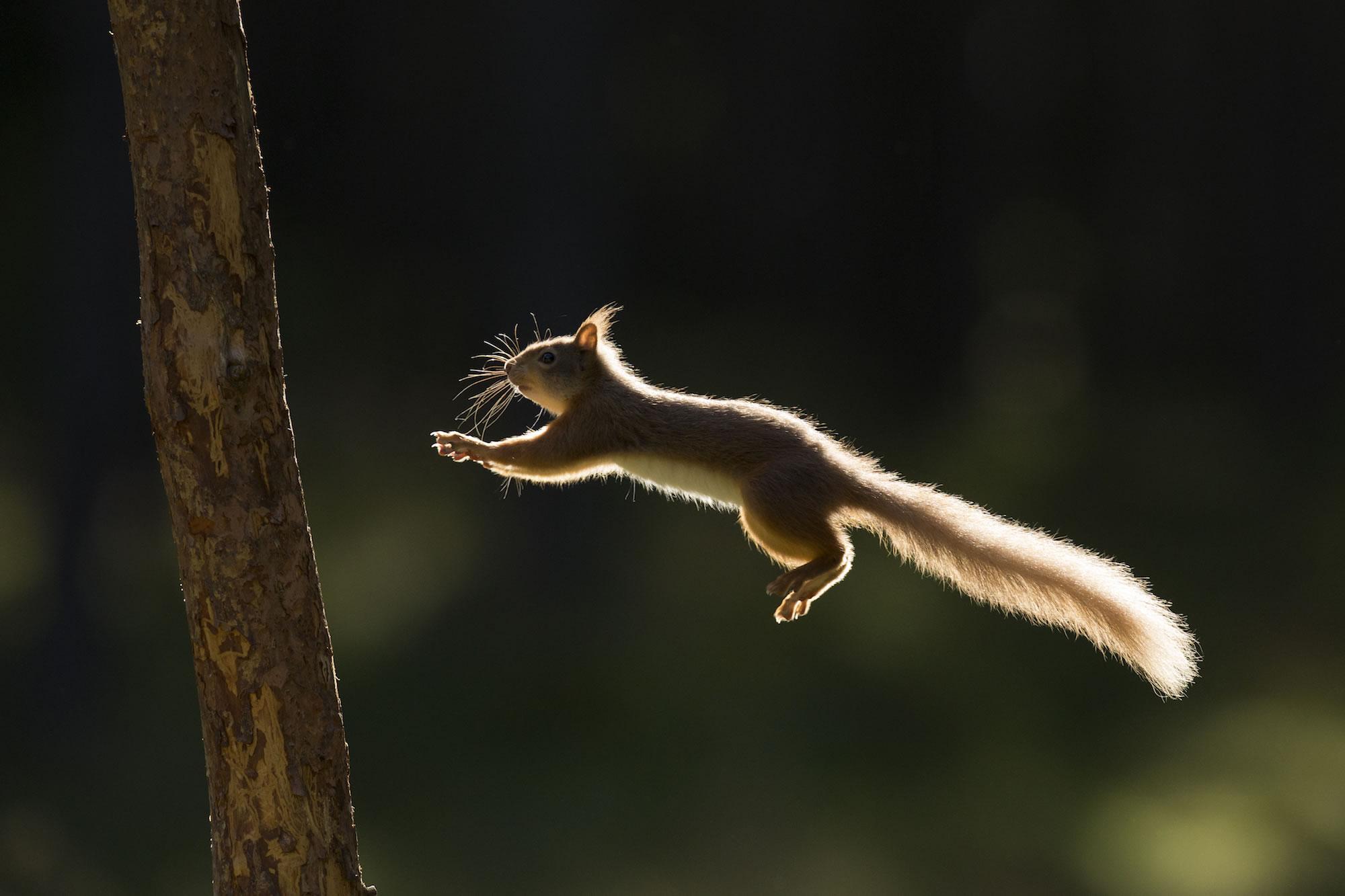
    Declining or at risk species include red squirrels, wild cats, capercaillie and great yellow bumblebees. Recovery or return of species such as beavers, cranes, sea eagles and pine martens happen slowly, while elk and lynx are among the species already made extinct.

    The Scottish Government has put 37% of Scotland’s seas into forms of designation, but damaging activities such as scallop dredging and bottom trawling are only banned from less than 5% of coastal waters. Government assessments reveal that the extent of seabed habitats continues to decline. Wild salmon populations are at historically low levels. Seabirds are feeding their chicks plastic waste.

    The Alliance recommends using rewilding as a natural solution for increasing absorption of atmospheric carbon, building rewilding into post-Covid green recovery plans, and establishing a native species recovery policy and a nationwide network connecting nature recovery projects.

    To sign-up for the online launch of ‘Choices’ on Thursday 22 July, 19:00-20:00, visit https://bit.ly/ChoicesLaunch.

  • Opinion piece: people aren’t an afterthought for Scotland’s rewilding movement – they are at the heart of it

    Opinion piece: people aren’t an afterthought for Scotland’s rewilding movement – they are at the heart of it

    Rewilding is going mainstream far quicker than we dreamt possible in 2019, when over 20 organisations across Scotland came together to form the Scottish Rewilding Alliance.

    Steve Micklewright is the chief executive of Trees for Life, and the convenor of the Scottish Rewilding Alliance.

    Rewilding is going mainstream far quicker than we dreamt possible in 2019, when over 20 organisations across Scotland came together to form the Scottish Rewilding Alliance.

    The new two-party Scottish Government prefers to call it “nature restoration”, but the concept is the same, and even Boris Johnson wants to “build back beaver“.

    The projects and organisations that make up the Alliance are very familiar with the social and economic benefits that well-designed rewilding projects bring for rural and coastal communities. But there is still some suspicion that the rewilding movement doesn’t understand the importance of people.

    This is where the debate will be won or lost, and that’s why the Rewilding and The Rural Economy report our friends in Rewilding Britain just published, with input from us, is so important. It is the first detailed examination of the opportunities available to Scotland from what it calls nature-based economies.

    The idea is that rewilding principles are used to create regenerative areas where nature can recover and communities can thrive. These areas, covering as much of 30% of our land and sea, would see a recovery in habitats, in species, and in abundance, but, crucially, they would also be home to growing and diverse communities and businesses.

    Nature-based tourism is perhaps what people first think of, but there are many more businesses which currently thrive in increasingly wild places. There are already signs of rapidly growing interest in sustainable native forestry; recreational fishing; low-impact, high-value farming; and so on.

    The report looks at 33 projects where rewilding techniques have been used, and on average, 10 years in, they employ 54% more people than their less wild predecessors. What’s more, the jobs created have been much more varied, allowing a wider range of people to stay in the area or move in for the longer term.

    These plus points stack on top of the wider community benefits of rewilding. To pick just one high profile example, earlier this month Trees for Life won its court case against NatureScot, and all their historic licences to shoot beavers were ruled unlawful.

    Evidence shows that well-located beaver populations do wonders for flood mitigation, and Rewilding Britain cite a study in Devon showing 30% lower peak water flow during storm events.

    Less directly, wilder lands and seas also draw down carbon and store it, reducing Scotland’s climate impact. Whether or not you think that should have a price put on it, the fact remains that it’s exceptionally valuable.

    The final – and perhaps most obvious – aim of rewilding is to restore biodiversity and bioabundance. There is a biodiversity crisis just as deep as the parallel climate crisis, and the old logic of “conservation” has failed.

    We do not need lines drawn on a map around tiny, fragile remnants of the plants and animals Scotland used to support. Only large scale approaches – systems thinking – will allow us to begin the work needed to leave bountiful wild lands and seas for future generations.

    If we are to see the economic benefits this report sets out, though, the changes required are not tinkering, and they will not be quick. Progress on this scale needs proper planning, but cannot be top-down, by ministerial decree. Nor can it be delivered just with local consent: plans of this sort need to be locally-led, and that takes time, and, ideally, government support.

    Westminster and Holyrood have both begun to pledge funding, with UK ministers committing to a £640 million Nature for Climate Fund, and Scottish ministers promising to put £500 million into our natural economy, including by expanding the Nature Restoration Fund secured by the Scottish Greens before this year’s election.

    These may be small sums compared to what both governments have spent on climate-busting projects over the years, but, if delivered well, the social and economic returns will make the case for a wider change in government funding priorities, both here and at Westminster.

    In some respects, Scotland is ahead of the rest of the UK: the report recommends that England and Wales bring in a community right to buy, along the lines of Scotland’s land reform legislation.

    But there is much more to do. The opportunity is there for real community restoration alongside restoration of our wild land and seas. Before the Highland Clearances, rural Scotland used to support far larger communities, and barren landscapes benefit no one. Ministers have signed up to the idea that “rural repopulation is a vital objective, alongside nature-based solutions”, and we will hold them to that.

    Across much of Scotland, the kernels exist for nature and rural communities alike to recover. The Alliance will be pressing the new Scottish Government hard to deliver on radical nature restoration measures, and to do them in a way which puts community benefit and local leadership first.

    This piece originally appeared online at https://www.pressandjournal.co.uk/fp/opinion/3569178/rewilding-scotland-people-heart-nature-restoration-opinion 

  • Lynx and beaver reintroductions should be part of any Green agreement with SNP, says coalition

    Lynx and beaver reintroductions should be part of any Green agreement with SNP, says coalition

    The Scottish Rewilding Alliance is calling on the Scottish Greens to make the trial reintroduction of lynx and the widespread relocation of beavers a core part of any agreement they reach with the Scottish National Party.

    The Scottish Greens manifesto stated they ‘support the gradual reintroduction of species native to Scotland where appropriate and in cooperation with local communities, including a lynx reintroduction trial’.

    “The Scottish Greens have committed to restoring nature through rewilding, including a trial lynx reintroduction. If they reach an agreement with the SNP that includes this commitment, many will see this as a sign they can achieve real change through cooperation,” said Steve Micklewright, Scottish Rewilding Alliance Convenor and Chief Executive of Trees for Life.

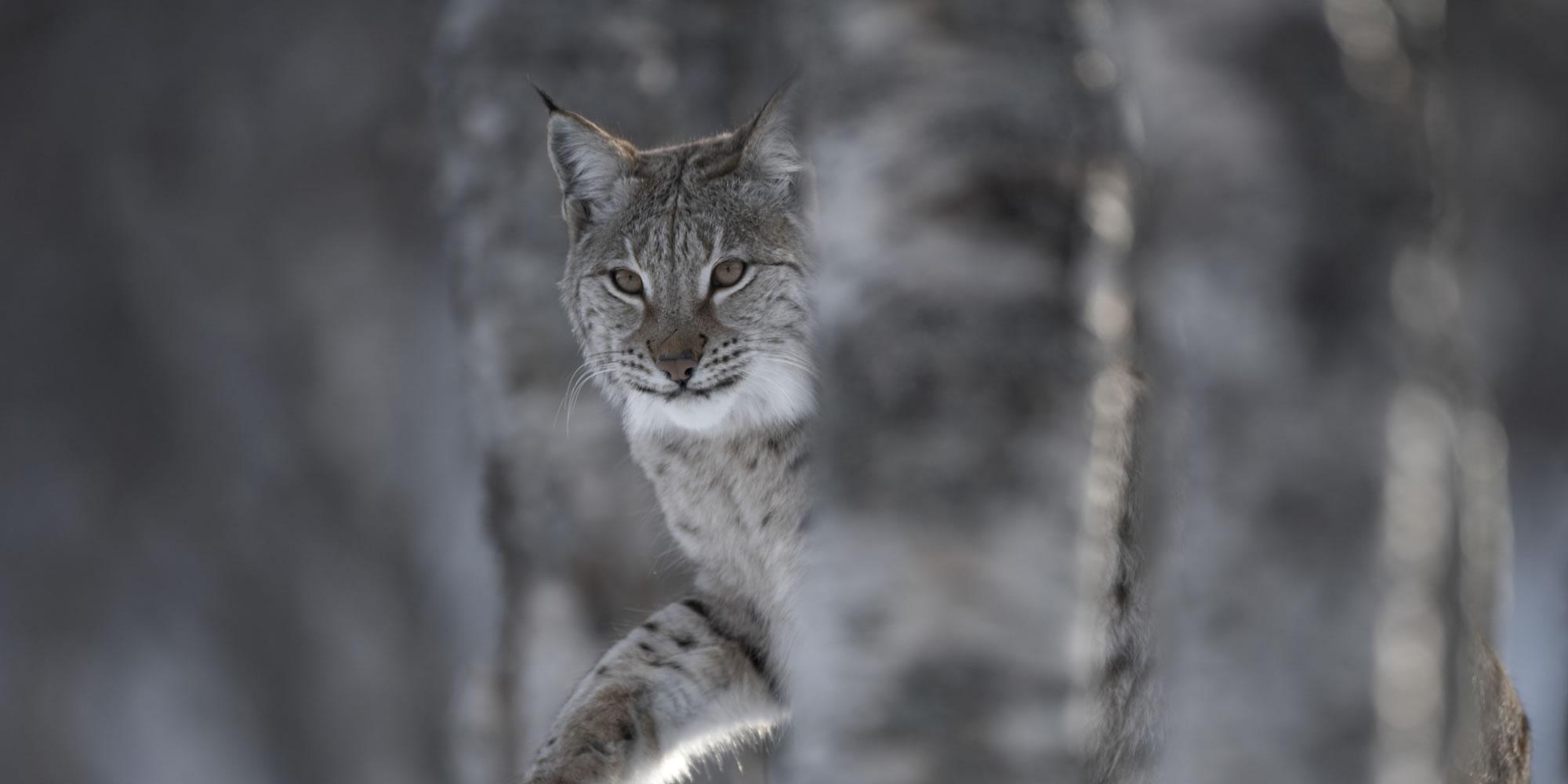
    The native Labrador-sized Eurasian lynx was driven to extinction in Scotland some 500-1,000 years ago through hunting and habitat loss. It has now been reintroduced to many areas of Europe, including in areas used for farming, hunting, forestry and tourism.

    Lynx areshy and solitary woodland hunters that avoid humans. Research suggests the Highlands has enough habitat to support around 400 lynx, which could help to restore nature’s balance by controlling numbers of roe deer, the cat’s preferred prey.

    An opinion poll survey by respected market research organisation Survation for the Scottish Rewilding Alliance showed that 52% of Scots supported a pilot reintroduction of lynx, with just 19% disagreeing.

    Steve Micklewright said: “A trial reintroduction of lynx will have very strong public support, and there would be no clearer signal that Scotland intends to become the world’s first Rewilding Nation.”

    The Scottish Rewilding Alliance also wants to see a better approach to beaver relocations to suitable areas of Scotland where beavers are still missing, to help stop the needless killing of wild beavers when they cause problems for farmers on Tayside.

    Beavers create wetlands that can reduce flooding, improve water quality, and benefit fish and other wildlife. But since the Government legally protected beavers in 2019, its nature agency NatureScot has issued dozens of killing licences – resulting in 20% of the Scottish population being killed in 2019 alone.

    Steve Micklewright said: “Nearly all of these beavers could have been relocated to parts of Scotland where local landowners and communities want the benefits they bring, including reducing the risk of flooding. A deal between the Greens and SNP deal must tackle this needless waste of life.”

    The Survation poll showed that 66% of Scots support beaver relocation ahead of their authorised killing. NatureScot has identified 100,000 hectares of potential beaver habitat in Scotland, but Ministers have decided to block beaver relocation to these areas.

    “Public opinion is in favour of beaver relocation and we have huge areas where they could be moved to. The Greens must ensure that this can happen,” added Steve Micklewright.

    The Scottish Rewilding Alliance, a coalition of over 20 environmental organisations, is calling on the Scottish Government to declare Scotland the world’s first Rewilding Nation, with the rewilding of 30% of Scotland’s land and sea within a decade.