
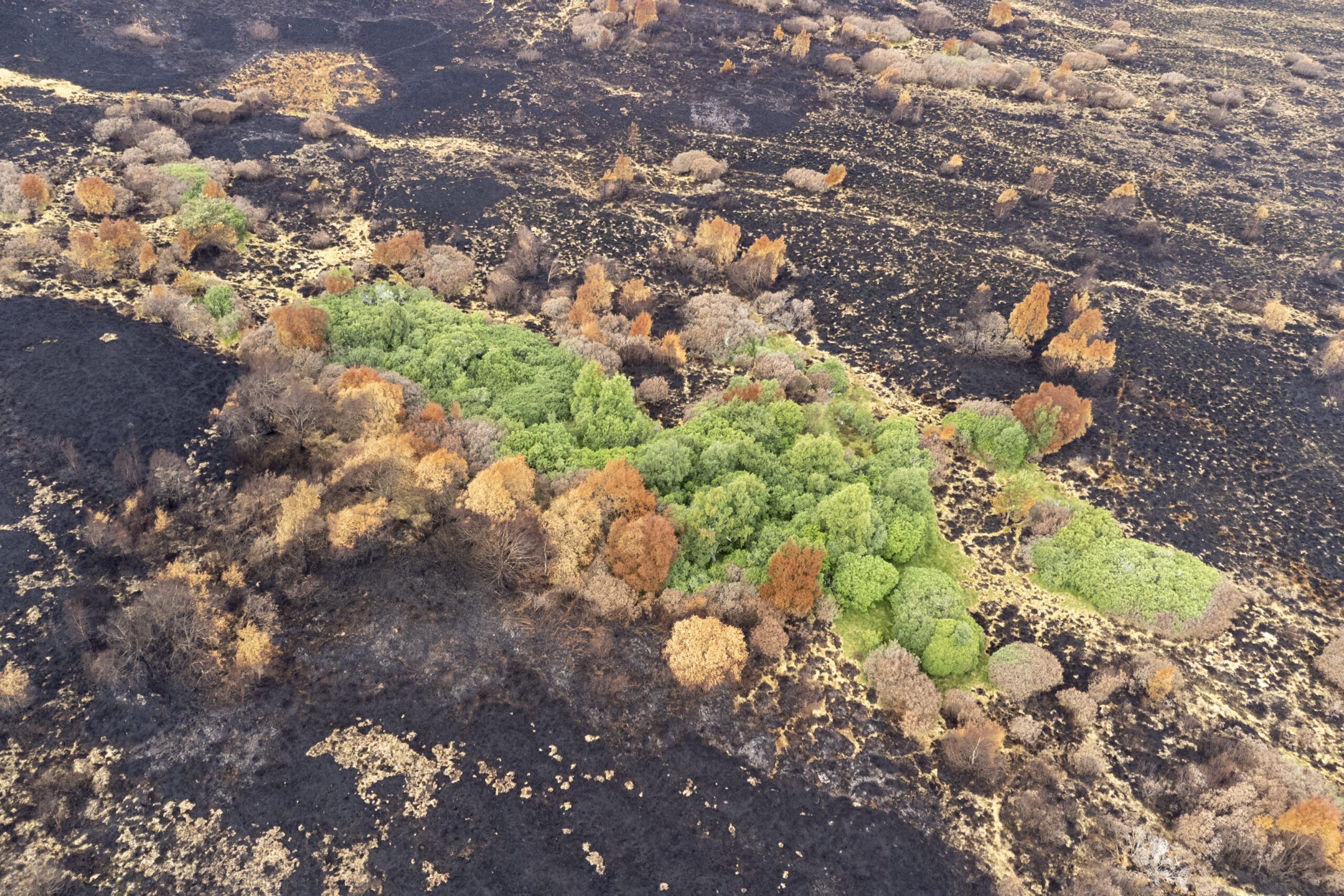
The Scottish Rewilding Alliance is calling on Scottish Ministers to convene a national Scottish Landscape Resilience Summit to bring together land managers, the Scottish Fire and Rescue Service (SFRS), scientists and policymakers to develop a long-term strategy for adapting to Scotland’s growing wildfire risk.
The call follows the recent major wildfire that broke out in the Cairngorms near Aviemore, burning around ten square miles of moorland, woodland and forestry.
Campaigners are calling for a two-tier approach: strengthening emergency response and public fire prevention measures in the short term, while also investing in landscapes that can better retain water and withstand drought and fire over the long term.
The call comes as concern grows over the increasing risk of wildfires in a changing climate. The Alliance says Scotland needs to build on the Scottish Government’s previous wildfire summit in 2025, which focused on emergency response, equipment and public behaviour change. Campaigners say it’s time to add long term landscape resilience and natural water management to the next phase of planning.
The proposed summit would explore how different approaches could work together, including conventional fire prevention measures, alongside “fire-smart” ecological restoration — such as rewetting peatlands, establishing ponds, creating native broadleaf buffer zones and restoring beaver wetlands.
Tom Bowser, Co-Convenor of the Scottish Rewilding Alliance, said:
“If we are to successfully adapt our landscapes for an unstable future in a changing climate, we need to bring together different perspectives, share knowledge and build trust. We need to learn from each other – and from elsewhere – about what works to reduce wildfire risk.
“Artificial fire breaks, carefully managed grazing to create a patchwork of different land types, wetland habitats and peatland restoration must all be on the table.”
The Alliance says landscape resilience measures should be seen as part of a broader wildfire strategy, not a replacement for emergency response or fire prevention. Creating fire resistant landscapes is a shared responsibility that falls to everyone who owns or manages land, including those actively restoring nature.
Lisa Chilton, CEO of SCOTLAND: The Big Picture said:
“Restoring nature as our climate changes and wildfires escalate is a two-part story: managing young habitat growth today is the essential bridge to a more fire-resistant landscape tomorrow.
“Young woodland and scrub need to be managed in such a way as to minimise fire risk while still allowing them to develop into mature, fire-resistant woodlands. So it’s vital that rewilding land managers, like all land managers, have robust wildfire plans in place. A Scottish Landscape Resilience Summit, bringing together all stakeholders including rewilding representatives, would play an essential role in finding shared solutions.”
Organisations and groups wishing to show support for the call for a Landscape Resilience Summit can sign here: