
Fire, flood, and drought aren’t separate disasters — they are climate shocks with the same root cause. Restoring Scotland’s land is our first line of defence.
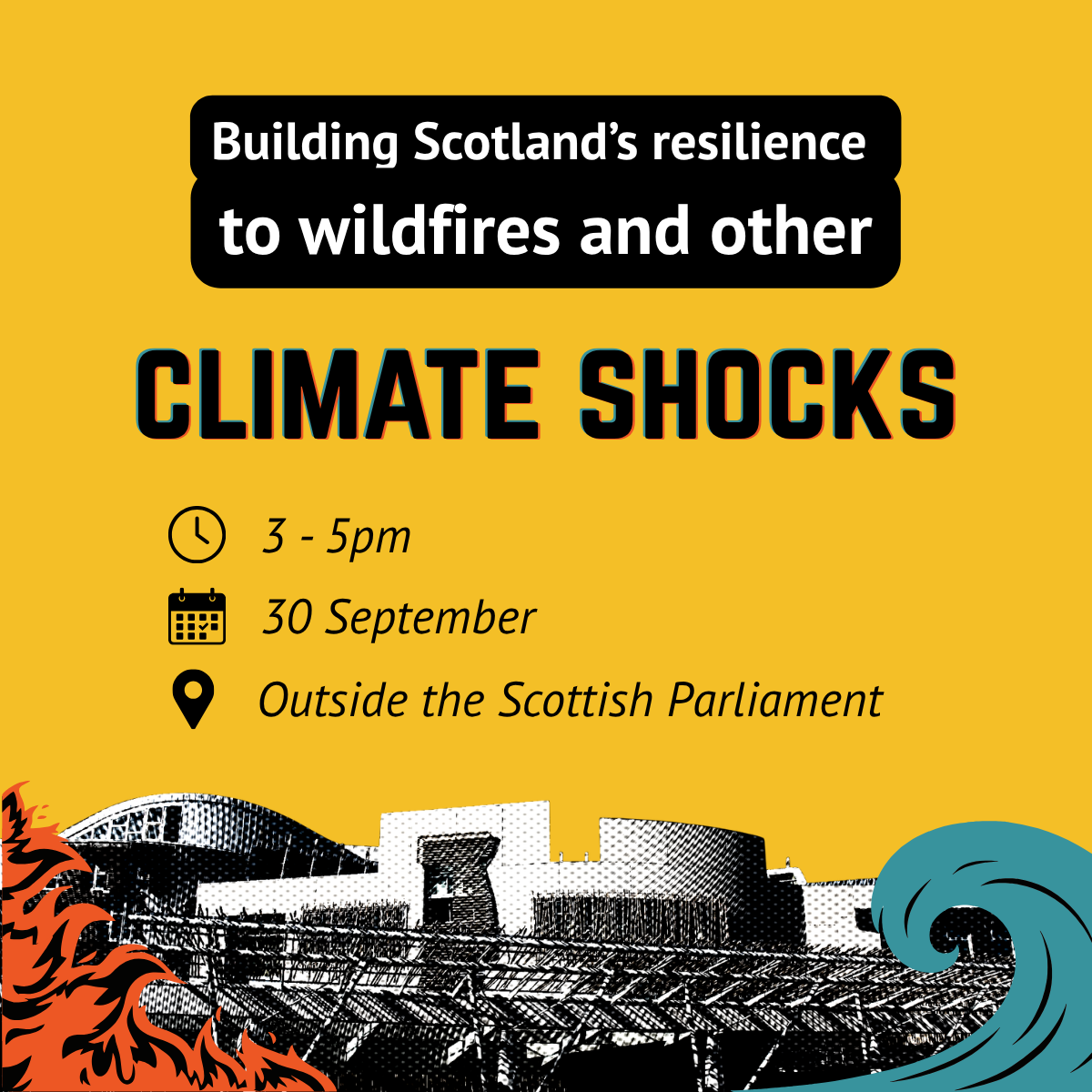
We’re calling on the Scottish Parliament to back rewilding as Scotland adapts to escalating climate shocks, including wildfires, drought and flooding. On Wednesday 30 September, MSPs will debate a motion on increasing Scotland’s resilience to climate shocks. We’ll be there to show support for building up Scotland’s climate defences.
Sign up to attend the rally, then use the images available below to spread the word.
Sign up to the rally
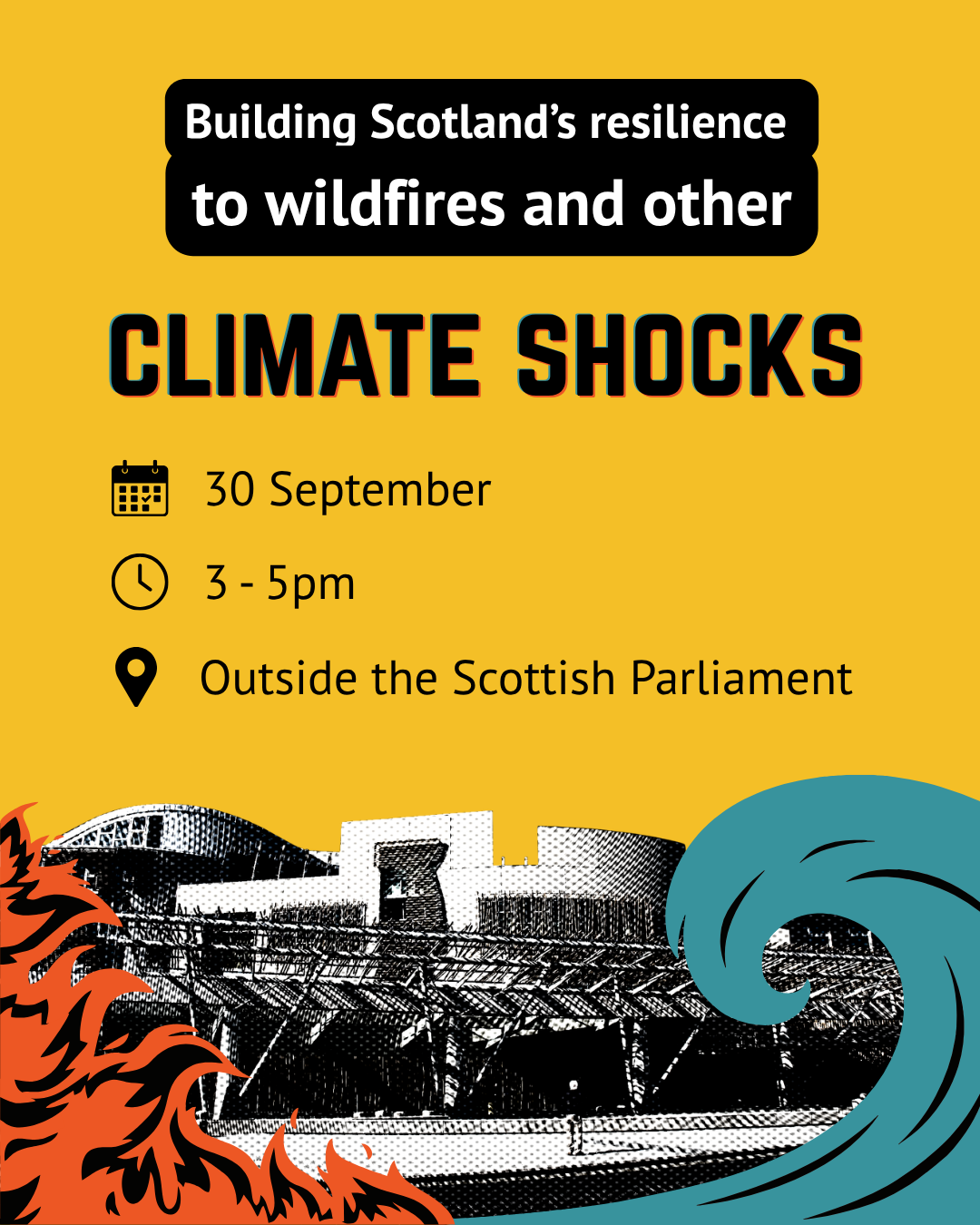
Extreme weather is no longer a future threat in Scotland — it’s here.
From severe wildfires burning through much-loved landscapes, to streets under water and rivers running dry, our communities are paying the price for political gridlock.
On Wednesday, MSPs are gathering at Holyrood for a debate on Scotland’s climate defences. Join us outside the Scottish Parliament on Wednesday 3 – 5pm to show support for the debate.
Images for sharing
Building up our climate defences
Scotland leads the world in climate targets, but lags behind in climate defences.
Government policy has treated landscape adaptation as a balancing act between stakeholder groups. But while ministers try to avoid friction, extreme weather is already forcing radical, unmanaged changes on communities.
It’s time for open, honest conversations about the way forward.
Scotland needs a dedicated Climate Shock Fund to provide the investment needed to scale up nature-based solutions alongside conventional infrastructure, alongside a national Landscape Resilience Summit to break through the political gridlock.
Scotland’s vulnerability to climate shocks
- Scotland suffered 241 severe wildfires in 2025 alone. The Dava Moor fire burned over 11,800 hectares — making it the largest in UK history — and released twice as much carbon into the air as all of Scotland’s annual peatland restoration projects saved that entire year.
- Around 284,000 homes and businesses are at risk of flooding — a figure set to hit 400,000 by 2080 as Met Office models show extreme downpours becoming up to 10 times more frequent.
- 2025 was the driest year in eastern Scotland since 1976. Severe dry spells forced SEPA to place major river catchments (like the Tweed, Don, and Lunan Water) under Significant Water Scarcity alerts for over 30 consecutive days, threatening farm crops, livestock, and drinking supplies.
- Coastal erosion rates have accelerated by nearly 40% since the 1970s. Over £1.2 billion in roads, rail lines, water works, and homes are at direct risk by 2050.
- Unchecked climate impacts could cost Scotland’s economy £11 billion to £45 billion per year by 2050 (up to 20% of GDP). Taking early action could save over £30 billion annually in avoided damages.
The action bottleneck
- Annual peatland restoration has consistently missed statutory targets by 48% to 70%
- Woodland creation has suffered a 40%+ shortfall against statutory targets.
- According to the Climate Change Committee, over 40% of national adaptation targets are stalled or inadequate, and over 50% lack basic baseline delivery data.
Nature-based climate defences
- Healthy wet peat holds up to 20 times its weight in water and stops fires from burning underground. Every £1 invested in peatland restoration yields up to £4.50 in public benefits.
- Beaver complexes slow river flow rates by up to 60% during peak storm events and hold millions of litres of water, creating hydrated green firebreaks that resist ignition during severe droughts.
- Native broadleaf trees (birch, alder, willow) have high foliage moisture (exceeding 100–200%) and lack volatile resins, making them effective living firebreaks.
- Saltmarshes reduce incoming storm wave energy by up to 90% across just 80 metres, shielding sea walls and inland communities from compound flooding.