A letter from the Scottish Government on the topic of beavers to Glen Affric.
Dr Alasdair Allan MSP, Acting Minister for Climate Action, has asked the Scottish Rewilding Alliance to publish this letter on its website to update our members and supporters.
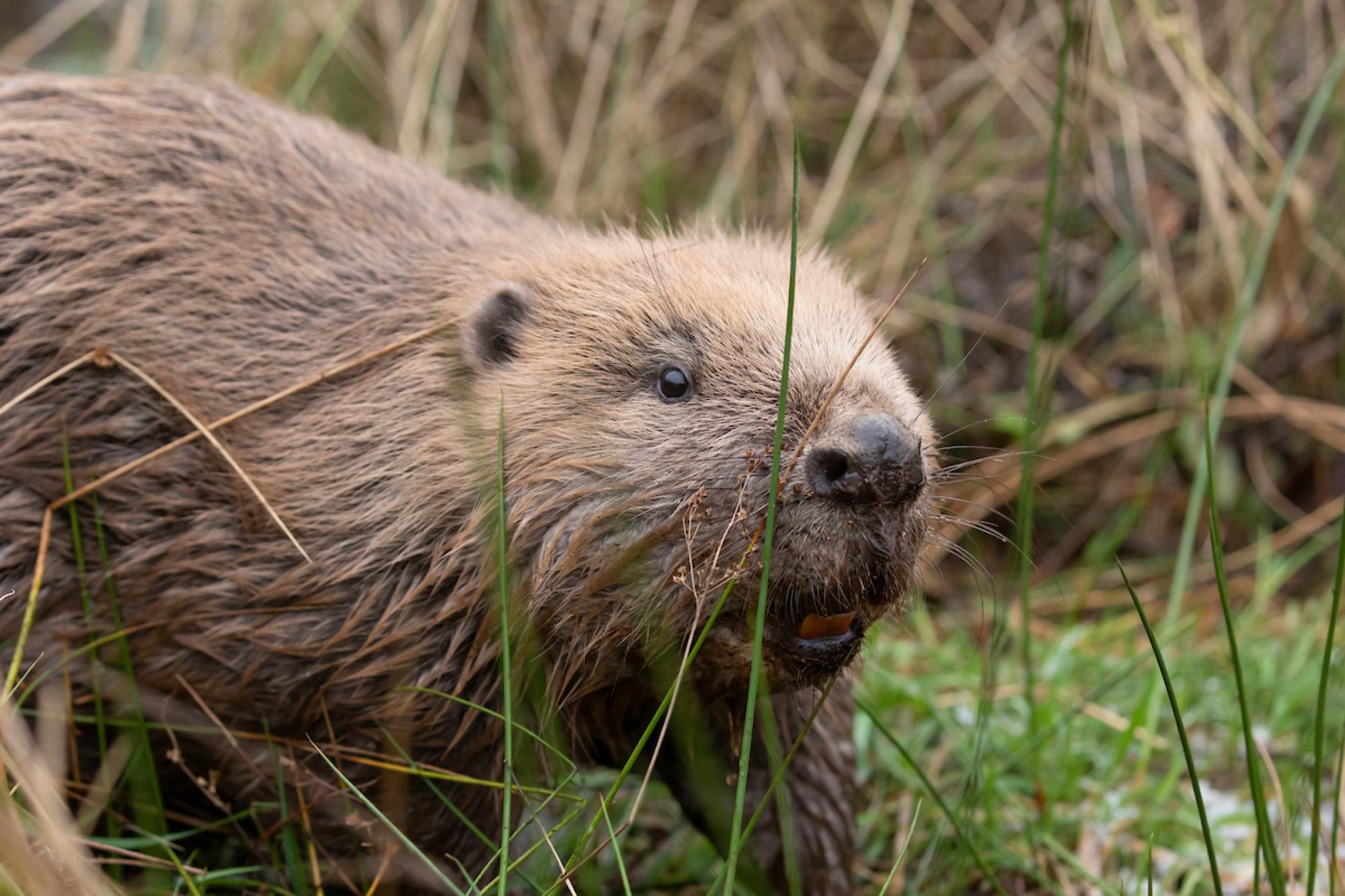
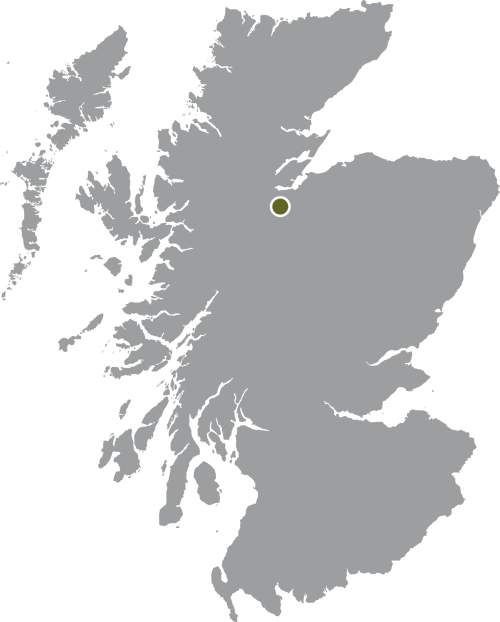
This follows a public outcry about the decision by Scotland’s nature agency, NatureScot, to delay the granting of a licence to translocate beavers to Loch Beinn a’ Mheadhoin in Glen Affric. We at the Scottish Rewilding Alliance thank all those who wrote to the Scottish Government to express their concern about this decision and the process through which it was reached.
Your voice is being heard.
In this letter, the minister reaffirms the Scottish Government’s commitment to the targeted reintroduction of beaver populations in Scotland. We believe that a robust licensing process is necessary in order to ensure that species reintroduction projects are appropriately designed and run, engaging local communities and others in the process.
We do not agree that a single, conventional translocation project should require ministerial intervention and unnecessary delays that deter others from undertaking their own conservation translocations.
We look forward to meeting with the Scottish Government later this month to discuss this situation.
A little west of Loch Ness, in a quiet hanging valley tucked largely out of sight, Sam Hesling’s timber-clad home offers panoramic views across an expanse of native woodland that his family helped create. But Sam isn’t a typical landowner presiding over a large Highland estate, he’s an engineer and the Chair of the Abriachan Forest Trust, a community-run charity with a remarkable story.
The Trust celebrated its 25th birthday last year, and Sam’s family has been part of its evolution from day one. The story goes that his granny first caught wind of the fact that Forest Enterprise had Abriachan forest on their ‘disposal list’. Following a conversation that began in the village car park, an invitation was extended to the community to buy what was at the time, a 534-hectare conifer plantation.
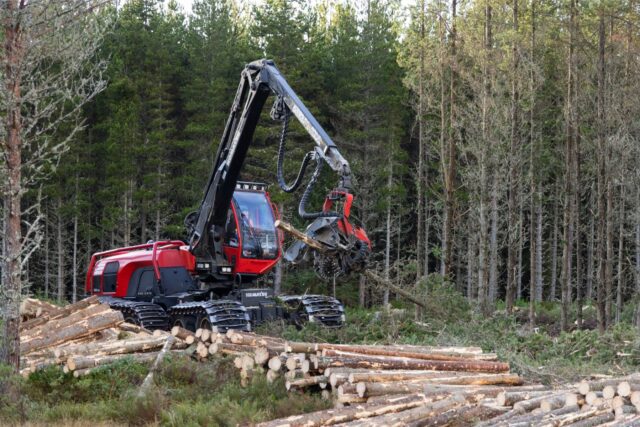
Back in 1998, modern access rights had yet to be enshrined in Scottish law, and the community’s interest was partly motivated by a desire to secure access to the forest for local people. However, the Trust soon began boosting biodiversity by replacing some of the non-native conifers with birch, oak, aspen and Scots pine, while at the same time, diversifying the age structure of the remaining plantation.
A 75% increase in wildlife diversity has been recorded.
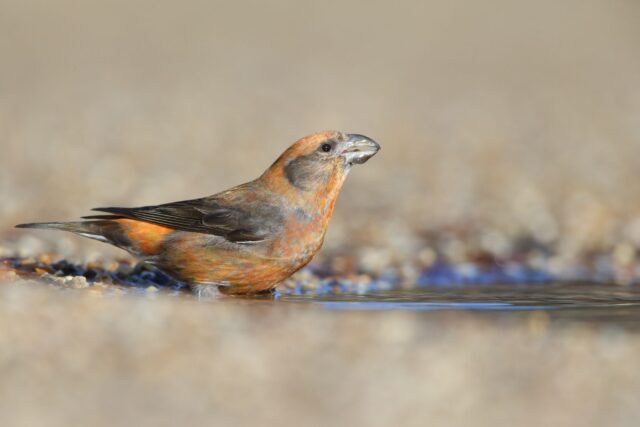
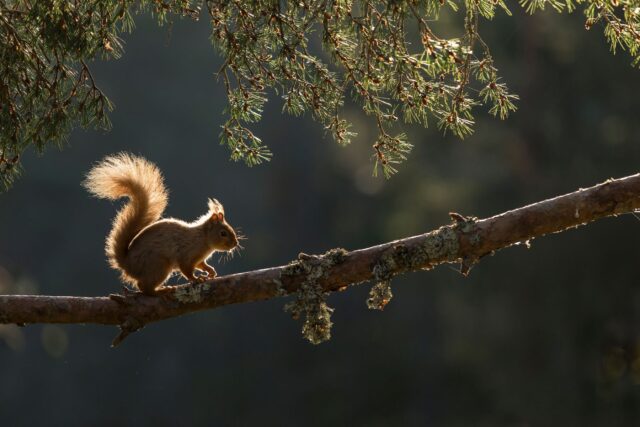
Since those early beginnings, 125,000 native trees have been planted and a 75% increase in wildlife diversity has been recorded. The forest is home to black grouse and crossbills, while red squirrels and pine martens have made a comeback. Just as importantly for the Trust, more than £3.7 million has been invested in the local economy, seven part-time jobs have been created and a community-led application has been made to reintroduce beavers. But all these achievements only scratch the surface of what the forest has come to represent.
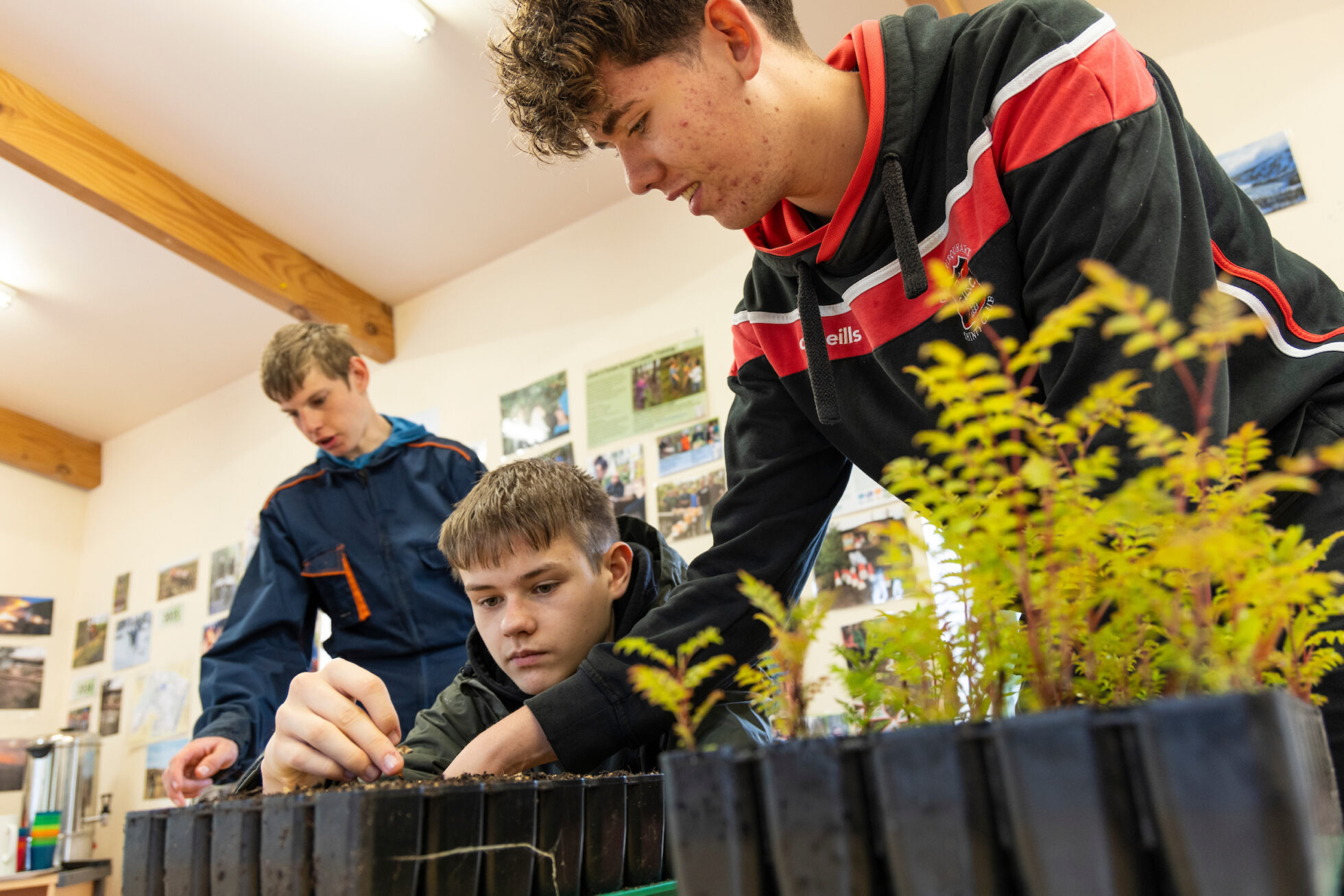
Like Sam, Suzann Barr is a member of the local community and has been a part of the Trust’s development from the beginning. It’s immediately clear that she is a force of nature in her own right and today, Suzann is supervising two students from the nearby Glen Urquhart High School.
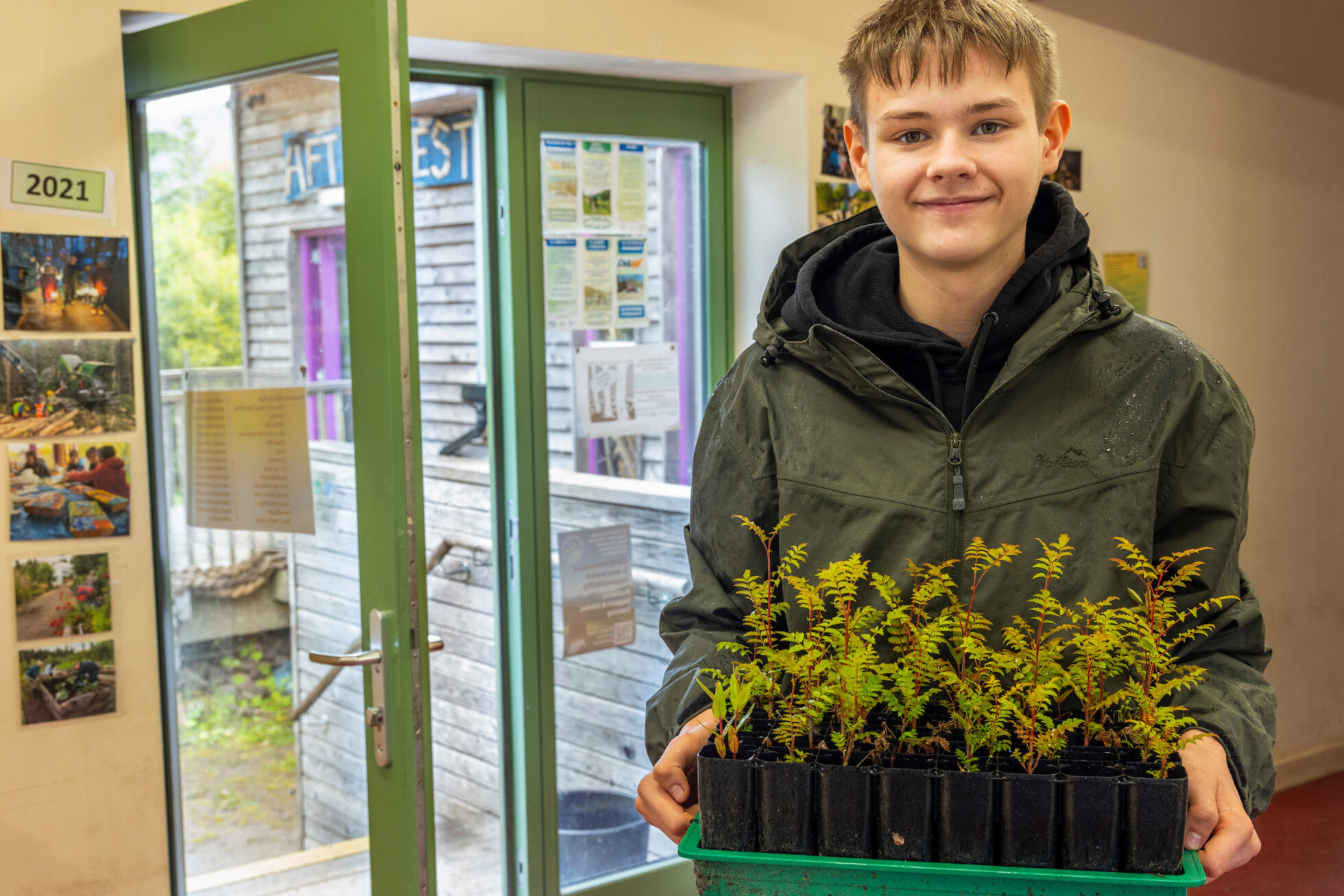
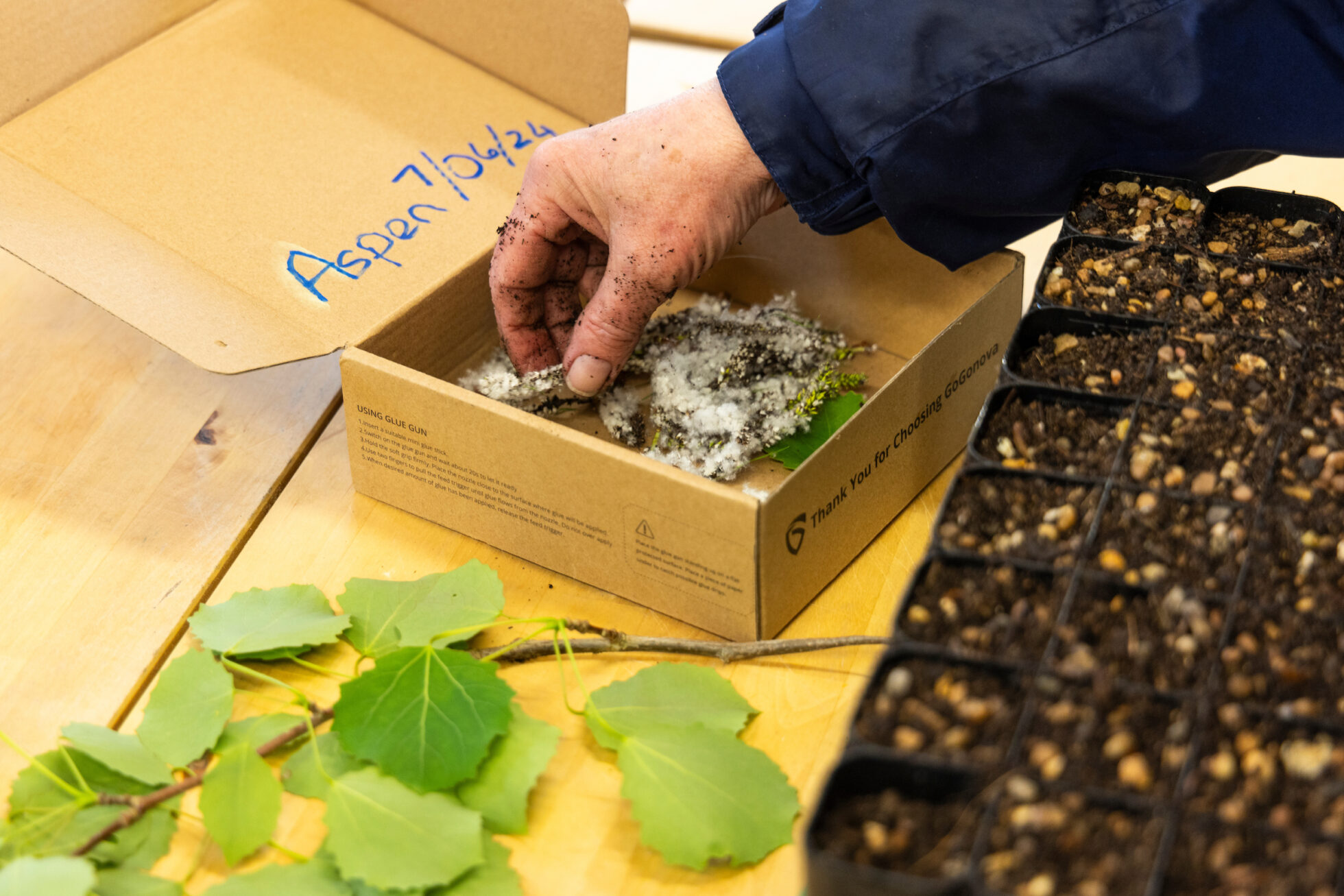
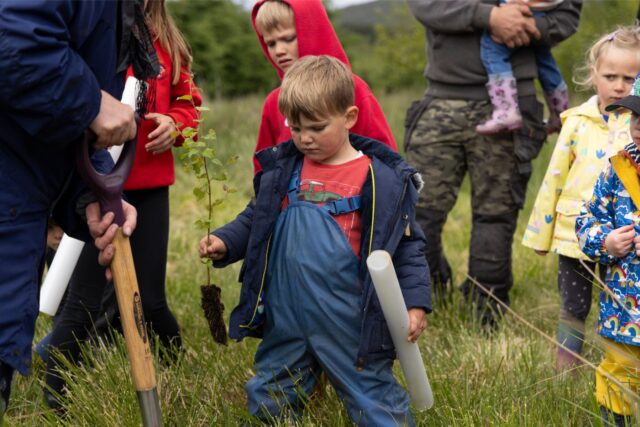
Rory and Duncan are finishing their Level 4 Forest and Outdoor Learning Award – just one of a broad range of schemes for young people. The lads are planting a mix of native trees, with the Trust keen to get volunteers involved in all stages of woodland restoration, from collecting seeds, through to planting out saplings.
More than 35 young people and adults who have received such grounding at Abriachan have moved on to employment in land-based jobs. ‘That’s what we’re all about,’ says Suzann. ‘Those are people who are going to have an impact on how we treat our planet.’
‘Is it hard to get young people enthused about this stuff?’ I ask. ‘Not at all’ says Suzann. ‘They enjoy coming here. We get kids coming back, desperate to show their parents what they’ve done – to show off their birdbox, or the tree they planted, and it’s just a delight to hear their enthusiasm.’
‘People love to see the change they’ve helped create.’
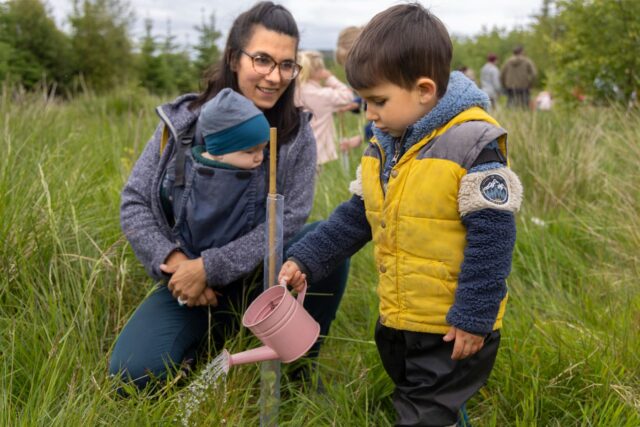
Most of the wildwood becoming established at Abriachan is regenerating naturally, but the Trust continues to encourage volunteers to plant trees, because it helps to nurture a connectedness with the forest. ‘People love to see the change they’ve helped create,’ reflects Suzann.
Sometimes, children choose to plant their trees too close together, ignoring Suzann’s instructions. “Our trees are friends!” they say, and you just have to let that go,’ she explains. ‘In the end, it’s the experience that matters.’
And that experience can have a profound impact. The Trust works with all sorts of people from early years nursery groups through to adult learners. Each Thursday, Suzann welcomes kids with additional support needs from Inverness: ‘kids who can’t cope with the standard education system,’ as she puts it.
‘A lot of what we do is based around the forest school ethos,’ says Suzann. ‘Being in the outdoors helps people feel calmer and more connected with nature. That’s something we really strive for.’
‘Their time here forms an important part of their week.’
Adults and young learners all work and eat together – with food an important focus at Abriachan. ‘Some of our adults are really quite socially isolated,’ says Suzann. ‘So, their time here and the relationships they develop, forms an important part of their week.’
Abriachan has become a place where nature and people come together, fostering a common sense of purpose. There is a palpable family atmosphere, which reflects the thousands of hours invested by this community. ‘If we could go back in time, I don’t think any of us could have imagined what the Trust has become and the impact it’s had,’ says Suzann. ‘It’s taken 25 years, but it’s a long game we’re playing. You have to be patient.’
The Abriachan Forest Trust is a member of the Northwoods Rewilding Network, and despite some enduring local wariness about the R-word, the Trust was pleasantly surprised by the overwhelming support they received for their recent proposal to reintroduce beavers. ‘Now the idea is in people’s heads, they just want to get on with it,’ laughs Suzann.
So, does community-based nature restoration work?
It is clear that one of the key benefits of community ownership at Abriachan is that local people are able to influence land management decisions, to tailor the forest to their needs and feel that they retain control. Change can be a scary thing, but here, the changes have been initiated and managed by the community. This is their forest, and its recovery is down to their work.
‘So, does community-based nature restoration work?’ I ask Sam. ‘Just look around,’ he says. ‘This used to be a totally homogenous conifer plantation. Now look at it.’
It’s October in Lochaber and the weather has read the script. A brisk wind lends an autumnal chill, ushering clusters of showers across the landscape. Gone are the calls of summer waders and gone too are the lush greens from the strath. The ground underfoot is waterlogged, the spongy sphagnum oozing water with each step.
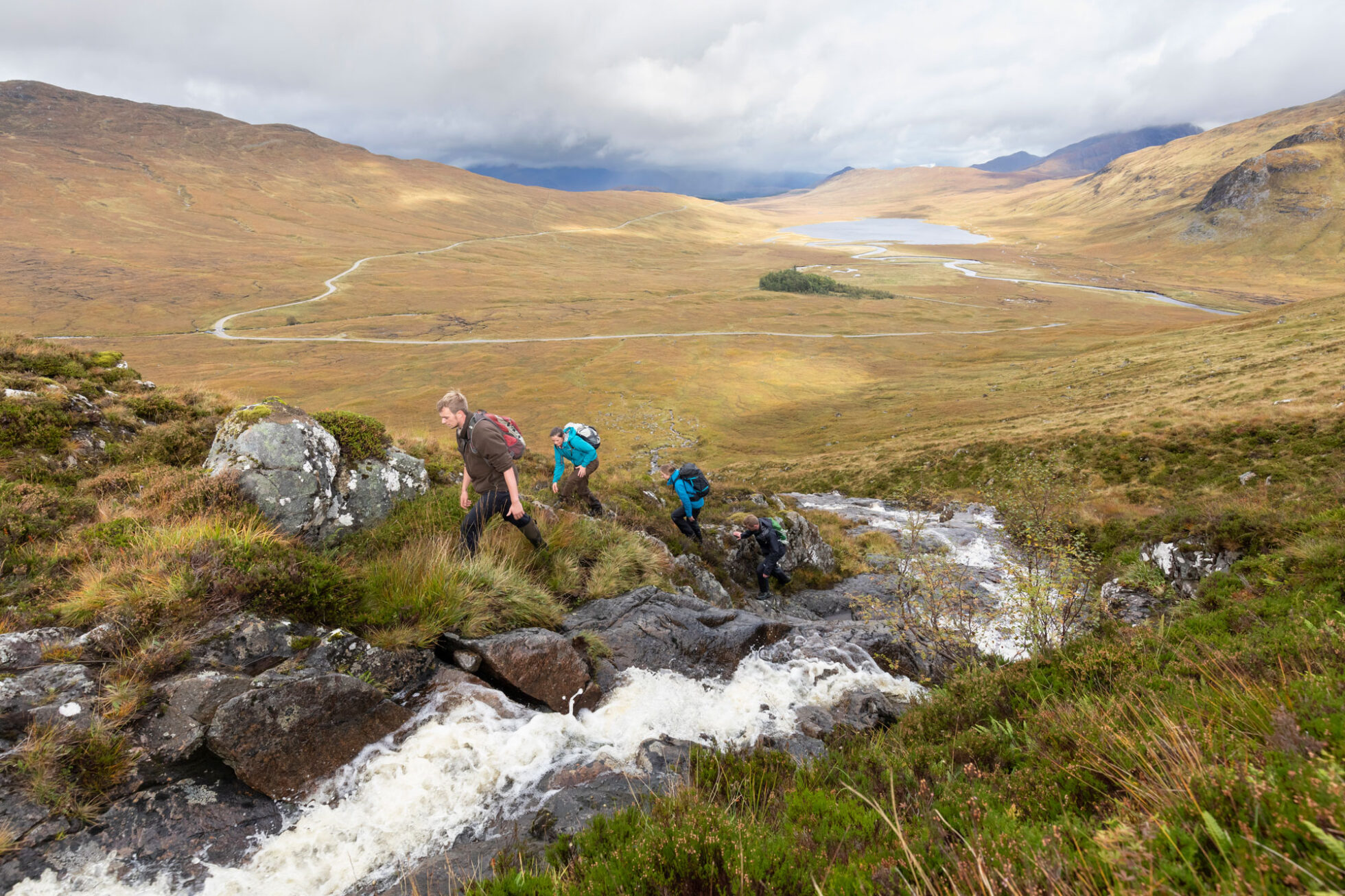
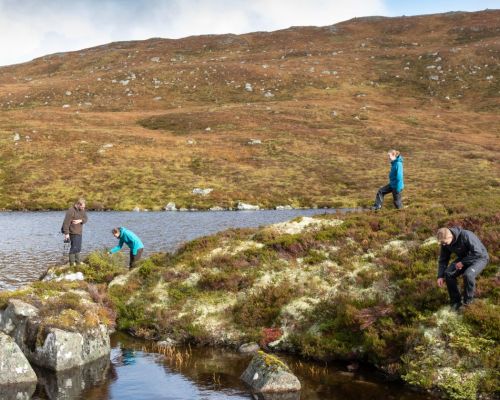
In a line, our team of five marches up the hillside, following a lively burn that drains a loch high above us. It is a steep climb that sets my heart pounding, but the views continue to improve as we gain height. Spirits are buoyant, because although we are looking for a rare species, this particular lifeform cannot evade us. That is the beauty of tracking down wild trees: if you know where they are, they’ll be there.
Our quarry is a scattered population of mountain birch (Betula pubescens tortuosa), a high-altitude form of the familiar Highland species the downy birch (Betula pubescens). These trees once grew extensively across Scotland’s mountains above around 600m, forming a forest zone that is known elsewhere as the “birch belt”.
The birch belt is a habitat that has been almost completely obliterated
Montane woodlands of any sort are rare in Scotland – less than 5% of our total native woodland lies above 400m – and the birch belt is a habitat that has been almost completely obliterated; lost from our landscapes for so long that it has faded from our cultural memory.
Birchwoods would naturally be the key component of Scotland’s treeline across much of the country, as is still the case in neighbouring Scandinavia. Over there, mountain birch grows at higher elevations than Scots Pine, continuing up the hillsides and merging with alpine willows, dwarf birch and juniper scrub as the last tree species standing. Here in Scotland, those same habitats have been lost through centuries of over-grazing, apart from a few willow bushes clinging on in places herbivores cannot reach.
Across much of southern Norway, an area that is geologically and climatically similar to Scotland, vast swathes of alpine plants, shrubs and trees carpet the uplands.
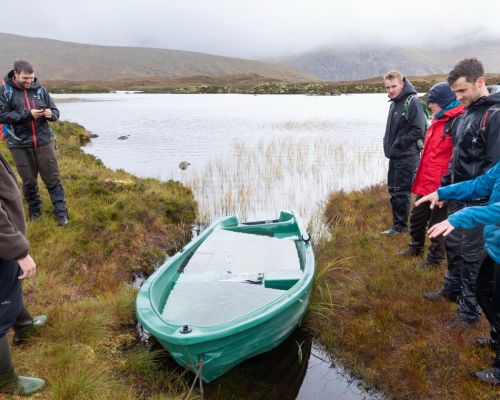
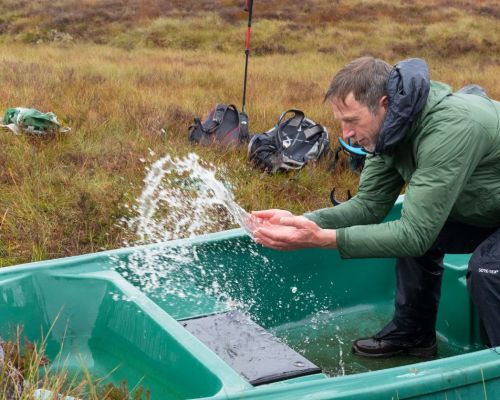
Our team picks a path through some deeply gullied peatland and a brief lull in the showers allows us a glimpse of our destination: a chain of small islands strewn across a loch. Before long we are out on the water, zigzagging in an old rowing boat towards one of the larger islands, where we can see groves of trees growing around the water line.
Once ashore, the team splits up to scour the island for botanical treasures. It is immediately clear from their reactions that these unremarkable-looking islands are full of floral interest. Despite being separated by less than 50m of peaty water, they are almost never visited by the resident red deer. As a result, the vegetation on these islands exists in an entirely different grazing regime to the surrounding moorland. From the abundant lichens, to the mountain birches and willow scrub that survives here, they represent an ecological counterfactual: a snapshot of what Scotland’s uplands could look like.
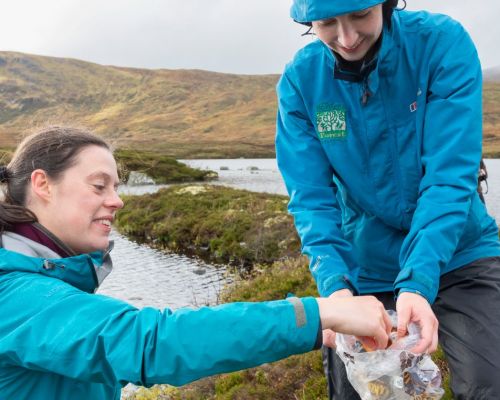
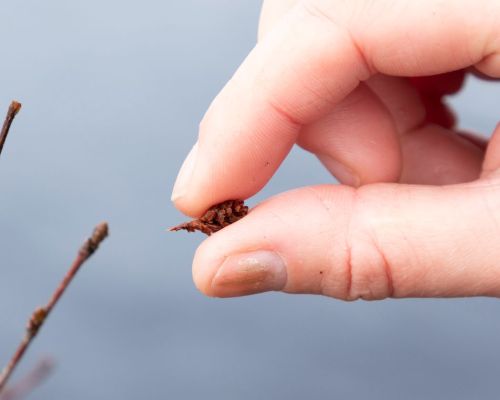
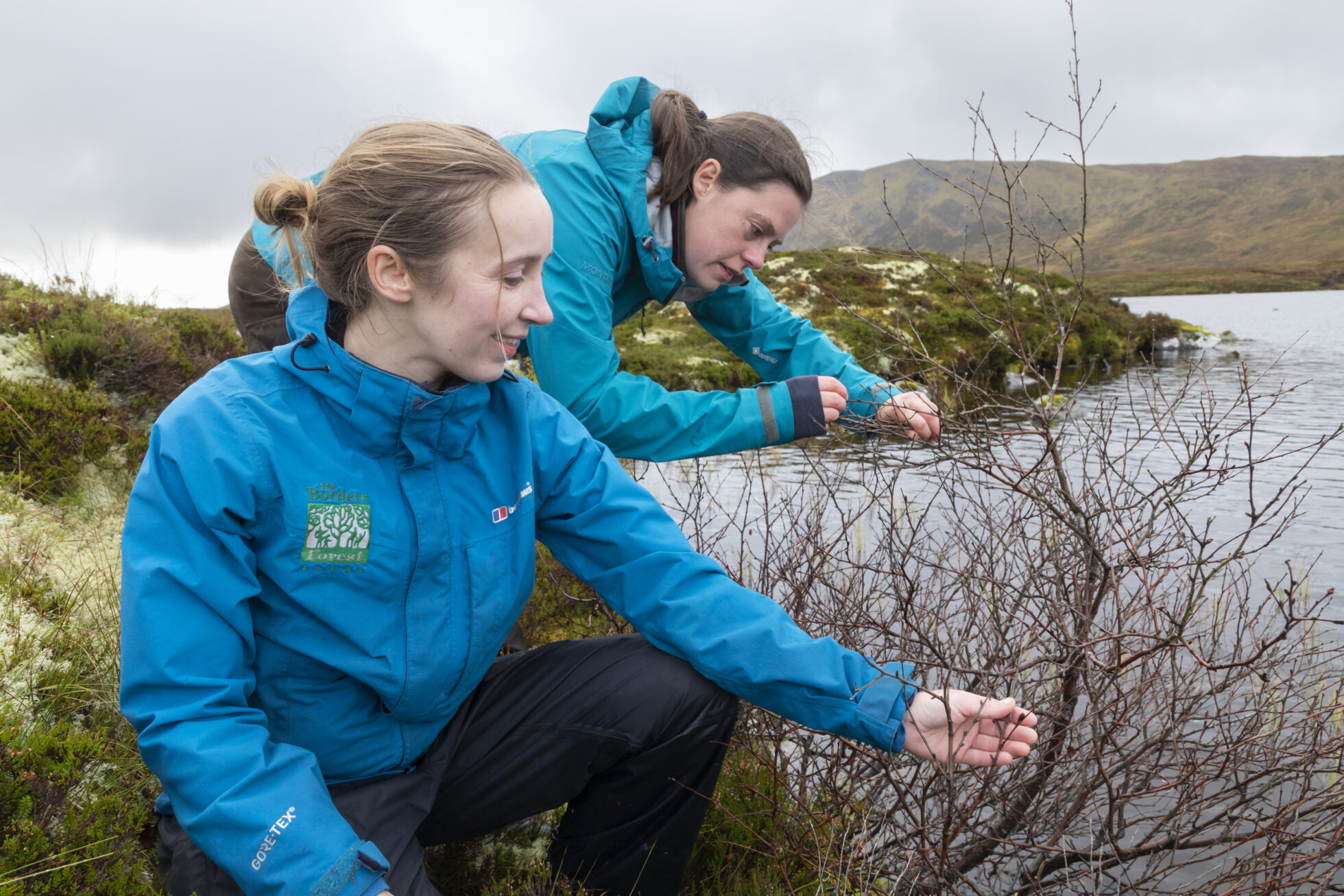
“Have you found any with catkins?” Nicky Hume asks, reminding me that we didn’t just row out here to stare admiringly at the little trees. Catkins are the sexual organs of many tree species: hanging clusters of tiny flowers that are either male or female in form and function. We were targeting female catkins on this trip because at this time of year they will be ripe with seed.
We find our prize – hundreds of catkins hanging like Christmas decorations
Shaking my head, we wander towards a clump of birches growing on the southern side of the island. Their leaves are already golden, several weeks further into autumn than their counterparts in the glen and, although the trees are only a metre in height, they have thick, multi-stemmed trunks that betray their considerable age. Hanging from their branches, we find our prize – hundreds of catkins hanging like Christmas decorations.
Our mission to collect these seeds has come about as a result of the Mountain Birch Project, a new initiative with two objectives. The first is to understand what remains of Scotland’s montane woodlands, by mapping those places where trees still grow above the 600m contour. The second is to harvest viable seed from wild populations of mountain birch, so that these altitude-adapted trees can be grown in nurseries and used to reinstate Scotland’s birch belt.
That ambition is close to Nicky’s heart, both personally and professionally. Working as a woodland adviser for the Borders Forest Trust, she hopes to return mountain birch to the high ground of the Moffat Hills, where it remains a missing piece of the ecological puzzle. As Nicky harvests catkins, she explains to me that the seed will be grown on at Proven Plants, a new nursery specialising in native trees, before the Trust plants the saplings out in the Borders.
There is no ecological reason why significant parts of the Scottish Borders couldn’t more closely resemble landscapes like this in northern Sweden.
But the Mountain Birch Project is much bigger than our team of five. It hopes to connect with people outside of conservation and leverage Scotland’s vast community of outdoor enthusiasts. Stalkers, skiers, climbers and hillwalkers are all part of the target audience for this citizen science initiative. In fact, anyone who enjoys being in the mountains can help. All they have to do is record the location of any high-altitude trees they come across on their adventures. This will allow Scotland’s remaining mountain birches to be mapped far faster than any research team could manage on their own, and will also raise awareness about Scotland’s missing treeline amongst hill-goers right across the country.
A growing number of people recognise the importance of restoring montane habitats
Happily, this project joins a growing number of emerging montane woodland initiatives. The National Trust for Scotland, at its Ben Lawers and Mar Lodge estates, is actively mapping and restoring montane scrub. The charity Trees for Life is trying to link the woodland in Glen Affric and Glenmoriston by planting around the treeline on Carn na Caorach. The John Muir Trust and Woodland Trust are also both working to restore high-altitude habitats on their estates in Scotland and Northern England, and Cairngorms Connect – a landscape-scale partnership within the National Park – recently planted thousands of montane willows in the mountains around Loch A’an. Some privately owned estates are getting in on the action, too, reducing deer densities and propagating montane species to try to reinstate a more natural treeline.
With all of these efforts underway, it is clear that a growing number of people recognise the importance of restoring montane habitats. As we head back down the hillside, I quiz the team about this, asking why they think Scotland’s missing treeline matters.
Sarah Watts, a PhD researcher studying montane woodlands, answers first. She explains that the treeline is not really a discrete, hard “line” at all, but instead a key transition zone in mountain environments. “It is a mosaic of habitats,” she says, “which fill the space between the timberline (where trees have an upright growth form) and the upper altitudinal limits at which trees can grow at all.”
“Woody [tree] species are an important structural feature in this zone,” she continues, “due to their direct influence on soil and microclimatic conditions. They improve nutrient retention, reduce surface run-off and mitigate the severity of extreme events such as landslips and avalanches. They can also provide shelter for wild deer and livestock, allowing the latter to be grazed at higher altitudes. All of this has economic value.”
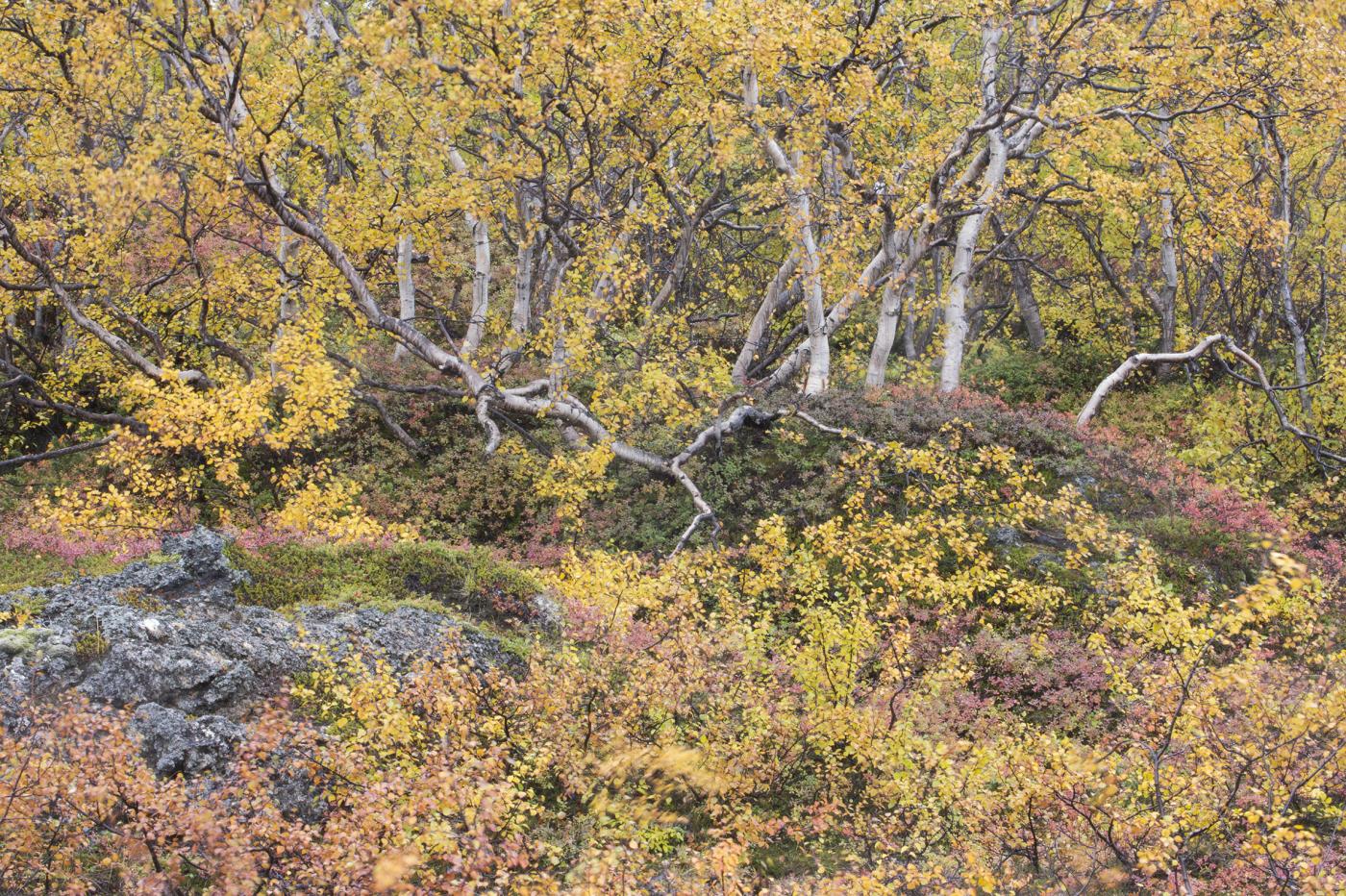
Autumnal montane woodland in Iceland, where species and structural diversity adds complexity to the landscape.
For Nicky, it is the act of restoring that is important, because of the people that process will touch. “It was time outdoors that initially sparked my interest in nature and made me want to protect it,” she says. “I know I am not alone in that feeling. Many in the mountaineering and climbing communities care deeply about Scotland’s landscapes and want to do something to help conserve them. The Mountain Birch Project gives them that opportunity to restore our treeline habitats, while doing the things they love.”
“It’s really important to remember that it isn’t just the trees we want to see return,” says Gus Routledge, a freelance ecologist. “It is the diversity of structure provided by these trees. The birches will nourish and bind the soils, provide shelter from the wind and create a home for a wide variety of wildlife. Virtually all the species we currently find in our uplands would still make a home in this rich mosaic, just as they did when Scotland still had a natural treeline lacing across its landscapes.”
“When I think about what this initiative might achieve,” Gus continues, “I have an image in my mind. It is of bluethroat and redwing nesting amongst an open canopy of mountain birch, surrounded by a mosaic of alpine heath, grassland, willow and juniper scrub. Tall herbs such as alpine sow-thistle and wild angelica are thriving in this landscape, alongside red grouse and ring ouzel, both of which benefit from the increased food and shelter that the trees and shrubs provide. At this time of year, the autumn colour palette is rich and varied, with far more than just deer grass, heather or purple moor-grass to light up the hillsides.”
The sharp piping of an agitated oystercatcher, as it spirals into the air, is muffled by an icy blast from the north. It’s a characteristically blustery day in the Angus glens when bright, warm sunshine battles with bruised skies, laden with the next wintry squall. We take refuge in a beautifully appointed converted farm steading, which sits somewhat incongruously amid the wild expanse of Glen Clova.
“I much prefer the term ‘renaturalising’ to rewilding,” reflects Dee Ward, a businessman who bought the 8,000-acre Rottal Estate fifteen years ago. Nestling in the south-eastern corner of the Cairngorms National Park, Rottal blends the traditions of sheep farming, deer stalking and grouse shooting, with a growing tourism and event portfolio. Dee is referring to the pioneering river restoration work that has been carried out on the Rottal Burn, as it feeds into the River South Esk, which flows through Glen Clova on its way to the Montrose Basin.
“The Rottal was straightened in the 1840s and although it retained relatively good conditions for salmon and trout, every time the burn flooded, young fish, eggs and gravel were just washed away.”
“I much prefer the term ‘renaturalising’ to rewilding.”
Dee Ward, owner, Rottal Estate.
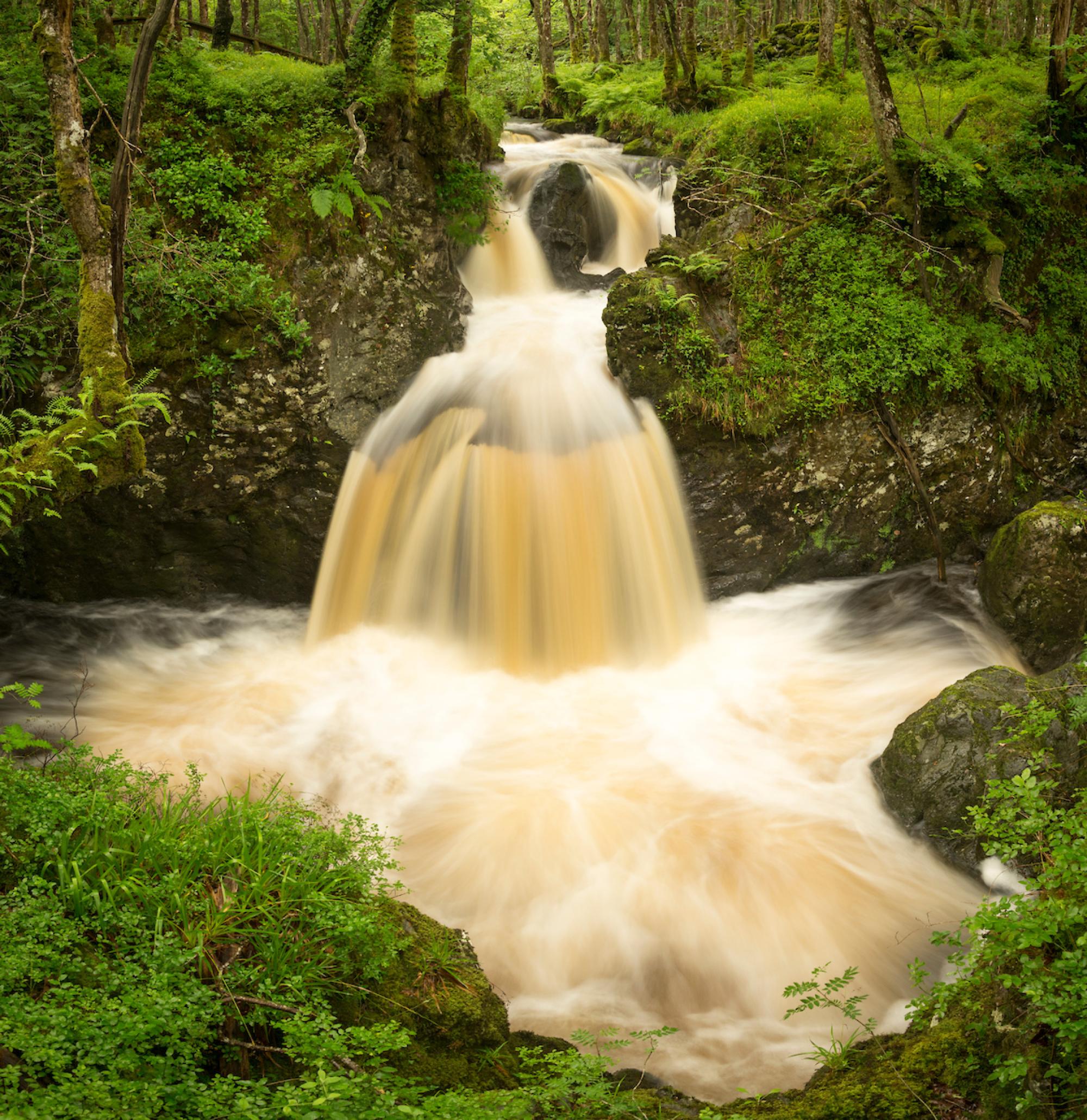
In 2012, an 800m section of the burn was ‘renaturalised’ by returning it to its original meandering channels and, in so doing, increasing its length to over 1200m and slowing the flow of water. By adding large woody debris in the form of windblown Scots pines, along with new tree planting, the burn soon looked much wilder, but crucially, was no longer confined, and was free to weave its own pathways across the floodplain.
“Returning the burn to its original channel, then allowing it to be governed by natural processes for the benefit of salmon, was tremendously appealing to me,” Dee reflects.
The Rottal is one of the primary spawning tributaries of the South Esk, so Dee’s aspirations were aided by the Esk Rivers & Fisheries Trust, who sourced the not inconsiderable EU funding for the extensive engineering works. Craig MacIntyre is the Director of the Trust: “The Rottal obviously looks much more interesting now with trees and wildflowers, but from a biological perspective, we’re simply seeing more fish. The densities of salmon fry are five times what they were, and the complexity of the river now allows salmon, at different stages of their life, access to food and shelter.”
Shelter is something that Scotland’s salmon are crying out for. These complex fish are sensitive and thrive in water up to around 15 degrees Celsius – any higher and they become thermally stressed. With so many of Scotland’s rivers stripped of their woodland cover, and the shade that riparian trees provide, water temperatures in some areas are rising to dangerous levels.
Despite their undeniable drama, many of Scotland’s river catchments are devoid of woodland cover and natural vegetation communities.
The impact of the Rottal Burn realignment was surprisingly quick. Within just 10 weeks of the burn flowing within its new channel, new sediment bars had formed, and salmon had started spawning: a testament to nature’s ability to recover, given the chance. The rapid and radical change quickly attracted attention, and Dee has since hosted myriad interest groups, from fish biologists to local school children. “I often get folk ringing to come and see the work,” he says, “not necessarily for any reason other than that they’re interested.”
Craig also recognises the significance of the project: “It’s become a national case study and other projects have been inspired by what has been achieved here. It may not be a huge area, but its impact has been far-reaching.”
The Rottal now meanders freely creating gravel bars, some of which will be colonised by regenerating alder and willow, whose roots will provide shade and shelter for young fish.
As the rain sets in outside, a welcome tray of coffee arrives, and we veer towards some of the sensitivities that surround rewilding.
“The Rottal Burn work wasn’t at all controversial because everyone saw the benefit in it.” Dee pauses before continuing, “Beavers and the like are different, however, because people tend to view anything new as bad. Beavers haven’t been around long enough in Scotland for people to see that in the right place, they can do fantastic work.”
“The improvements on the Rottal should be easy for anglers to get their heads around,” Craig says, “because we’re creating better conditions for more fish to spawn. The resistance comes from change – anglers have got used to neat and tidy rivers where they can easily cast. More trees, or more beavers for that matter, means more insects and woody debris for invertebrates, and this means more fish. It’s this win-win approach, that benefits both nature and people, that gives us a route forward.”
Beaver landscapes are a complex mosaic of light and shade, wet and dry, cool and warm. Ever-changing, they provide niches for myriad species.
Both men are clearly passionate about what has been achieved on the Rottal and, against the backdrop of rapidly declining fish numbers, can see the potential of river and catchment restoration elsewhere; but Dee is pragmatic.
“The landscape we have today has evolved over a long time. It’s almost been death by 1000 cuts. Someone cuts down a tree and then another tree, then they pull a hedge out, then they drain a meadow. You don’t notice it but over, say, 100 years, a huge change has taken place. I see our job as healing those cuts by making incremental changes. Then, slowly, slowly, insects start coming back, small birds return and bit by bit, the whole estate comes back to life.”
It is clear that seeing is believing, and for those who have visited Rottal, or a growing number of other river restorations across Scotland, the association between complex, wooded river catchments and salmon productivity becomes obvious. But according to Dee, if there is scepticism, it’s symbolic of a wider societal malaise.
“So many people these days don’t really come into close contact with nature, and we’ve grown used to our countryside being neat and orderly. We’ve got to relearn our connection with nature to fully understand that we’re part of a complex and sometimes messy web of life.”
Rewilding can take place at many different scales, and the word itself means different things to different people. But if we accept that, at its core, rewilding is returning abundance and diversity of life to our degraded landscapes, then surely the Rottal Burn realignment is an example of rewilding?
“I don’t like the word personally, because it has connotations of large predators and just letting nature take its course.” Dee continues, “I think there are huge areas of Scotland where rewilding would work brilliantly, but what I’m trying to do here is ‘renaturalise’ alongside other land uses, which will allow nature and people to live in harmony.”
Craig chips in: “I think rewilding implies a lack of management or human intervention, and the Rottal involved a huge amount of intervention, even though in the long term, it will be led by natural processes.”
This familiar hair-splitting debate over definitions and degrees of rewilding has the potential to drain energy from much-needed physical change on the ground. It is apparent that what Dee and Craig’s team have put in place in the Angus glens, and its longer-term goal, very much aligns with the general principles behind rewilding, even if they remain uncomfortable with the word itself.
“I think there are huge areas of Scotland where rewilding would work brilliantly.”
– Dee Ward
There is a widespread notion that Scotland has a binary choice between nature and people, and among those communities who are wary of change, there is a suspicion that with rewilding, people will lose out. Increasingly, however, that narrative is being reframed so that rewilding isn’t perceived as a threat; but instead as an opportunity offering enormous potential for nature, climate, and people. Scotland’s landowners – people like Dee Ward – will play a key future role in that process.
“For me, it’s very much about restoring Rottal to what I believe is a more natural state. We can enrich biodiversity, we can store more carbon, we can reduce flood risk, and I believe we can marry this with traditions such as deer stalking and grouse shooting. Ultimately, this blend of activities, all governed by renaturalisation, will allow the estate, and the uplands in general, to be economically viable.”
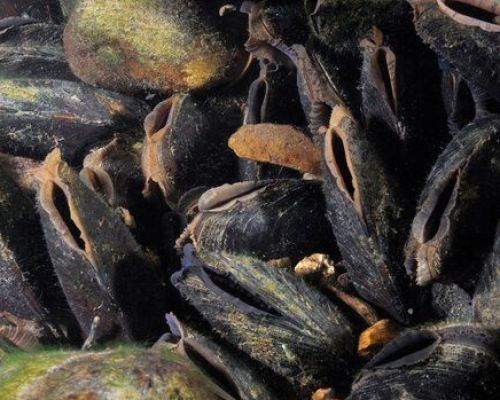
Downstream of the Rottal Burn in the River South Esk, freshwater pearl mussels, an incredibly rare species that relies on clean, cool water, remain relatively abundant. These fascinating molluscs can live beyond 100 years and rely on salmon and trout in the early stages of their lives. Attaching to the gills of passing fish, they effectively hitch a ride for almost a year before dropping off to start their life anchored to the riverbed, where they clean the water by filtering it through their gills. Dee, Craig and their team can imagine a day, not so far away, when conditions in the Rottal Burn are suitable for the return of a creature that has been absent for decades – centuries, even. Restoring mussels and the unseen, but vital, ecological process they deliver, would be another milestone on Scotland’s journey towards an ecologically richer tomorrow.
Rewilding or renaturalising? Who cares?
Find out more about river restoration in Scotland.
By scrapping plans for a Galloway National Park, the Scottish Government has yet again proved it cannot successfully plot a path to a wilder Scotland.
In response to today’s announcement by the Scottish Government on a new national park for Scotland, Karen Blackport, co-convenor of the Scottish Rewilding Alliance and chief executive of Bright Green Nature, said:
“By scrapping plans for a Galloway National Park, the Scottish Government has yet again proved it cannot successfully plot a path to a wilder Scotland. This decision undermines efforts to restore nature, protect wildlife and support resilient rural communities. Amidst a climate and biodiversity crisis, Scotland needs leadership and vision – not another retreat from meaningful action.
“The Scottish Government must now use the Natural Environment Bill to begin a new phase for Scotland’s national parks – ensuring that everyone can benefit from wilder national parks that can be the jewels in the crown of Scotland’s nature recovery and its journey towards becoming a Rewilding Nation.”
While beauty is in the eye of the beholder, it’s unlikely that an oyster is ever going to win the Bonnie Baby competition. Virtually colourless and often found plastered in mud, it struggles to hold a candle to many more ‘attractive’ molluscs. But as they say, looks aren’t everything and there is more to the humble oyster than most of us might imagine.
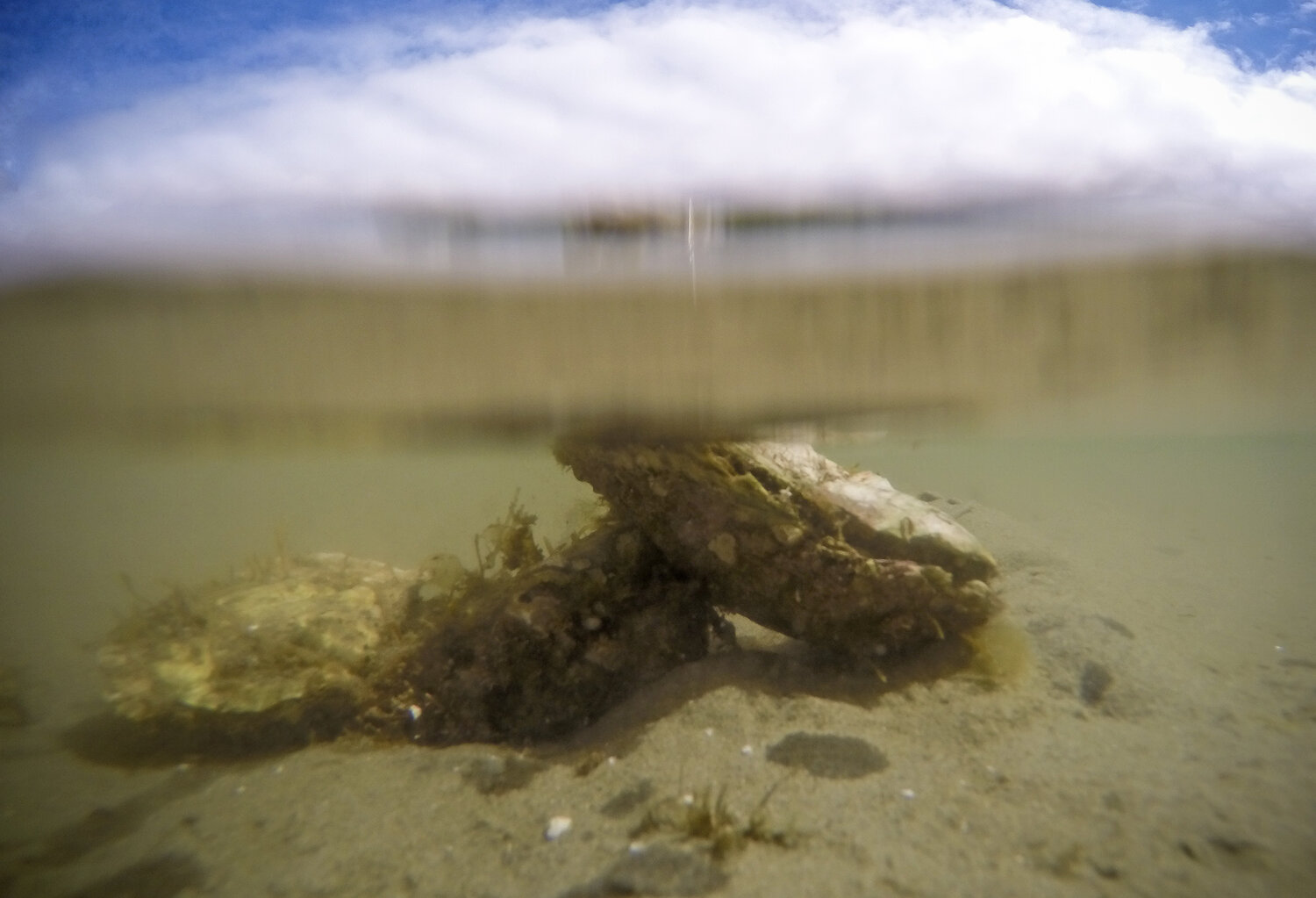
Surprisingly, Ostrea edulis has much in common with the more charismatic Eurasian beaver. Like the beaver, the native oyster is a keystone species: an incredible ecosystem engineer, with the ability to help us restore abundance and diversity to Scotland’s seas. While the work of the beaver can help mitigate flooding and filter harmful chemicals through its extensive dam building, the oyster similarly filters huge amounts of water – more than 200 litres every day. It removes pollutants, chemicals, effluent and particulate matter, and like beavers, oysters help sequester carbon, as well as creating complexity in their environment through their intricate three-dimensional reefs, which provide sanctuary for a vast array of marine life.
Once found all around our coastline, oysters have been over-used and abused, their fragile habitat dredged and trawled to the point where they are now endangered. While giant pandas and tigers grab the conservation headlines, the plight of this non-descript but essential mollusc goes largely un-noticed.
Oysters filter huge amounts of water – more than 200 litres every day – removing pollutants, chemicals and particulate matter.
So, what can be done to reverse the tragic demise of this marine treasure? People power is the short answer. Nestling south of the vibrant port of Oban, a small rural community on the Craignish peninsula is well aware of the oyster’s potential. In 2016, concerned about the effects of over-fishing, dredging and plastic pollution in the glorious but susceptible Loch Craignish, a group of volunteers formed the Craignish Restoration of Marine and Coastal Habitats, or CROMACH for short. The group aims to promote and protect the surrounding marine environment and top of their ‘to do’ list is the return of native oysters to the sea loch.
The area has been designated as a ‘Hope Spot’, the first of its kind in Scotland. Established by Mission Blue, an organisation led by the legendary oceanographer Dr Sylvia Earle, Hope Spots are special places identified as critical to the health of the planet’s oceans. The Gulf of California is a Hope Spot; so too the Sargasso Sea and the Maldive Atolls. The Argyll Coast & Islands sits alongside the great and the good of the world’s marine ecosystems.
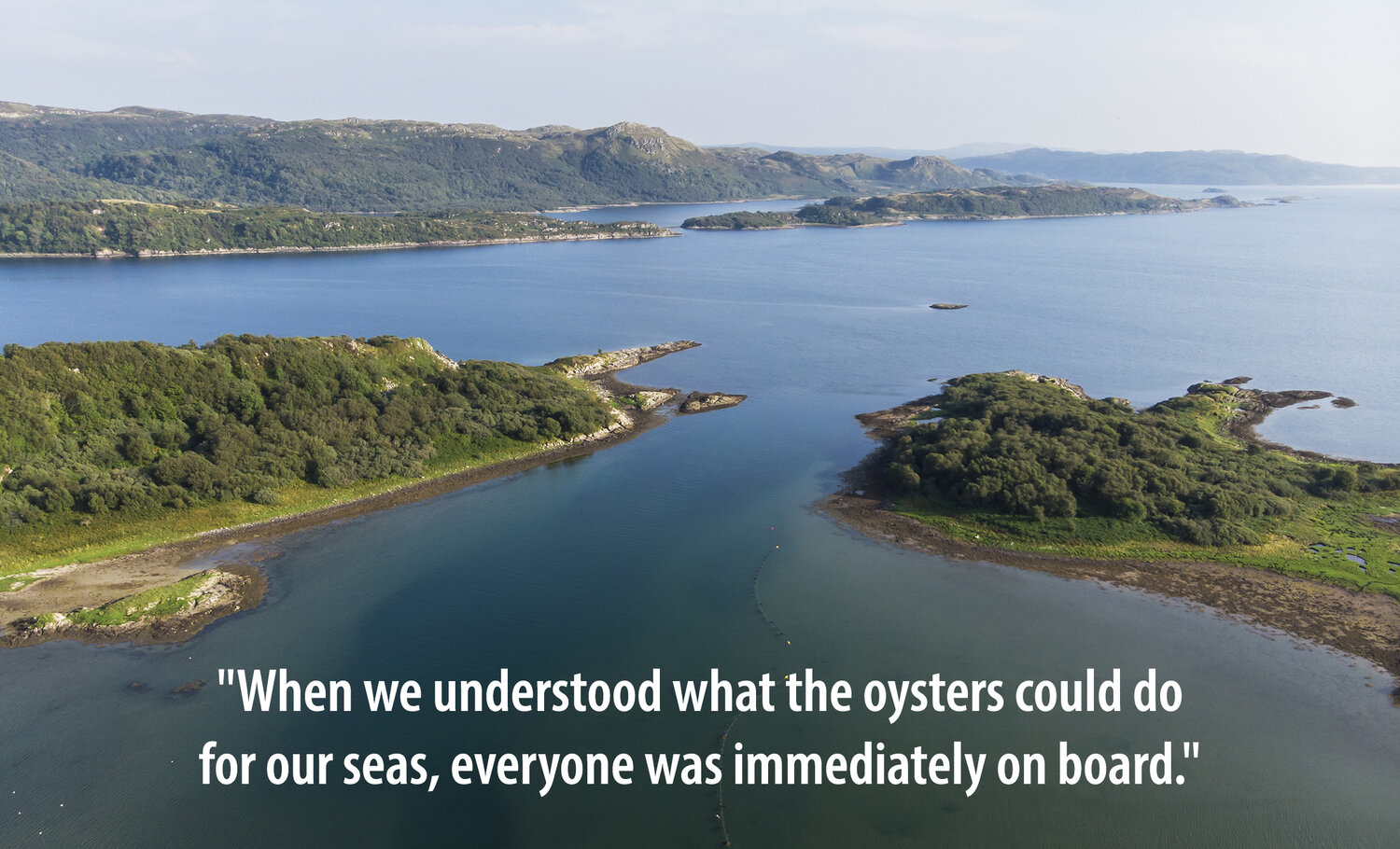
Antonia Baird, the enthusiastic Chair of CROMACH, grew up here. “My family have been here for generations and I know how glorious it is, but we also know we need to look after what we have. We heard about oysters and we knew there was still a tiny population in the loch, but when we understood what they could do for our seas, everyone was immediately on board.”
In 2019, following a series of meetings, presentations and school visits, CROMACH secured a small SeaChangers grant to cover a pilot study into the feasibility of returning these native bivalves to the loch.
“There’s a baffling amount of red tape and bureaucracy, but eventually we secured a licence and worked closely with NatureScot to ensure that biosecurity protocols were followed.” Antonia smiles before continuing. “We then introduced a thousand tiny baby oysters into specialised cages. They did well, and the project for a large-scale reintroduction was born.”
CROMACH is an eclectic mix of people of all ages, united by a strong connection to this place. “There are many important players who have made this possible – too many to mention – but it needed a driving force and Danny Renton, or Mr Oyster as we now call him, is that force. We could not have come this far without him.”
A grant from the National Lottery Heritage Fund meant that a five-year project could kick off to grow 1 million juvenile oysters in specialist floating cages. Once mature they will be translocated to trial seabed sites around Loch Craignish.
“It’s incredibly exciting,” Antonia explains. “All the bits interlock nicely both ecologically but also from a community perspective. Our members range from academics to hands-on volunteers, to primary school children, yachtsmen and visitors, some of whom have been coming here for years. Everyone feels a part of this.”
Ardfern seems idyllic on a hot August day with not a midge in sight. It’s a village that still has a school, and a village shop – increasingly rare in a world of change. Before meeting Mr Oyster, I chat with another driving force, the charismatic wildlife photographer and guide Philip Price, who has been in the thick of this since its conception. He, his artist wife and their triplets lead a mainly green existence – growing their own fruit and vegetables, and getting about on an electric bike, with a capacious trailer that Philip uses to transport clients to his wildlife hides. “We needed a united community voice to help us make vital decisions on how we use our seas. We want to have the power to say ‘stop’ to unsustainable fishing and development, because we won’t get a second chance” says Philip, a passionate advocate for all aspects of rewilding.
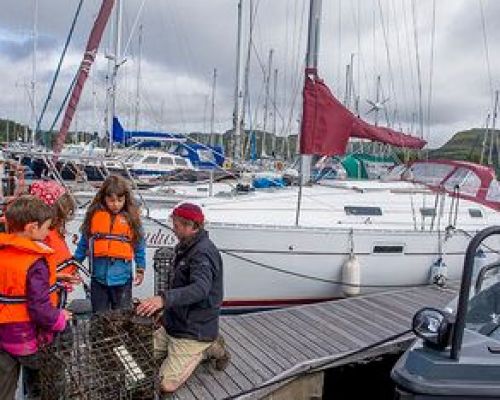
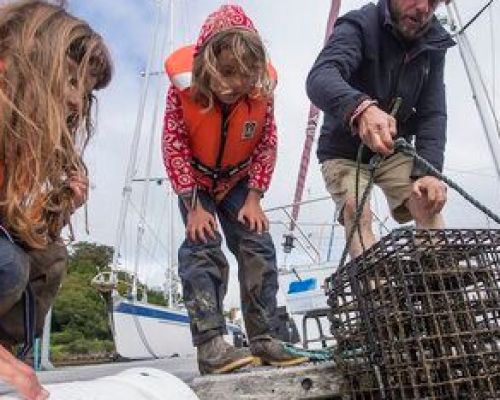
Danny is as equally charming and charismatic and although widely recognised as the instigator of the oyster reintroduction, he is quick to point out the key role of others. “John Hamilton of Lochnell Oysters has advised us and helped us all the way. He designed and developed the ‘oyster hoisters’ to hang under the marina pontoons at the Ardfern Yacht Centre. Each hoister houses thirty mature oysters all of which will release spat. Yacht owners can sponsor a hoister and become active stakeholders. In this way, they can put something back into the marine environment.”
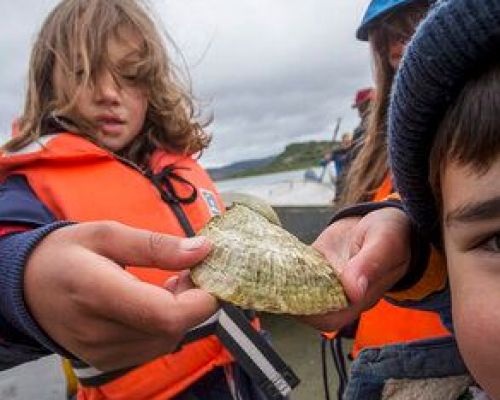
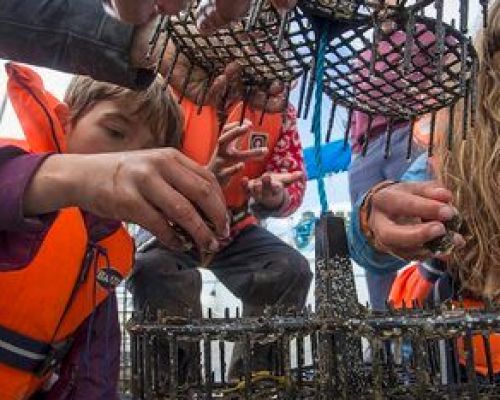
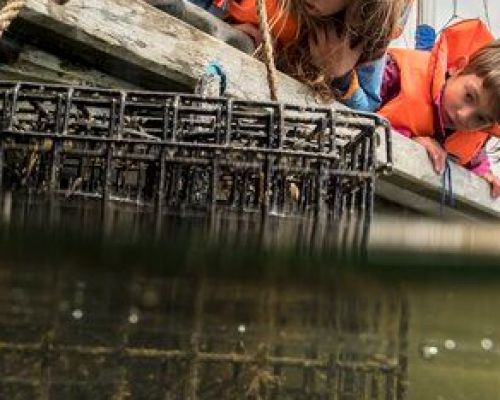
Oysters fascinate children and Danny’s own charity Seawilding, has partnered with Heart of Argyll Wildlife, a local environmental group run by Pete Creech and Oly Hemmings, who will be working with primary-aged children drawn from five local schools. They will record weather, sea condition and temperature, and gather data on the oyster’s growth rates. They will examine predation and mortality levels, while also studying the other creatures that share the oyster’s space. The presence of non-native marine species, perhaps introduced on boat hulls, will also be logged. “We’ve rented a room in the Craignish Hall opposite the marina so on bad weather days after looking at the oysters and seeing their progress, we can run our workshops for the children there. This is great for engaging the children, but it’s also an important citizen science project,” Pete Creech tells me.
Students from the Scottish Association of Marine Sciences (SAMS) as well as from Stirling University’s School of Aquaculture will also monitor the project’s progress once the young oysters have become established on the seabed. Alongside several other restoration projects across the UK, the data gathered will feed into the wider effort to restore oyster reefs.
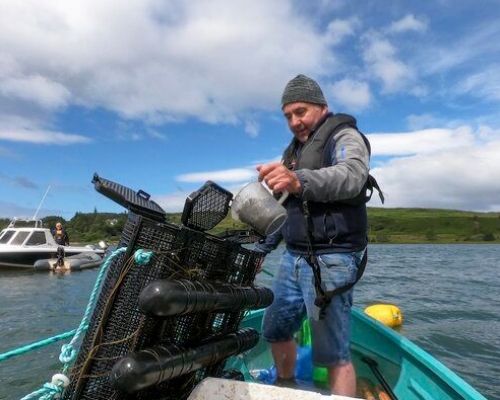
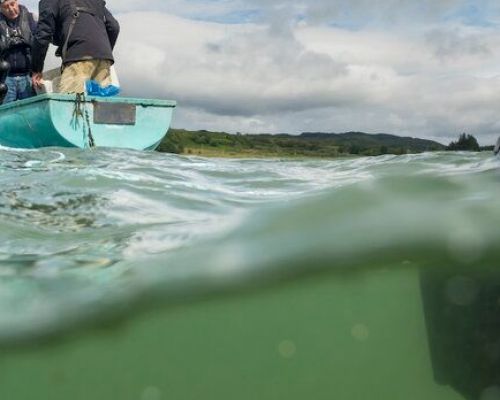
Danny and I head to the shoreline. Loch Craignish is as smooth as silk, clear as gin and fringed by swathes of purple loosestrife, yellow hawkweed and meadowsweet. Bees and grasshoppers thrum and tick. We drag a small boat down across a patch of yellow sand, and Danny rows us out to the newly established oysters drifting in cages off a small island, Eilean Buidhe.
They have been out here now for three weeks. After two years in the planning, 60,000 juvenile oysters, the size of a thumbnail, arrived from a Morecombe Bay hatchery. It was a great moment. Finally, Scotland’s first community-led marine habitat restoration project was underway.
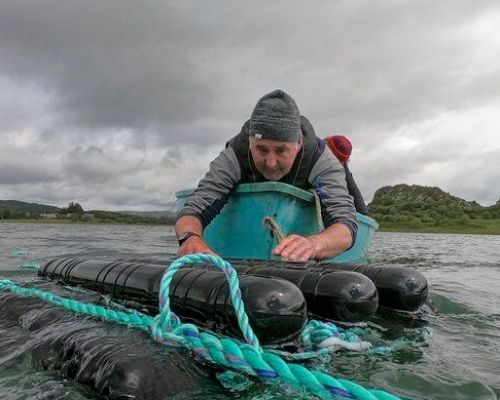
The oars click and splash as we chat and quickly reach the floating baskets. Danny pulls one up – seaweed festoons the container. The oarsman carefully takes a handful of little oysters from their refuge.
“Look at this, they’ve grown already – see that pelmet around the shell, that’s new growth. In the next five years, we hope to put in a million young oysters. When they are around the size of a 50p piece, we will return them to the seabed having first located safe sites that have been surveyed by divers.”
But his brown weather-beaten face creases with concern.
“Ultimately, if this is to succeed, we need a Marine Protected Area for Loch Craignish for community-led research and habitat restoration. We need to keep the scallop dredgers out as they can destroy our work in minutes.”
Danny is ambitious and highly driven. He would like to see the eventual establishment of a sustainable local fishery. “It would provide jobs, and we could grow other things – seaweed, and mussels – a regenerative polyculture. If we can take people with us, the model we are creating is infinitely replicable elsewhere. It’s a project that could be rolled out all around Scotland. People are increasingly aware of what is happening on land, but not at sea. Many local fisheries are dead or dying but rather than simply lament that, we want to do something positive.” He smiles as he returns the baby oysters to their floating home, and then rows us gently back to the beach.
I think of a favourite quote by Margaret Mead: “Never doubt that a small group of thoughtful, committed citizens can change the world; indeed, it’s the only thing that ever has.” Beautiful Loch Craignish is rightly a Hope Spot. And hope is what we need.
Words: Caroline Wood Imagery/film: SCOTLAND: The Big Picture
On Thursday 22 July, hundreds of viewers from across the world tuned in to The Scottish Rewilding Alliance’s Live stream event Scotland: Choose Rewilding. In this blog post, we share the key messages from the inspiring panel of speakers, based on their first-hand experiences of bringing nature back from the brink.
What is rewilding?
Put simply, rewilding is any activity that increases or restores nature, whether in a National Park or within a busy, urban environment. There is no set definition, since rewilding projects vary depending on the location, local communities and the amount of biodiversity already present. Our event Scotland: Choose Rewilding, for instance, featured a range of rewilding projects that included farming crofts, large, community-owned estates and coastal communities.
Rewilding holistically addresses both biodiversity loss and climate change. Rewilded ecosystems are extremely effective at drawing down carbon dioxide from the atmosphere and sequestering it, whilst simultaneously supporting thriving ecosystems. They should be prioritised as a viable climate change solution, alongside more technological approaches.
Protecting existing natural habitats is no longer enough. Unless we actively restore degraded land as well, we will experience a ‘shifting baseline syndrome’ where nature has an ever-decreasing presence.
There is no ‘one size fits all’ model for rewilding. Each site will need a specifically tailored approach. Nevertheless, having common tools, resources and guiding targets can be helpful, as long as they don’t stifle innovation.
We need to be sensitive of and respectful towards other people’s attitudes. Rewilding is seen by some as a threat to their livelihoods, and Scotland in particular has entrenched attitudes to land ownership.
Engaging local communities is crucial. Without a community-led, bottom-up approach, there is a danger that rewilding projects become seen as a hobby for nature-loving millionaires. Ideally, rewilded landscapes should be developed in partnership with local people, deliver tangible benefits and promote productive, sustainable communities.
We can’t be naïve – there will need to be new houses as well. But with innovation, rewilding and human development can coexist; we need to move the conversation from being a binary choice between one or the other.
Livestock can play a vital role in rewilding. For instance, pigs that roam freely and root for food closely mimic the activities of their wild boar cousins.
Rewilding can be part of a viable business. For example, Lynbreck Croft, a livestock farm in the Cairngorms practising regenerative techniques, turns a profit while sequestering twelve times as much carbon as they emit.
Strategic interventions can make a big difference. A ‘helping hand’ can catalyse the rewilding process. The Bamff estate, for instance, have raised funds to introduce bird boxes, osprey platforms, seed scrapes and ponds to accelerate a wildlife revival.
Don’t aim for a specific goal – instead, allow nature to exercise its capacity to self-heal. But it is important to monitor as much as possible, and collect data that can be used as concrete evidence to convince others (including policy makers) of the benefits rewilding brings.
Too many of us are living ‘outside an ecosystem’, disconnected from both nature and where our food really comes from. Rewilding gives people the chance to get their feet wet and their hands dirty; to see for themselves that we are just one species within a complex web that needs to be kept whole in order to work.
What will you choose?
Perhaps you don’t have several hectares to give back to nature, but we can all support rewilding in our own way. From bird boxes and garden plants, to writing to your MSP or supporting a crowd-funding campaign – we can all raise our voice on behalf of nature. We don’t have to passively watch nature being eroded before our eyes. We have a choice. Do you choose rewilding?
Today’s Programme for Government was a test of the Scottish Government’s willingness to set us on the pathway to a Rewilding Nation. This Programme for Government, with its reduced peatland and woodland restoration targets, weak commitments to consult on real protections for marine areas and nature targets that appear as an afterthought, fails that test.
John Swinney has promised to make Scots ‘healthier and wealthier’ in today’s Programme for Government. But we know there’s a missing piece of the puzzle – nature.
Wilder nature could boost our health and wellbeing, support local economies and help us tackle climate breakdown. Today’s Programme for Government was a test of the Scottish Government’s willingness to set us on the pathway to a Rewilding Nation. This Programme for Government, with its reduced peatland and woodland restoration targets, weak commitments to consult on real protections for marine areas and nature targets that appear as an afterthought, fails that test.
With no nature minister in government and no plan for the large-scale recovery of Scotland’s ecosystems, we’re seeing the effects of this across every decision this government makes.
Backtracking on beavers – by undermining the Scottish Beaver Strategy.
Overlooking oysters – by stalling on introducing real protections for marine areas.
Losing nerve on lynx – by sidestepping a reasoned debate on lynx reintroduction.
In response to the Programme for Government announced by the Scottish Government today, Karen Blackport, co-convenor of the Scottish Rewilding Alliance and chief executive of Bright Green Nature, said:
“Once again nature is the Scottish Government’s blind spot, undermining John Swinney’s promises to make Scots healthier and wealthier. Today’s Programme for Government is a missed opportunity for transforming Scotland from one of the world’s most nature-depleted countries to a forward-looking Rewilding Nation with 30% nature recovery across land and sea.
“Rewilding boosts health, jobs and local economies, and helps tackle climate breakdown – but the government still lacks a nature minister or a plan for the large-scale recovery of Scotland’s ecosystems. Instead, ministers are backtracking on beavers, stalling on real protections for marine areas, and showing a loss of nerve on lynx reintroduction by dodging reasoned debate on this crucial issue.
“We want to see a Programme for Government that makes Scotland healthier, wealthier – and wilder.”
It could take seven decades before large-scale nature restoration is underway across 30% of Scotland’s land, new figures from the Scottish Rewilding Alliance show.
The coalition of more than 20 organisations calculates that rewilding across Scotland is now underway across 2.5% of the country’s land, with 195,615 hectares rewilding.
This is an increase of 32,985 hectares since the Alliance’s last assessment one year ago, which reported that 2.1% of Scotland’s land was rewilding.
In line with global targets, the Scottish Government is committed to protect at least 30% of its land and sea for nature by 2030. But at current rates of increase, it will take 65 years before major nature restoration is underway across 30% of Scotland’s land.
Rewilding has been surging in recent years, and across Scotland there are now nearly 200 projects led by communities, charities, farmers, landowners, public bodies and others. But the Alliance says a significant increase in political support is now needed to reach the target.
Thousands of people across the country have backed the Alliance’s call for Scotland to be declared the world’s first Rewilding Nation, with nature recovery across 30% of its land and sea. This week the Scottish Rewilding Alliance is taking those voices to parliamentarians by speaking with MSPs at a dedicated display stand in the Scottish Parliament.
“Urgent political action is needed. Leaving it until 2090 before Scotland can benefit from nature recovery across 30% of its land is something we can’t afford,” said Steve Micklewright, Scottish Rewilding Alliance co-convenor and chief executive of Trees for Life.
“Politicians from all parties need to step up. With political will, rewilding can help us tackle the nature and climate emergencies while benefiting health, jobs, sustainable food production and re-peopling, and ensuring clean air and water, and healthy rivers and seas.”
Rewilding 30% of Scotland can be achieved by restoring habitats including peatlands, native woodlands, wetlands, rivers and seas, while maintaining and benefitting productive farmland.
Scotland is ranked one of the world’s most nature-depleted countries. Research shows that intensive agriculture and climate breakdown are having the biggest impacts on habitats and wildlife, with other threats including non-native forestry, pollution, and introduced species.
Polling shows that 80% of Scots think the Scottish Government should have policies in place to support rewilding.
But rewilding is not yet included in the Government’s key policies and frameworks, such as the planning framework, net zero plan, and biodiversity strategy. There are fears that planned legislation, including the Land Reform Bill, may be less ambitious than planned when it comes to nature restoration.
Levels of marine recovery are unknown, due to government delays on ensuring effective Marine Protected Areas and lack of support for large-scale marine restoration. Based on known rewilding projects, however, the total area of Scotland’s seas in recovery is believed to be dangerously low at less than 1%.
“With political leadership in line with its international commitments, Scotland could become a world leader in nature recovery – the opportunities and benefits are huge,” said Karen Blackport, the Alliance’s co-convenor and chief executive of Bright Green Nature.
“Declaring Scotland a Rewilding Nation would lead to meaningful action with ministers committing to restoring the country’s natural environment through legislation and funding to enable rewilding and empower local communities.”
The Rewilding Nation Charter at www.rewild.scot/charter, calling on the Government to declare Scotland a rewilding nation, has been signed by thousands of people. The campaign has been backed by high-profile names including Hollywood star Leonardo DiCaprio, actor Brian Cox, singer Nathan Evans, and activist Laura Young (Less Waste Laura).
At this week’s display in the Scottish Parliament, MSPs will be invited to sign the Rewilding Nation Charter, hear from constituents, and play a specially designed rewilding game outlining the crucial importance of natural processes.
Ends
Notes to editors
Methodology on 2.5% of Scotland’s land rewilding: To calculate the area covered by rewilding projects within Scotland, the Scottish Rewilding Alliance used self-reported figures from rewilding initiatives, including data sourced from Rewilding Britain, Northwoods Rewilding Network, and other projects which have restoration of natural processes as an aim. The anonymised data is available to journalists on request.
Calculations: According to National Records of Scotland Land Area figures (which do not include inland water), the total land area of Scotland is 7.791 million hectares; 30% of this is 2,337 million hectares. 30% of Scotland’s land area minus current area rewilding = 2,337 million hectares minus 195k ha = 2.142 million hectares. At a rate of 32,985 hectares per year, it will take 65 years to reach 30% of Scotland rewilding.
80% support for Government policies on rewilding: 1,000 people were asked for their views on the Scottish Government’s policies on rewilding in the opinion poll conducted by market research agency Survation (survation.com) on behalf of the Scottish Rewilding Alliance in August 2024.
We welcome the Scottish Government’s ambitions on nature recovery – but we need spending commitments to match.
Today, the Scottish Parliament will pass its 2025/26 budget, which sets its spending priorities for the year ahead.
Nature is our life-support system. We rely on it for our access to breathable air, drinkable water and nourishing food as well as human health and wellbeing. However, in Scotland, intensive management, over-exploitation, neglect and pollution have stripped our landscapes and seas of their richness of life. The most recent Biodiversity Intactness Index, published by RSPB and the Natural History Museum in 2021, ranked Scotland 28th from the bottom of 240 countries and territories across the world.
We therefore welcome additional commitments from the Scottish Government to increasing the Nature Restoration Fund, boosting peatland restoration spending and supporting local government, which has a critical role to play in climate mitigation and nature restoration efforts.
But the government must start to match its ambition on nature targets with its spending commitments. Valuing and enhancing our environment is a primary ‘National Outcome’ for the Scottish Government. The Scottish Biodiversity Delivery Plan recently published by the Scottish Government outlines actions to halt biodiversity loss by 2030 – and to have regenerated biodiversity by 2045. The state of nature in Scotland is currently so damaged that repairing our broken ecosystems requires a significant investment of time, effort and money.
Rewilding – large-scale restoration of nature to the point where it can look after itself again – offers hope for addressing the connected biodiversity and climate emergencies. Importantly too, it offers a wide range of social and economic benefits. These benefits include nature-based jobs and community wealth-building, improved health and wellbeing, mitigating the impacts of extreme weather from flooding to droughts, ensuring sustainable food production, clean air and water, and re-peopling of depopulated areas.Rewilding must be a national mission: as Dr Alasdair Allan MSP, Minister for Climate Action, said at the launch of our ‘Pathway to a Rewilding Nation’ in
Rewilding offers documented economic benefits and serves as a valuable investment in society. Notably, a sample study of major projects in Scotland revealed a more than 400% increase in job opportunities. Additionally, rewilding interventions can prove to be highly cost-effective.
As the Scottish Rewilding Alliance launched our Pathway to a Rewilding Nation, we called on the Scottish Government to help create a wilder future for Scotland by expanding funding for nature. We know budgets are under pressure. We acknowledge that the Scottish Government has made some hard decisions while trying to deliver a budget that helps us make progress in the fight against both the causes and impacts of climate breakdown and the nature emergency.
But without political commitment and a budget that prioritises ecological restoration, it’s a fight Scotland will lose.
To set Scotland on the path to ecological recovery, we need:
An increase in funding for farmers, crofters and land managers for options that deliver the most positive ecological impact
Funding for collaborative ecological restoration efforts, like farmer clusters and catchment restoration initiatives
Funding that enables the natural regeneration of more of Scotland’s woodlands
Dedicated funding for ancient pinewood restoration – not money diverted from vital rainforest restoration efforts
Funding for coexistence with wildlife programmes to better enable species translocations and reintroductions