Tom Bowser asks if nature recovery legislation will be transformative – or another missed opportunity?
I love Scotland, but sometimes my country saddens me. We are a nature-depleted nation within a nature-depleted island. Our seas are hard-fished, our land hard-farmed. The badger is our largest terrestrial predator; anything bigger we’ve killed off and resolutely refuse to bring back. If you care about the environment, there is much to be disheartened by.
Shockingly, Scotland is ranked 212 out of 240 countries and territories for the state of its nature. Our beautiful landscapes and seascapes have been largely stripped of their richness of life through intensive management, over-exploitation, and neglect. Many of the country’s precious habitats are in a pitiful state. Our wildlife is in decline, with one in nine species facing extinction.
But at this very moment, a new bill is progressing through the Scottish Parliament which could do much for our beleaguered ecosystems.
The question facing our elected representatives is, do they have the political will to ensure that the Natural Environment (Scotland) Bill is transformative? Or will it prove another missed opportunity to do what we could, when we still could?
The long-awaited bill was introduced back in February. Although only a framework – a set of intentions that whoever we vote into power in the 2026 Holyrood elections will have to flesh out – its aims appear ambitious.
A legal framework for setting nature recovery targets … A chance to catch up with EU countries already outpacing us by embedding such targets into law … An opportunity to tackle Scotland’s soaring deer numbers … All of this is within our grasp.
Next week, Holyrood’s Stage 2 Committee will debate proposed amendments to the framework document, and their decisions may determine the extent of its future impact.
Many of the proposals bring ecologically informed approaches into the bill – asking us to measure progress not simply on how many trees we plant, but the strength and connectivity of our ecosystems.
Showing the impatience that many feel with the Scottish Government’s constant, infuriating delays on protecting our seas, multiple amendments seek to tighten up requirements on marine planning and restoration.
Further welcome suggestions aim to close loopholes in the recent Wildlife Management and Muirburn Act, in the hope of finally stamping out rural Scotland’s dirty, open secret: the routine killing of protected birds of prey that takes place every year on driven grouse moors.
If these amendments make the final wording, the Natural Environment Bill will be significantly improved.
But the question remains: will it prove a transformative act that delivers real change for nature or instead remain a grand set of unacted-upon intentions? The answer to that lies with Scotland’s politicians.
‘A win for people-led rewilding’ as MSPs in the Scottish Parliament vote to create a new hutting law compelling the Scottish Government to publish a model lease for hutting on public land.
Last night (4 November) MSPs in the Scottish Parliament voted to create a new hutting law compelling the Scottish Government to publish a model lease for hutting on public land.
The change to the law will make it easier for people across Scotland to access public land for low-impact, sustainable hutting in future.
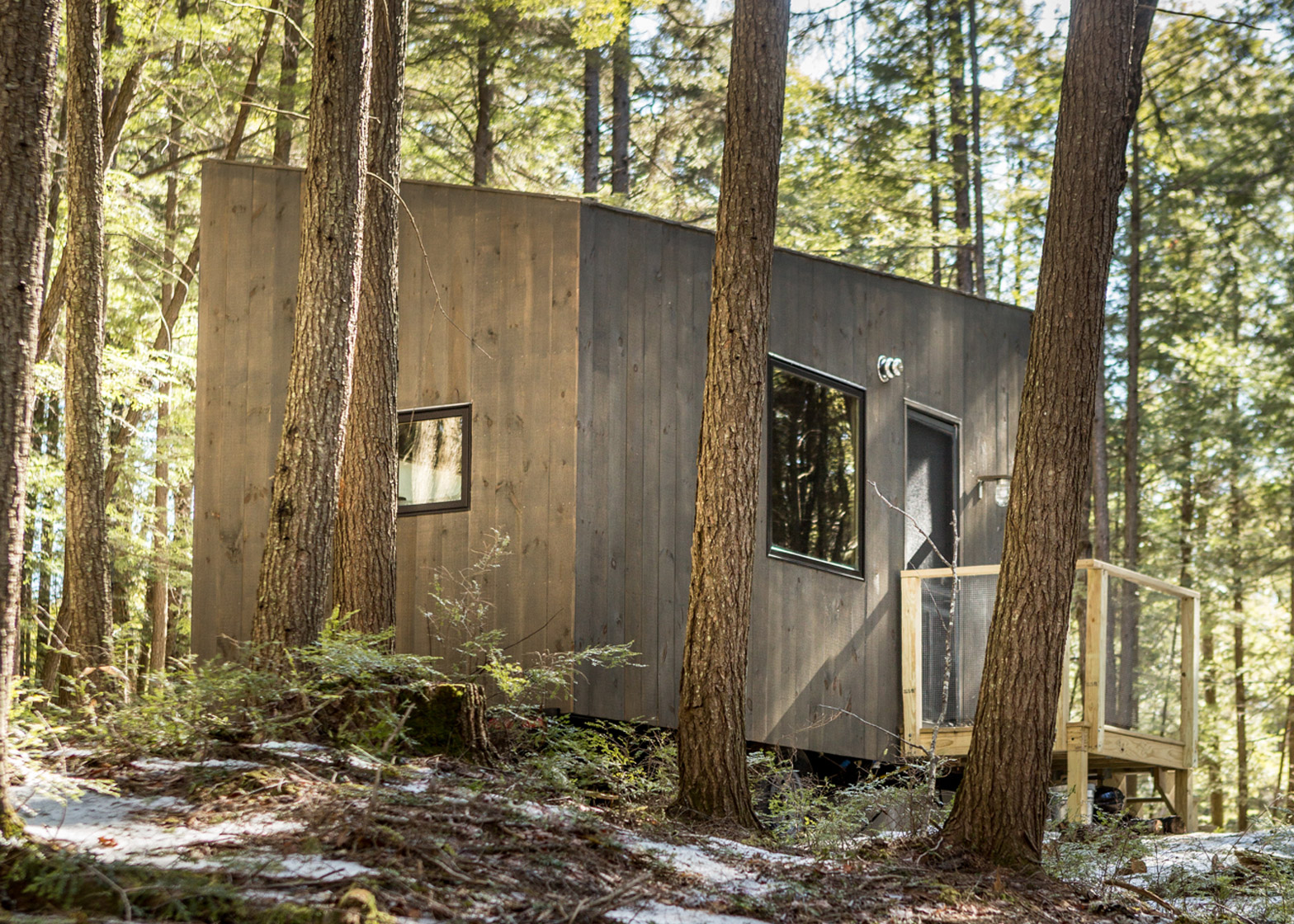
Huts are simple homes where people can reconnect with nature and experience the land off-grid. Reforesting Scotland’s 1000 Huts Campaign says that a culture of recreational hut use would benefit people greatly, including by bringing people close to nature, cultivating practical skills in low-carbon living, fostering community, and offering benefits for health and wellbeing.
With hutting depending on access to land for huts, campaigners from Reforesting Scotland and the Scottish Rewilding Alliance had called on the Scottish Government to publish a draft lease for hutters on public land.
The successful campaign for a legal change was inspired by a pilot project at Carnock in southwest Fife, which has seen a pioneering lease enable a group of hutters to build 12 huts on the national forest estate.
Al Whitworth, Director of Reforesting Scotland, said: “This is another success for our ongoing 1000 Huts Campaign, and we’re delighted that the Scottish Government has again recognised the benefits of making a model lease available for hutting on public land. We hope this will help unlock more sites where hutters can enjoy nature protected by a strong legal agreement.”
Steve Micklewright, co-convenor of the Scottish Rewilding Alliance and chief executive of Trees for Life, said: “It’s great to see the Scottish Government supporting the need for a model lease for hutting in the new Land Reform Bill. As well as restoring nature in a big way, rewilding is about people and restoring our relationship with the land. Hutting offers a fantastic way for more people to share in, and care for, Scotland’s landscapes. This is a win for people-led rewilding.”
The successful changes to the bill were proposed in Parliament by Ariane Burgess, Scottish Greens MSP for the Highlands and Islands.
“Opening up more public land for hutting will in turn create all sorts of opportunities for people to get closer to nature and develop practical skills, and will foster community and co-operation. I’m really pleased to see the Scottish Government recognising the importance of hutting in the new Land Reform Bill by supporting my proposed amendment. This positive result should benefit people for years to come,” said Ariane Burgess.
The hutting win represents a double success for the Scottish Rewilding Alliance’s recommendations on the Land Reform Bill. MSPs voted on 28 October to create a law obliging the owners of large landholdings over 1,000 hectares to publish plans on how they will increase biodiversity – which the Alliance says represents a ‘big step towards a Rewilding Nation’.
While celebrating the two new laws, the Alliance says that with Scotland one of the world’s most nature-depleted countries, the Scottish Government needs to be more ambitious going forwards.
Although the Scottish government is committed to protect at least 30% of land and sea for nature by 2030, just 2.5% of Scotland’s land is currently rewilding – with current rates of increase meaning it will take 65 years before major nature restoration is underway across 30% of the country.
Rewilding is the large-scale restoration of nature to a state where it can look after itself, focusing on restoring natural processes and, where appropriate, reintroducing missing species.
The Scottish Rewilding Alliance is calling on the Scottish Government to declare Scotland the world’s first Rewilding Nation, bringing in bold legislation to support rewilding. Polling has shown this is supported by over 80% of the Scottish public.
The Alliance’s Pathway to a Rewilding Nation lays out a clear vision for a wilder, fairer future for Scotland. Political parties are being asked by rewilding campaigners across the country to put rewilding in their manifestos ahead of the 2026 elections.
New law says large landowners need to set out biodiversity plans, in ‘big step towards a Rewilding Nation’
Yesterday MSPs in the Scottish Parliament voted to create a law obliging the owners of large landholdings to publish plans on how they will increase biodiversity, as part of the new Land Reform Bill – in what the Scottish Rewilding Alliance says is a ‘big step towards a Rewilding Nation’.
The Scottish Rewilding Alliance has campaigned for the change as part of its Rewilding Nation campaign, supported by thousands of people across Scotland.
The new law will require landowners of landholdings over 1,000 hectares to set out how they are boosting biodiversity, as well as adapting to climate breakdown.
They will also have to lay out how they are complying with the Scottish Outdoor Access Code, complying with the code of practice on deer management, and contributing towards net-zero emissions.
While many responsible landowners will already be taking steps to restore nature and ensure ecosystem health, all large landowners will now have a legal duty to consult on and publish land management plans, once the Scottish Government has put the required regulations in place.
The Alliance says Scotland’s largest landholdings have a pivotal role to play in repairing Scotland’s biodiversity, mitigating against the effects of climate breakdown and enabling Scotland to adapt to a changing climate.
Steve Micklewright, co-convenor of the Scottish Rewilding Alliance, and chief executive of Trees for Life which owns the 4,000-hectare Dudreggan estate near Loch Ness, said: “This new law represents a big step towards Scotland becoming the world’s first Rewilding Nation.
“How land is managed is a key part of tackling climate breakdown and reversing biodiversity loss – and in Scotland, where land ownership is highly concentrated, large landholdings have a key role in repairing Scotland’s ecosystems.
“Ensuring that large estates set out their plans to restore nature is vital. Rewilding – large-scale restoration of ecosystems and natural processes – offers hope for tackling the nature and climate emergencies, and creates a cascade of benefits for people.”
There are 1,810 landholdings in Scotland over 1,000 hectares. Some landholdings are already restoring nature at scale, but currently the lack of land management plans laying this out makes data collection difficult.
The successful change to the bill was proposed in Parliament by Ariane Burgess, Scottish Greens MSP for the Highlands and Islands. The change received cross-party support.
While celebrating the success, the Scottish Rewilding Alliance says that with Scotland being one of the world’s most nature-depleted countries in the world, the Scottish Government needs to be more ambitious going forwards. This includes putting in place support and funding to enable large landowners to restore biodiversity and take upscaled action to ensure ecosystem health.
Although the Scottish government is committed to protecting at least 30% of land and sea for nature by 2030, just 2.5% of Scotland’s land is currently rewilding – with current rates of increase meaning it will take 65 years before major nature restoration is underway across 30% of the country.
Rewilding is the large-scale restoration of nature to a state where it can look after itself and people, focusing on restoring natural processes and, where appropriate, reintroducing missing species.
The Scottish Rewilding Alliance is calling on the Scottish Government to declare Scotland the world’s first Rewilding Nation, bringing in bold legislation to support rewilding. Polling has shown this is supported by over 80% of the Scottish public.
The Alliance’s Pathway to a Rewilding Nation lays out a clear vision for a wilder, fairer future for Scotland. Political parties are being asked by rewilding campaigners across the country to put rewilding in their manifestos ahead of the 2026 elections.
The Rewilding Nation campaign has been backed by thousands of people from all walks of life across Scotland. It has received public backing from Scottish actors Brian Cox and Alan Cumming, Scottish musician Nathan Evans, Hollywood A-lister Leonardo DiCaprio, and activists Laura Young (Less Waste Laura) and Somhairle.
High-profile campaign takes message to parliament in first event of its kind and follows public backing by Alan Cumming last week.
Campaigners calling for Scotland to become the world’s first ‘Rewilding Nation’ have today (1 October) taken their message to the country’s politicians, in a colourful stunt outside Holyrood.
More than 100 people – representing thousands of individuals, charities, community groups and businesses from across Scotland – gathered outside the Scottish Parliament, with a visual display of ‘stop’ and ‘go’ signs exposing the barriers holding back rewilding and spotlighting the readily available solutions.
It follows public backing last week by acclaimed Scottish theatre and movie actor Alan Cumming, who became the latest celebrity to back the campaign.
The Rewilding Nation campaign led by the Scottish Rewilding Alliance is calling on the Scottish government to commit to rewilding 30% of the country’s land and seas. The Alliance’s ‘Pathway to a Rewilding Nation’ sets out practical steps the government can take to make this happen.
The Holyrood event is the first time rewilding campaigners have taken their message directly to Scotland’s politicians in this way.
Rewilding has been surging in recent years, with nearly 200 projects across Scotland led by communities, charities, farmers, landowners and others. But the Alliance says it’s now time for politicians to step up too – including by making significant commitments to large-scale nature restoration in the run-up to the Scottish elections next May.
Scotland is one of the world’s most nature-depleted countries. Although the Scottish government is committed to protect at least 30% of land and sea for nature by 2030, just 2.5% of Scotland’s land is currently rewilding – with the rate of increase meaning it will take 65 years before major nature restoration is underway across 30% of the country.
Rewilding is the large-scale restoration of nature to a state where it can look after itself, focusing on restoring natural processes and, where appropriate, reintroducing missing species.
Karen Blackport, co-convenor of the Scottish Rewilding Alliance and chief executive of charity Bright Green Nature, said: “Rewilding is about hope for tackling the nature and climate emergencies, and brings with it a wealth of benefits, including jobs, clean air and water, and improved health.
“Polling shows 80% of Scots think the Scottish government should have policies in place to support rewilding – yet again and again, we are met by silence, foot-dragging or excuses when it comes to protecting and restoring nature in a major way.
“Scotland has the choice and opportunity to lead the way in turning the nature crisis around. We want to see these issues debated and discussed openly by all political parties in the run-up to the Scottish elections next May.”
Rewilding 30% of Scotland can be achieved by restoring habitats including peatlands, native woodlands, wetlands, rivers and seas, while maintaining and benefiting productive farmland, says the Alliance.
The Rewilding Nation campaign has also received public backing from Scottish actor Brian Cox, Scottish musician Nathan Evans, Hollywood A-lister Leonardo DiCaprio, and activists Laura Young (Less Waste Laura) and Somhairle.
Ian Morton; 07811 183633; ian.morton@campaigncollective.org
Richard Bunting; 07753 488146; richardbuntingpr@gmail.com
About the Rewilding Nation Charter:
The Rewilding Nation Charter at www.rewild.scot/charter, calling on the Scottish Government to declare Scotland a Rewilding Nation, has been signed by thousands of people and organisations across Scotland.
The Traitors, X-Men and Avengers star announces his support for Rewilding Nation campaign to his 750,000 followers on Instagram.
The Traitors, X-Men and Avengers star Alan Cumming has backed a campaign calling on the Scottish government to declare Scotland the world’s first Rewilding Nation and commit to rewilding 30% of the country’s land and seas.
The acclaimed Scottish theatre and movie actor – who has just wrapped filming his role as mutant X-Man Nightcrawler in next year’s Avengers: Doomsday movie, the latest instalment of the blockbuster Marvel franchise – has posted a call for action to his 750,000 Instagram followers.
Speaking about why he is supporting the campaign, Alan said: “Scotland could have more forests, healthier seas, and lusher wildlife. Rewilding is how we can make that happen – bringing with it balance, hope, and fantastic opportunity – creating jobs, teaching new skills, and bringing people together to look after Scotland’s future.”
The comments come as more than 100 people from across Scotland will gather outside the Scottish parliament on 1 October to draw attention to the barriers holding back rewilding.
Rewilding 30% of Scotland can be achieved by restoring habitats including peatlands, native woodlands, wetlands, rivers and seas, while maintaining and benefiting productive farmland, says the Scottish Rewilding Alliance.
Polling shows that 80% of Scots think the Scottish Government should have policies in place to support rewilding.
Steve Micklewright, co-convenor of the Scottish Rewilding Alliance and chief executive of charity Trees for Life, said: “We’re thrilled that Alan has added his voice to the growing calls for Scotland to declare itself a Rewilding Nation. Rewilding offers hopes for tackling the nature and climate emergencies, and can bring a cascade of benefits for people – including jobs, improved health, and clean air and water.”
Scotland is ranked one of the world’s most nature-depleted countries. Research shows that intensive agriculture and climate breakdown are having the biggest impacts on habitats and wildlife, with other threats including non-native forestry, pollution, and introduced species.
The Scottish Rewilding Alliance says declaring Scotland a Rewilding Nation would lead to meaningful action with ministers committing to restoring the natural environment through legislation and funding to enable rewilding and empower local communities.
The Alliance’s Rewilding Nation pathway includes proposals to make nature recovery the primary purpose of protected landscapes and seascapes, establishing wild zones around rivers and coastlines, doubling native woodland cover, restoring peatlands, and restricting dredging and bottom trawling across Marine Protected Areas.
The proposals champion the crucial role of people and communities, and include action for coexisting with wildlife, support for land managers and farmers, and investment in nature-based economies, jobs and skills. Recovery targets would ensure habitat restoration, and increases in species abundance and diversity.
The Rewilding Nation Charter at www.rewild.scot/charter, calling on the Scottish Government to declare Scotland a rewilding nation, has been signed by thousands of people. The campaign has been backed by high-profile names including Hollywood star Leonardo DiCaprio, actor Brian Cox, singer Nathan Evans, and activist Laura Young (Less Waste Laura).
Images: Download at https://bit.ly/RewildingNationimages. Please credit as per file name. One- time use only; images should not be used in relation to any other messaging, stored for future use, passed to a third party, or sold for commercial use.
Large, toothy predators elicit powerful emotions and strong opinions, so rewilding conversations often focus on these totemic beasts. But while apex predators are important, rewilding is about boosting biodiversity up and down the food chain, freeing up natural processes within our many dysfunctional ecosystems. And sometimes, that can happen just as easily from the bottom up, as from the top down.
What if true ecological recovery starts much smaller?
In the summer of 2024, Jeremy Clarkson shared a social media post highlighting his alarm at how few butterflies there were that year. Ever one to have his finger on the environmental pulse, Jeremy sagely concluded, ‘Something is afoot.’ If even Mr Clarkson is now noticing the decline of wild nature, perhaps the plight of smaller species might offer us all some common ground. While wolves remain challenging and beavers continue to provoke debate, maybe butterflies – or even moths – are a better place to start?
There are 57 resident butterfly species in the UK, plus two regular migrants, compared to more than 2,500 species of moths and over 870 macro species – moths large enough to be noticed. Surprising then, that moths are a peripheral presence in most of our lives. How many moth species can you name? Fluttering beneath streetlights and battering themselves softly against our windows, moths remain largely overlooked because they seem so inconsequential. They appear small, drab and uninteresting; nothing like a wolf.
Moths deserve your attention
But moths deserve your attention. On closer inspection, they’re a lot less drab than you might have thought – and they’re also important for a healthy wider environment, as Tom Prescott is keenly aware. I meet Tom, accompanied by Brock the dog, on a search for one of Scotland’s rarest moths, at a site near Tummel Bridge, on a muggy day in June. Tom is Butterfly Conservation’s Senior Conservation Officer for Scotland, and he explains that moths are important not only for their intrinsic value, but for their under-appreciated role as pollinators, nutrient cyclers and a key part of the food chain.
‘Get things right for moths and chances are, you’ll be getting things right for a lot of other things too.’
Tom Prescott, Scotland’s Senior Conservation Officer for Butterfly Conservation.
Moth caterpillars are an especially vital food source for chicks. Recent declines in moth abundance – with numbers down 28% in the last 50 years – are thought to be one of the drivers for more noticeable declines in species like cuckoos, farmland birds and bats. All this makes moths an important environmental indicator. ‘Get things right for moths and chances are, you’ll be getting things right for a lot of other things too, says Tom. Or vice versa.
Moths, and the countless other small creatures we overlook in our daily lives, might also have another even more important role to play. The British public’s famous love of nature has become a long-distance relationship, increasingly remote, increasingly mothballed. What if the Garden Tiger and the Elephant Hawk-moth could help reconnect us with the natural world?
Re-connect with the buzz and thrum of wild nature
The good news is moths can still be found just about anywhere. If you have a garden, you could hang a white sheet on a line at night, shine a torch on it and marvel at what shows up. Without a garden, you could simply open a window and turn on the light (remember to carefully catch and release your moths). Re-connect with the buzz and thrum of wild nature.
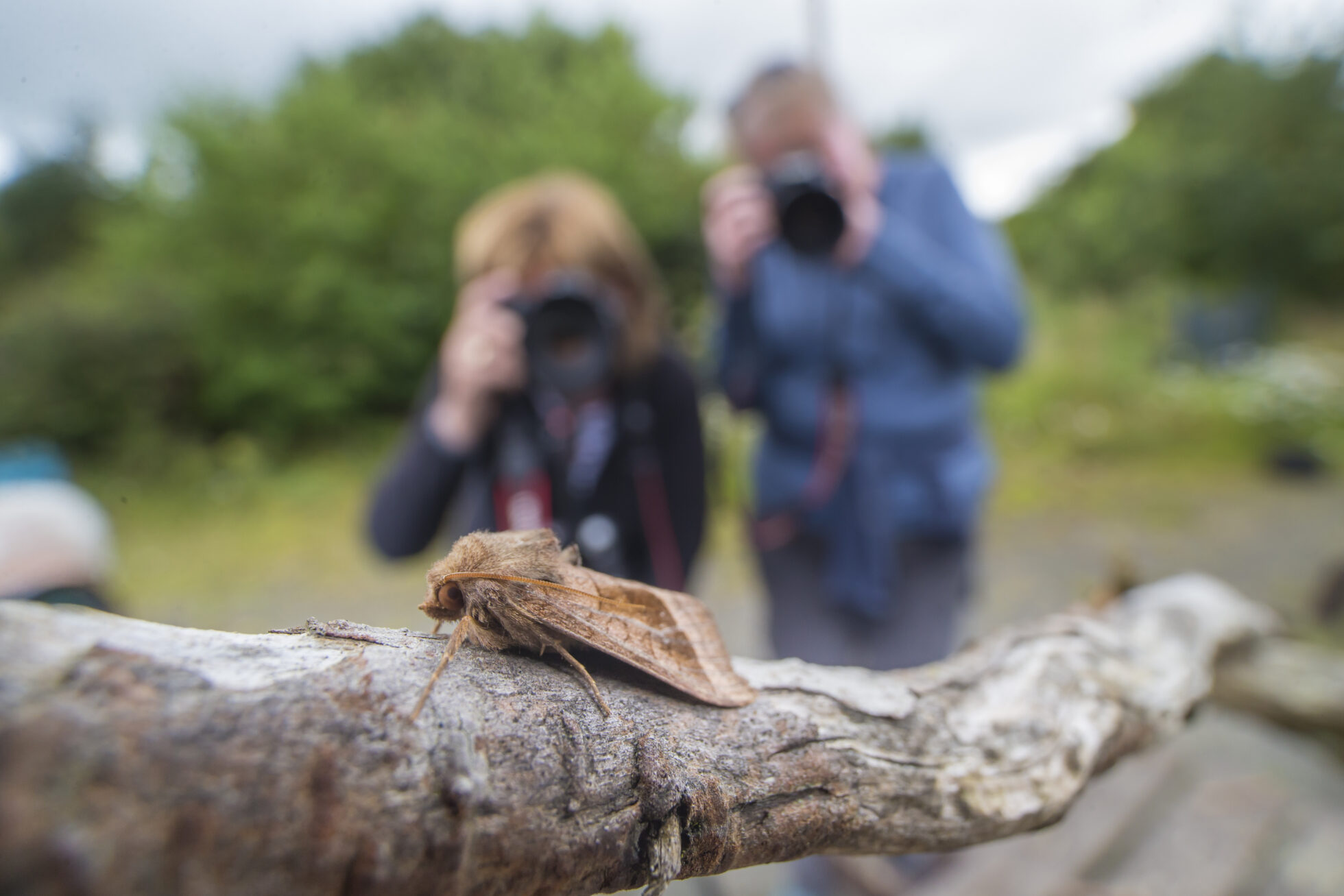

Before long, you might find yourself actively looking for moths, and if you get hooked, you could end up like Tom and me – out on the trail of the Kentish Glory. The Kentish Glory is a showstopper, with a glorious cape of rich caramel fuzz, long feathery antennae and an impressive wingspan of up to 65mm. The males sometimes fly around in the day, but as one of Scotland’s rarest moths they’re still hard to see.
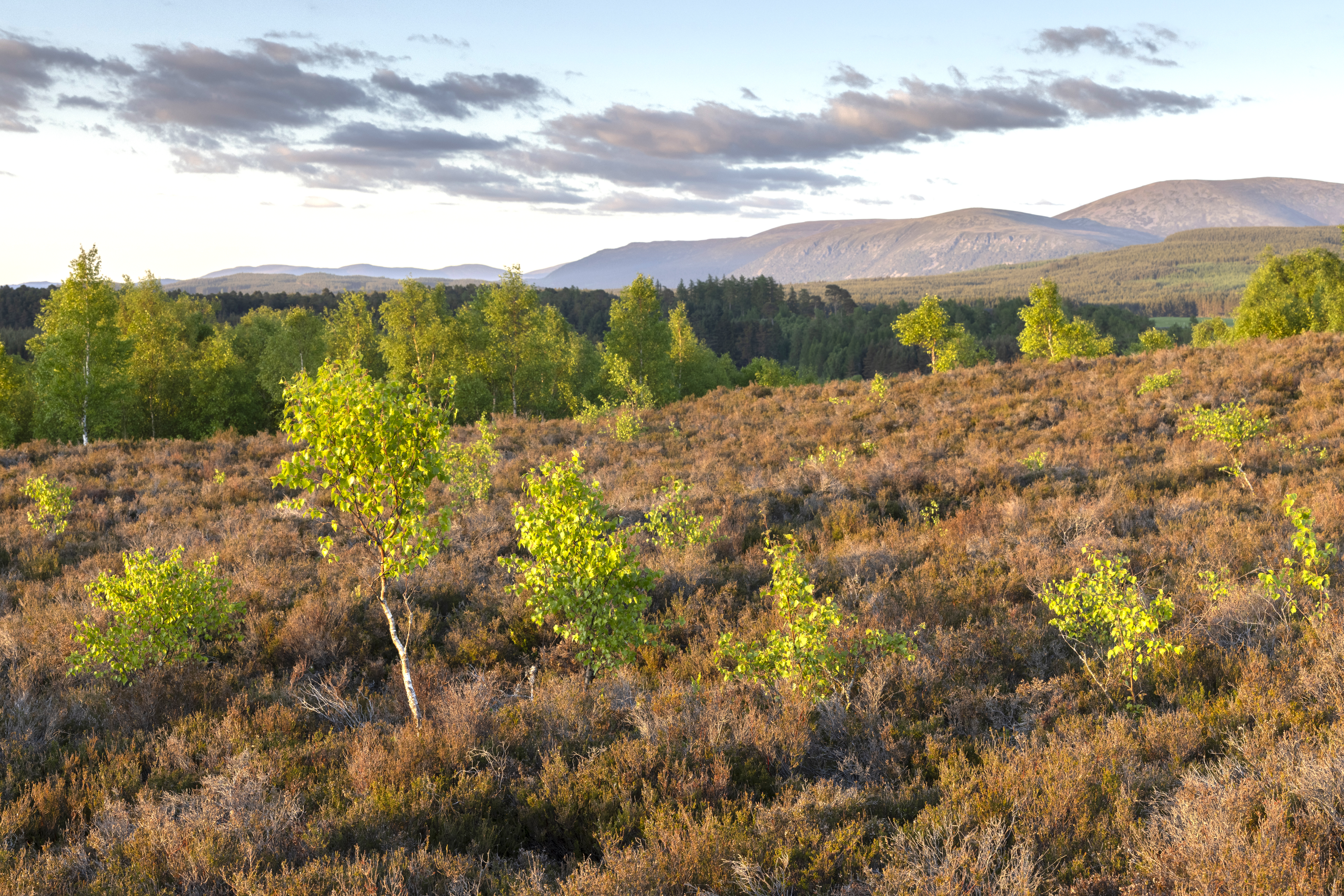
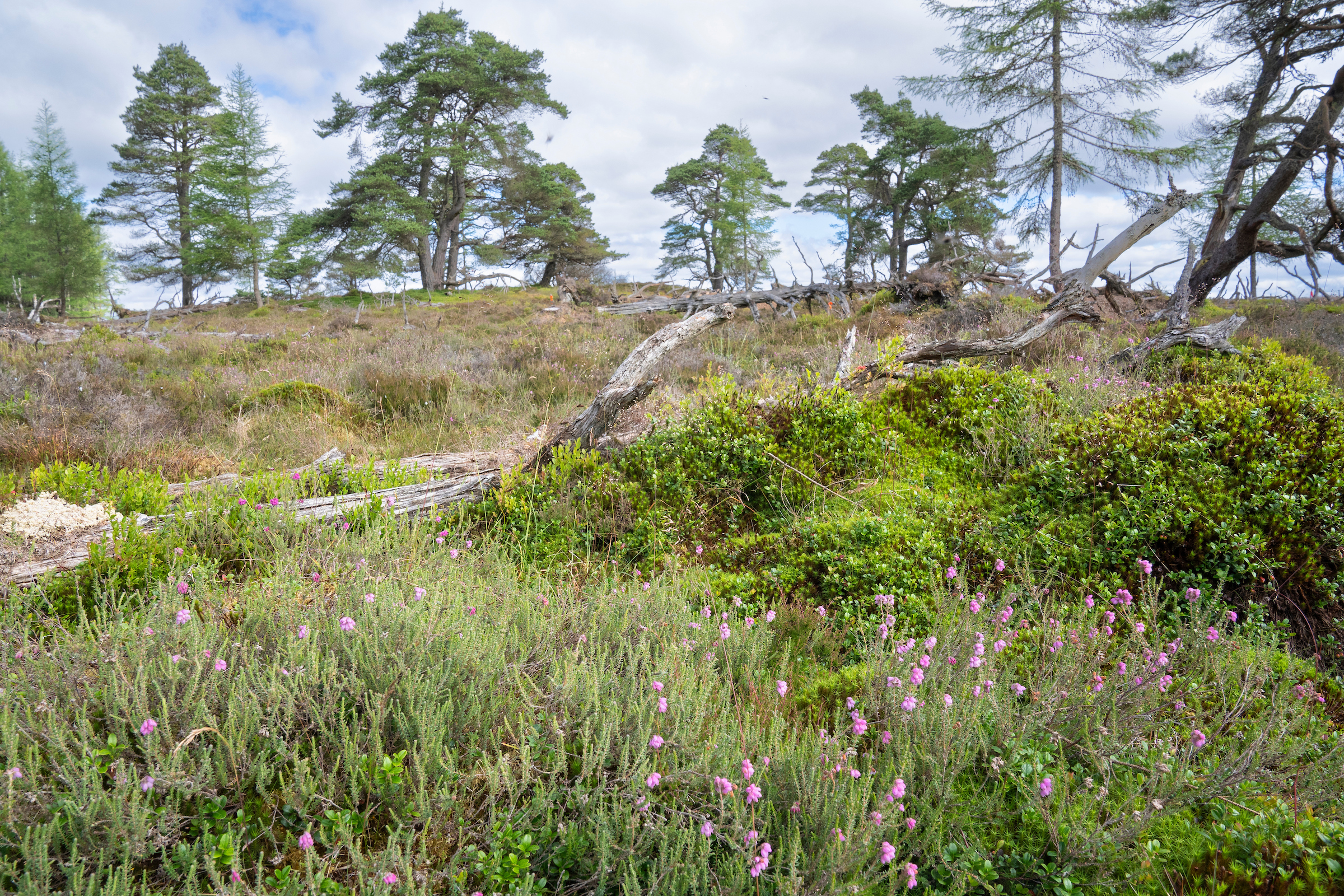
Their rarity is a paradox given the abundance of their food source, one of Scotland’s most common trees – the Silver birch. The Kentish Glory has already disappeared entirely from England (including Kent) and Wales, but clings on in Scotland. Why is it so rare? Why does it favour some silver birch trees and ignore others? No one quite knows. Even Tom, an expert on Kentish Glories, admits: ‘There’s so much about this moth we still don’t understand.’
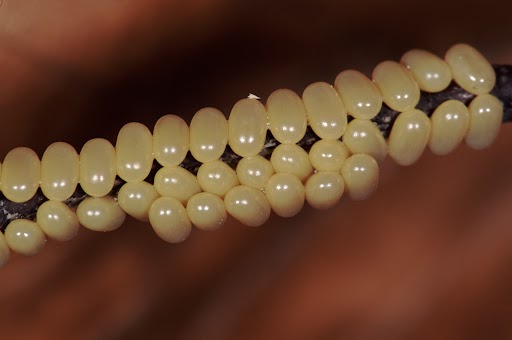
We do know that in the Spring, the females select a suitable birch tree, curl their abdomens around the end of a twig, and lay a couple of layers of eggs. ‘When first laid, they’re this bright custard yellow colour and quite obvious,’ says Tom. ‘But as they age, if they’re fertile, they turn a purple-brown colour, the colour of birch twigs, so they’re really well camouflaged.’
‘You’re not quite looking for a needle in a haystack, but it’s not far off.’
When the caterpillars hatch, they eat their way out of these eggshells, leaving behind the translucent casings, ‘like fun-sized bubble wrap.’ Finding these eggs or caterpillars is key to identifying active breeding sites but requires a sharp eye and plenty of stamina. ‘You’re not quite looking for a needle in a haystack,’ says Tom, ‘but it’s not far off.’ This is no easy treasure hunt but, with the help of dedicated volunteers, Butterfly Conservation has recently identified 95 new Kentish Glory sites within the Cairngorms National Park, turning the Kentish Glory into an unlikely ambassador for the park’s regenerating expanses of broadleaf woodland.
Still, there’s a catch. As these woodlands mature, they become unsuitable for the Kentish Glory, with the females only laying eggs on young, isolated birch trees. It seems Kentish Glories need some degree of natural flux across the landscape. They need some wildness. Birch trees are naturally succeeded by oak and ash over time, but when these giants are disturbed by death, fire or disease, the process starts again with birch, generating life-giving variety and complexity. Our modern landscapes rarely provide such change, remaining too often in stasis, managed as one thing or another.
Back with Tom near Tummel Bridge I meet one of Butterfly Conservation’s hardy volunteer surveyors. Philippa Swan’s diminutive frame and neat grey hair are contrasted by an all-in-one midge net hoodie, her trousers tucked firmly into socks. No ticks shall pass. Philippa means business. ‘Survey work takes you to places you didn’t know about,’ she says, explaining the origins of her interest in moths. ‘I’d go to places that were interesting for ancient history, and find butterflies there. The more I saw, the more interested I became in the whole environment.’
This is the key to rewilding ourselves: a journey that begins with noticing nature again.
This is the key to rewilding ourselves – a key principle of the Scottish Rewilding Alliance’s Rewilding Nation Charter – a journey that begins with noticing nature again and making more space for wildness in our day-to-day lives. But while Philippa’s journey has helped her discover a treasure trove of previously overlooked invertebrate gems, it has also alerted her to their plight. ‘We’re under so much pressure from commercial forestry here,’ she says. ‘We’re losing these things.’
She attributes the abundance of butterflies at these historic sites to the lack of forestry. ‘You’ve still got these little patches of ancient grassland, but they’re few and far between, every year we’re left with less and less.’
Philippa’s search for species like the Kentish Glory has awoken her to the importance of wild places and natural complexity, piquing a growing interest in fungi and flora, and the diversity of life so intricately entangled in healthy living systems. She talks of her sadness at the ongoing declines in nature but also of the joy and wonder she feels on discovering a patch of surviving richness. ‘It’s another paradox,’ says Philippa, with a smile, picking up her sweep net and continuing her search.
The Scottish Rewilding Alliance hopes to inspire local community groups to help Scotland become the world’s first ‘Rewilding Nation’, with the launch of a practical new guide.
The Scottish Rewilding Alliance hopes to inspire local community groups to help Scotland become the world’s first ‘Rewilding Nation’, with the launch of a practical new guide.
Available in both Gaelic and English, the guide to rewilding for community groups provides practical advice, case studies, and resources to help them start rewilding projects, and grow existing ones. The guide was developed in collaboration with community groups and features quotes and advice from the front lines of nature restoration.
Rewilding is the large-scale restoration of ecosystems to a state where nature can manage itself, focusing on restoring natural processes and, where appropriate, reintroducing missing species.
The guide was commissioned by the Scottish Rewilding Alliance, a collaborative initiative of charities, businesses and community groups working to promote rewilding in Scotland.
Steve Micklewright, co-convenor of the Scottish Rewilding Alliance and chief executive of Trees for Life, said: “We hope the guide can inspire people to come together to help restore nature, tackle climate change, and create healthier ecosystems.
“Creating the guide underlined what we already knew – that rewilding isn’t just about restoring nature, but about restoring communities too. Rewilding helps to create jobs, inspire education, and bring people together for the benefit of their local area.
“More than anything, rewilding means hope – for a liveable future, for a wilder world, and for thriving communities.”
The Alliance’s guide also outlines how groups can access funding, navigate land reform laws, and form effective partnerships with public bodies, scientists, and local residents.
It highlights the success of existing community-led rewilding projects too, including Ury Riverside Park in Inverurie, Aberdeenshire, where the guide was launched by Gaelic influencer Lauren Rhiannon.
Other local community rewilding projects featured in the guide include:
Seawilding in Loch Craignish
The Langholm Initiative – Tarras Valley Nature Reserve in Dumfries and Galloway
The Lochwinnoch Community Development Trust in Renfrewshire
Bright Green Future in the Scottish Borders
Midlothian Wildflowers
The guide was written by ecologist and social forester Professor Anna Lawrence, building on words and experiences shared by community groups. The translation was provided by Hannah MacDiarmid.
We welcome the Scottish Government’s interim evaluation of the Nature Restoration Fund, which highlights important progress but shows that current funding is insufficient to meet Scotland’s nature recovery goals. We urge all political parties to commit to restoring and significantly increasing the Fund in the next parliamentary session to secure lasting benefits for nature, climate, and communities.
We welcome the Scottish Government’s publication of an interim evaluation report for the Nature Restoration Fund (NRF) and urge ministers and all political parties to commit to continuing the NRF in the next parliamentary session, with significantly increased funding.
This review provides a valuable opportunity to reflect on one of Scotland’s key tools for reversing decades of biodiversity loss. As one of the most nature-depleted countries on Earth, it’s vital that nature recovery is adequately resourced in Scotland.
As of Spring 2024, the report shows that over £35 million has been invested in Scotland’s nature through NRF spread across nearly 800 projects. Wetlands, seagrass, meadows, rivers and other important habitats have all benefited from the funding, while nature’s return delivers tangible benefits at local and national levels.
The report also highlights some of the groundbreaking projects that have benefited from this funding, including Seawilding, Rewilding Lettoch and Rewilding Kilminning.
For many rewilding initiatives – often locked out of other funding routes – this money has been critical.
However, the review also demonstrates that much more needs to be done. The funding delivered so far is simply not enough for a country with such a long path towards being nature positive. NRF has also been put at risk through financial pressure, with funds diverted to cover budget holes elsewhere.
Without expanded, sustained and secure public investment, there is a real risk that Scotland will fail to meet its nature recovery goals. This will put ecological resilience, climate ambition and public benefit into jeopardy.
We urge the Scottish Government and all political parties to commit to continuing NRF in the next parliamentary session, with significantly increased funding.
To turn ambition into reality, we are also calling for:
A larger annual NRF allocation from 2026 onward, ideally doubling the current funding level.
Guarantees that any diverted funds (e.g. to cover other public spending pressures) are fully replenished in subsequent years.
Clear links between all public funds, nature recovery commitments and forthcoming statutory restoration targets to ensure funds deliver progress at scale and at speed.
We commend the Scottish Government for acting now to review the Fund’s performance – and urge ministers to listen closely to the independent evaluation. It’s time to show leadership on large-scale nature recovery: bring the Nature Restoration Fund back next session with greater ambition and investment.
Photo shows non-native removal at Tombane, a Northoods Rewilding Network partner. Copyright Tierney Lloyd/SCOTLAND: The Big Picture.
Our response to the reshuffle announcement by the Scottish Government.
In response to today’s reshuffle announcement by the Scottish Government, Karen Blackport, co-convenor of the Scottish Rewilding Alliance and chief executive of Bright Green Nature, said:
“It’s shocking that, in the face of biodiversity and climate emergencies, the Scottish Government still has no nature minister. Sidelining nature is costing society dearly – we can see it on delays to marine protections, backtracking on beavers and abandoning a third national park.
“We call on the First Minister to stop dodging the fact that Scotland is one of the world’s most nature-depleted countries and give nature the political voice it urgently needs.
“We thank Dr Alasdair Allan for the energy and interest he brought to the role and our conversations with him, and wish him well as he returns to the back benches.”